


When conversations around obesity come up, the focus often lands on genetics, motivation or personal discipline. But according to health coach Dan Go, the environment people live in may have a much bigger influence than many realise.
In a post shared on X on June 14, Dan pointed to a striking contrast between obesity rates in Japan and the United States. Using the comparison to make a broader point about lifestyle and infrastructure, he argued that staying healthy is often less about extraordinary willpower and more about the systems people interact with every day.
A system built for health
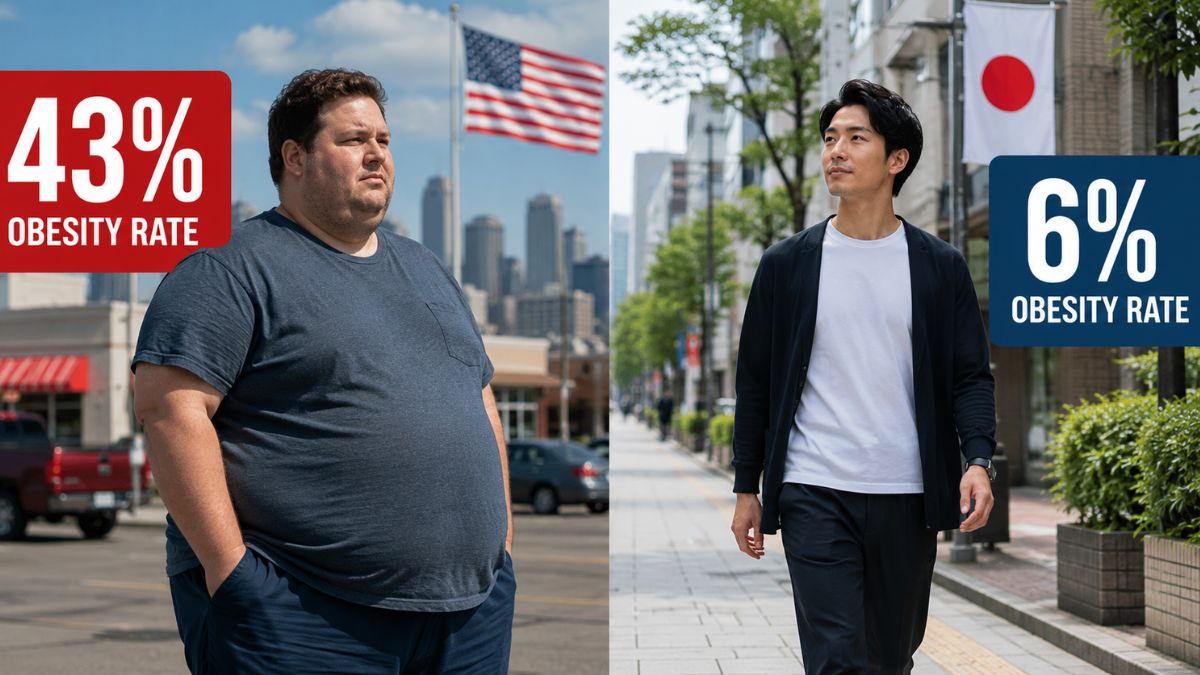
Dan highlighted figures showing Japan’s obesity rate at around 6 per cent, compared with 43 per cent in the United States.
Reflecting on his own experience travelling in Japan, he said the difference was immediately noticeable.
“I saw it firsthand, travelling to Japan. In two weeks there, I rarely saw anyone overweight. Not because they were dieting, but because of how they lived.”
According to Dan, everyday life in Japan naturally encourages movement and healthier eating habits.
“They walk everywhere,” he observed.
He also pointed to differences in food culture.
“Their version of ‘fast food’ has whole ingredients, fermented, high protein, rich in fibre. Meals are built around real food by default, not by discipline,” Dan wrote.
In his view, one of the biggest advantages of such an environment is that people do not have to constantly think about dieting.
“Nobody was counting macros. Nobody had a meal plan app,” he said.
Instead, as Dan put it, “They just lived in a system that made staying lean easy and being slim a standard.”
The ‘ZIP code’ predicament
Dan used the comparison to highlight a broader public health discussion around so-called obesogenic environments.
According to him, many modern Western environments are structured in ways that make weight gain more likely.
Heavy dependence on cars, neighbourhoods designed around driving rather than walking, and easy access to highly processed foods can all contribute to that challenge.
He argued that these factors often make healthy living more difficult, regardless of a person’s intentions.
Summarising his point, Dan wrote, “Meanwhile, the most obese countries on this list share the same pattern: car culture, processed food access, and sedentary defaults. Your ZIP code predicts your health more than your DNA.”
The statement resonated with many people online because it shifted the discussion away from individual choices alone and towards the environments people navigate every day.
Building your personal environment
While changing a country’s infrastructure is not something individuals can do overnight, Dan believes people can still make meaningful adjustments within their own surroundings.
He acknowledged that most people cannot simply relocate to a country with lower obesity rates.
Instead, he encouraged people to focus on the habits and systems they can influence directly.
“You can’t move to Japan. But you can build your own environment. Walk more. Eat real food. Make the healthy choice the easy choice,” he concluded.
His message was simple. Small changes in daily routines and surroundings may not seem dramatic, but over time they can shape behaviour in powerful ways. And sometimes, the easiest path is not about relying on more willpower. It’s about creating an environment that makes healthier choices feel natural.



