


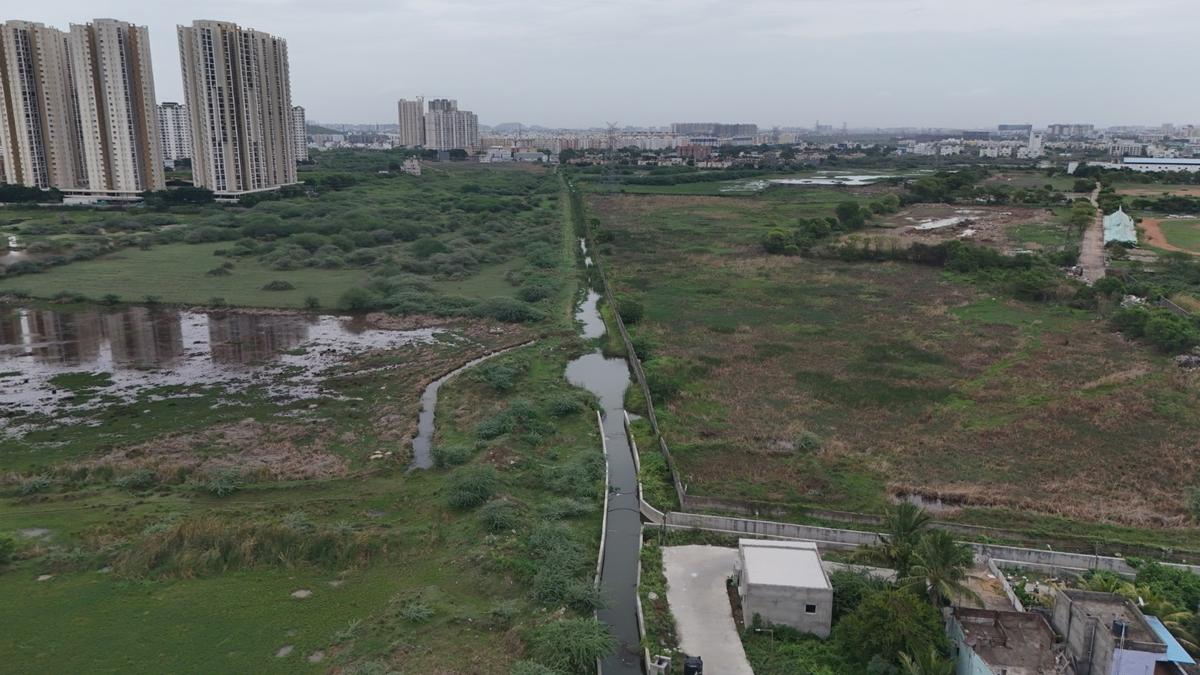
Residents claimed that the planning documents acknowledge that the 127-acre site was prone to waterlogging
| Photo Credit: SPECIAL ARRANGEMENT
Concerns have been raised by the residents of Thalambur over the proposed Global Sports City project by the Chennai Metropolitan Development Authority (CMDA).
In their memorandum submitted to Deputy Chief Minister Udhayanidhi Stalin and CMDA officials, the residents pointed out their objections regarding flood risks and hydrological disruptions in an already vulnerable wetland ecosystem.
Planning documents acknowledge that the 127-acre site was low-lying and marshy, prone to waterlogging and serving as a natural sink for runoff, the residents noted. This land formed part of the historical Pallikaranai marsh system, which once extended up to Siruseri, and continues to serve as a critical catchment for surrounding areas such as Thalambur and Semmenchery. Converting this floodplain into built infrastructure could force large volumes of water to enter residential neighbourhoods, worsening inundation along key access routes, they added.

The site’s inherent geography experiences severe flooding during monsoons despite mitigation efforts, similar to nearby developments, including a nearby university. The proposed solution of creating a pond, they contend, was neither scientifically robust nor sustainable in a marshland context, citing examples of artificial tanks that require frequent desilting.
Further concerns related to gaps in the broader drainage network. Several interconnected water bodies — including Natham Lake, Karanai Lake, and smaller ponds — lacked proper downstream linkages. The existing stormwater channel carrying runoff from Thalambur was already a bottleneck, with backflow from larger upstream odais causing recurrent flooding in areas such as Gandhinagar and Mahanagar. Routing additional discharge from the Sports City into this system could exacerbate flooding across both north and south Thalambur, they cautioned.

The proposal to channel excess water into the Perumbakkam marsh also drew criticism. Residents noted that the swamp itself overflows during heavy rain. There are discrepancies in planning maps, including an indicated but non-existent link between Navalur lake and downstream water bodies, a gap that has already resulted in seasonal flooding of nearby layouts, they alleged.
Absence of a traffic impact assessment, ambiguity over road infrastructure along drainage channels, and the long-term sustainability of water-intensive sports facilities in an area with poor groundwater quality were also among the other issues flagged.
Without a comprehensive, scientifically grounded hydrological plan, the project risks intensifying flood vulnerability, potentially affecting both the proposed facility and the surrounding communities during increasingly unpredictable monsoon events, the residents said.
Published – April 02, 2026 01:03 am IST



