


As you enter Jagdalpur, the district headquarters of Bastar, a towering sculpture of Bison Horn Maria dancers comes into view, welcoming visitors. It stands as a striking symbol of the region’s cultural pride and the enduring legacy of the Dandami Madia community.
The Dandami Madia (also spelt as Maria) people have long shaped the cultural landscape of southern Chhattisgarh. Their settlements across Darbha, Tokapal, Lohandiguda and Dantewada continue to maintain a deep relationship with the forest, where livelihood and beliefs remain closely intertwined.
Identifying themselves as part of the larger Gond tradition, the community carries echoes of the ancient Gondwana region that once stretched across central India. Among their most recognisable cultural expressions is the Bison Horn Maria dance.
Performed by both men and women, the dance turns the village clearing into a vibrant spectacle of colour and sound. Men wear the iconic horn-shaped headgear made from bamboo, adorned with bison horns, feathers, and bright cloth strips that sway with each movement. Layers of bead necklaces cover their torsos, while brass bells tied to their ankles create a rhythmic jingle as they dance.
Women wear bright, handwoven saris, heavy silver and brass ornaments, and headgear. Coins in the denominations of ₹1 to ₹10 are worked into their jewellery, and many also don a brass crown, adding to the ceremonial visual appeal. Their movements flow in graceful arcs, shoulders swaying to the beat of drums and bamboo flutes.
Celebrating hunting traditions, village rituals and the community’s bond with nature, the dance reaches its grandest expression during the Madia festival, when families from distant hamlets gather on nights filled with drumming and chants invoking deities such as Budhadev and Danteshwari Mai.
Despite modern influences, the Bison Horn Maria dance endures. It is an affirmation of identity, ancestral connection and the living cultural soul of the Dandami Madias.
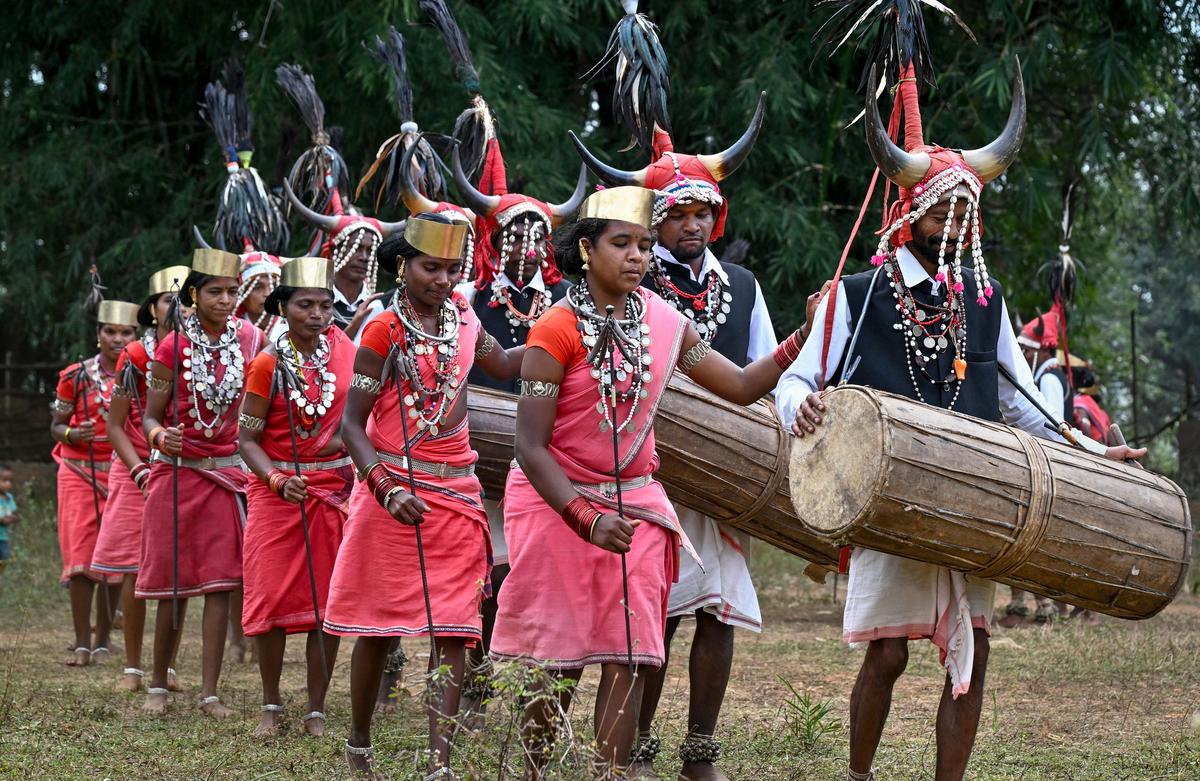
Photo:
K.R. Deepak
Members of the Dandami Madia tribe perform the traditional Bison Horn Maria dance during a village festival at Judiya Para in Jagdalpur on November 30, 2025. The dance, marked by horn-shaped headgear, energetic steps, and rhythmic drumming, is an integral part of the tribe’s cultural heritage and is performed during major community celebrations.
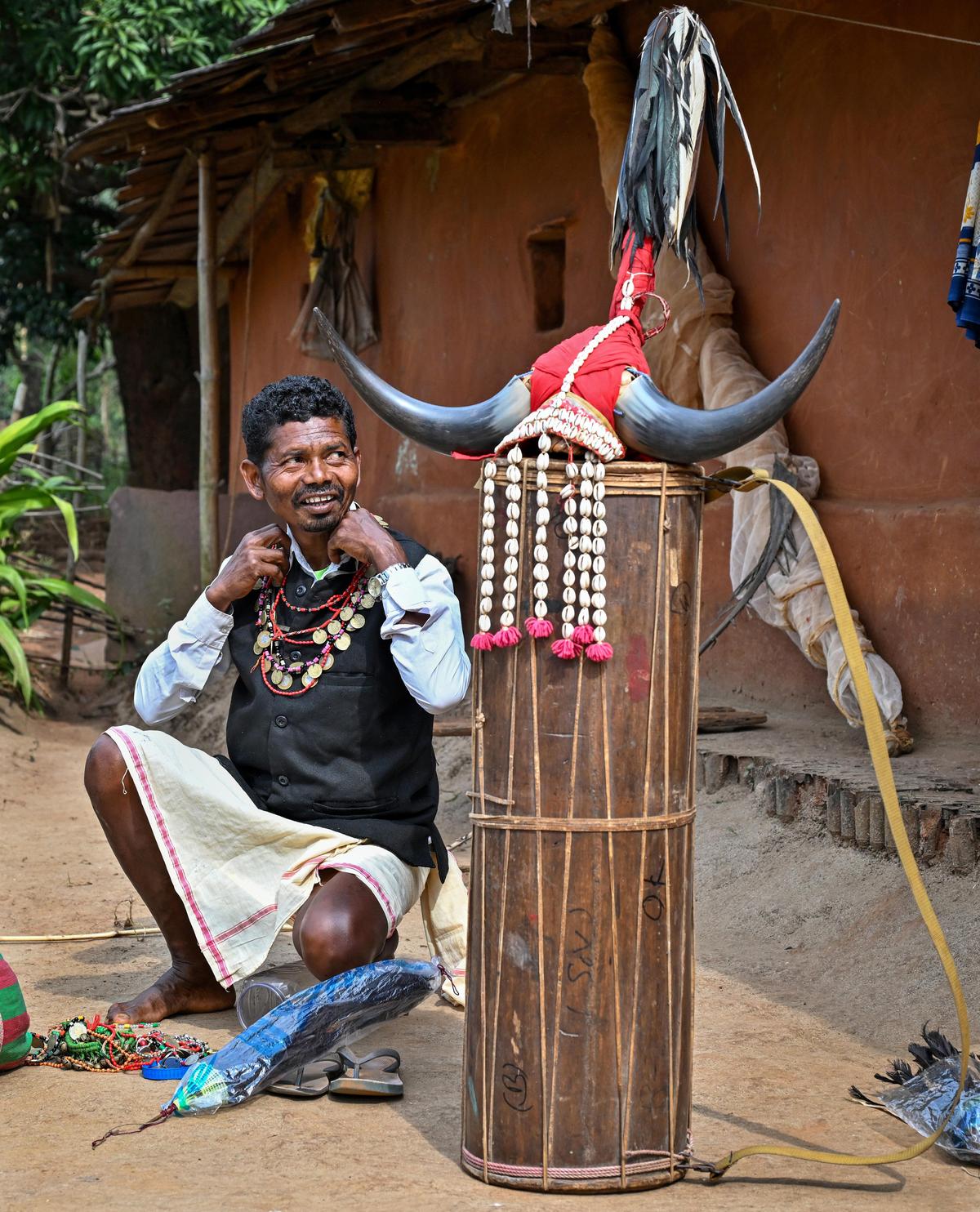
Photo:
K.R. Deepak
Getting into character: A dancer sits by a drum in front of his home, ready to wear his headgear and other accessories, in preparation for a performance at the village festival.
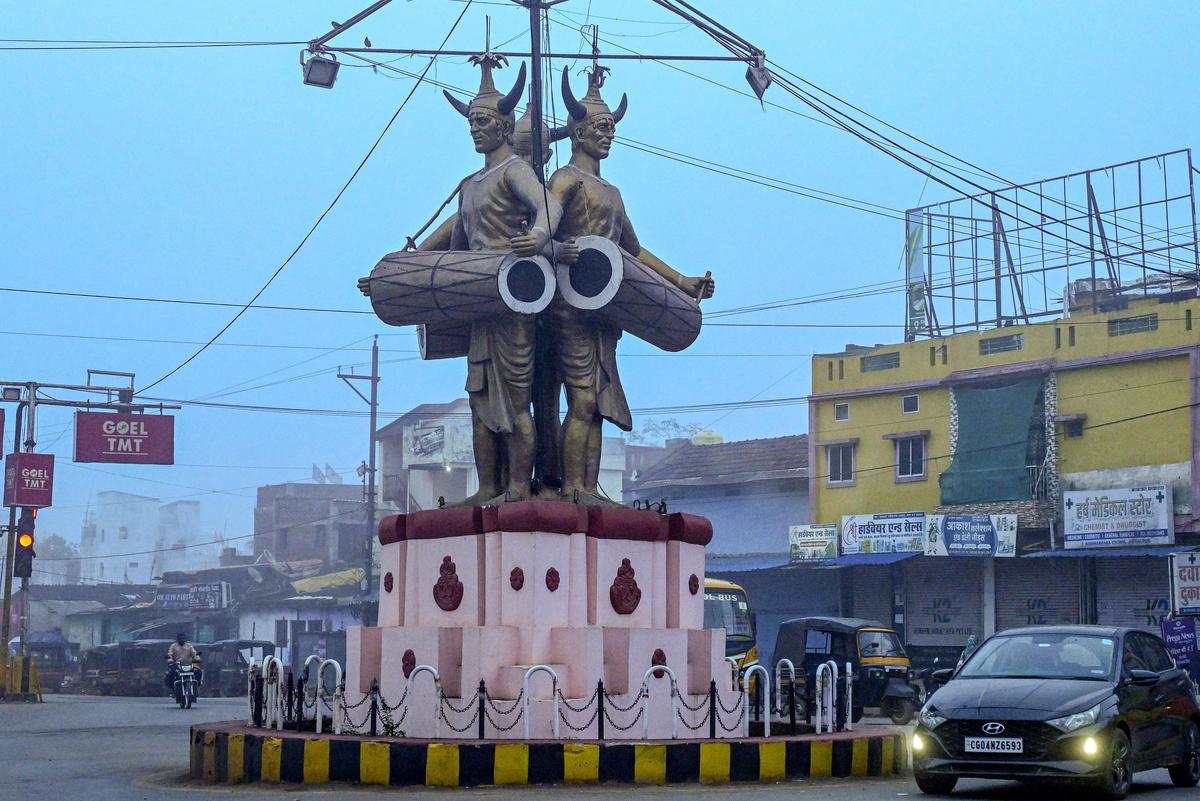
Photo:
K.R. Deepak
A symbolic reception: A sculpture of Bison Horn Maria dancers welcomes visitors at the entrance to Jagdalpur.
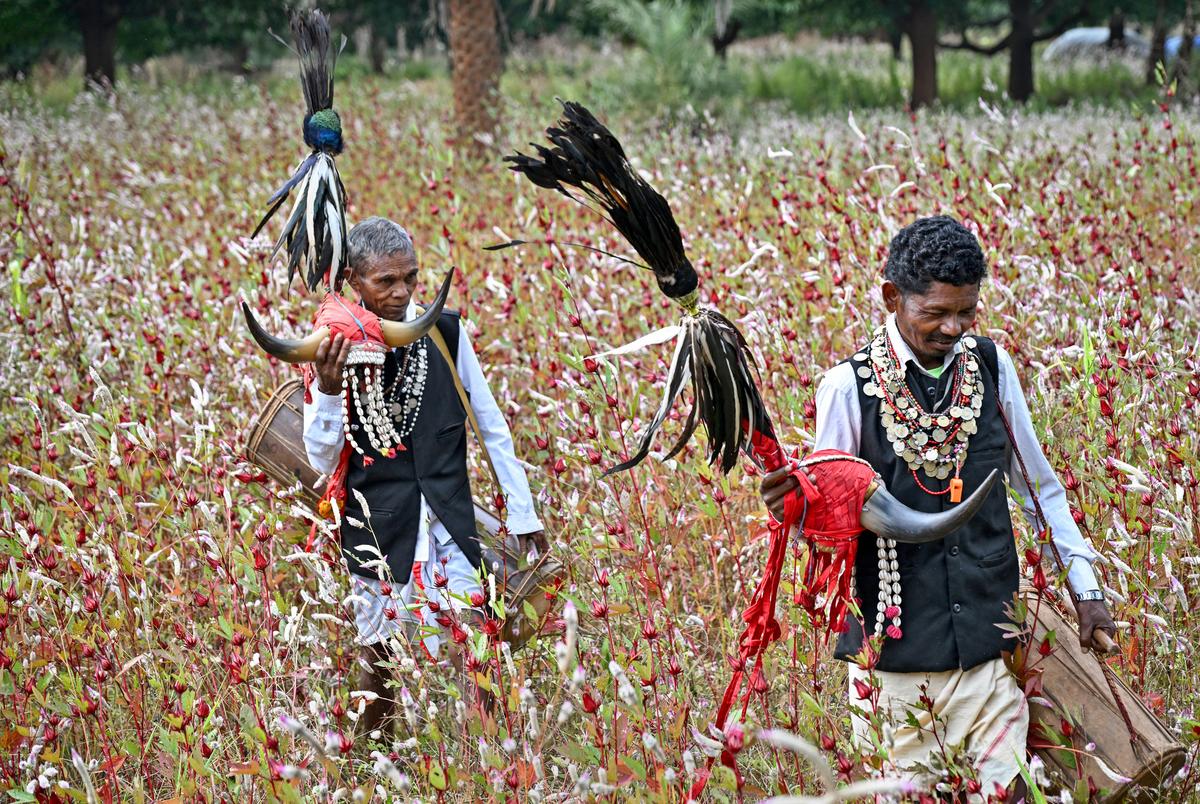
Photo:
K.R. Deepak
Bound by tradition: Two men from the tribe cross the fields on their way to perform the Bison Horn Maria dance at a village festival in Judiya Para.
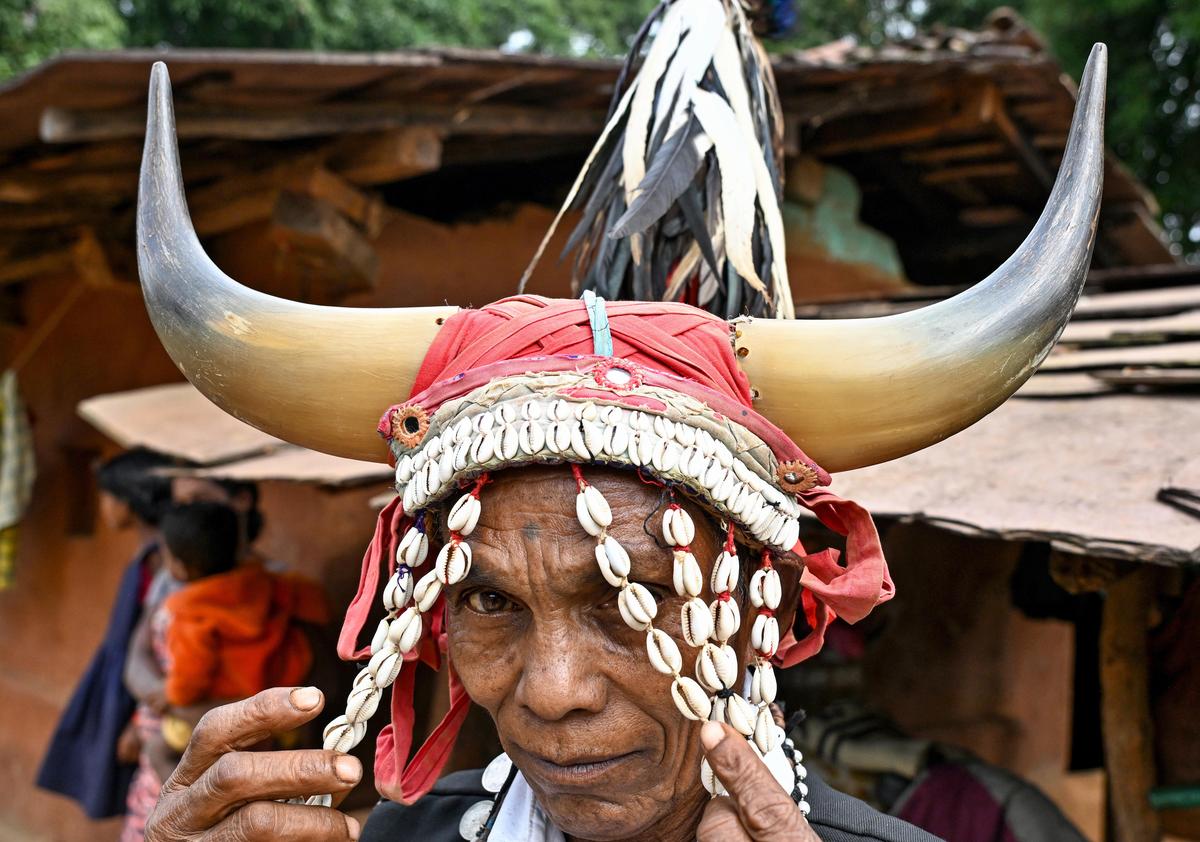
Photo:
K.R. Deepak
Intricate work: A member of the tribe shows off his elaborate horn-shaped headgear with white shells and feathers, on his way to a performance.
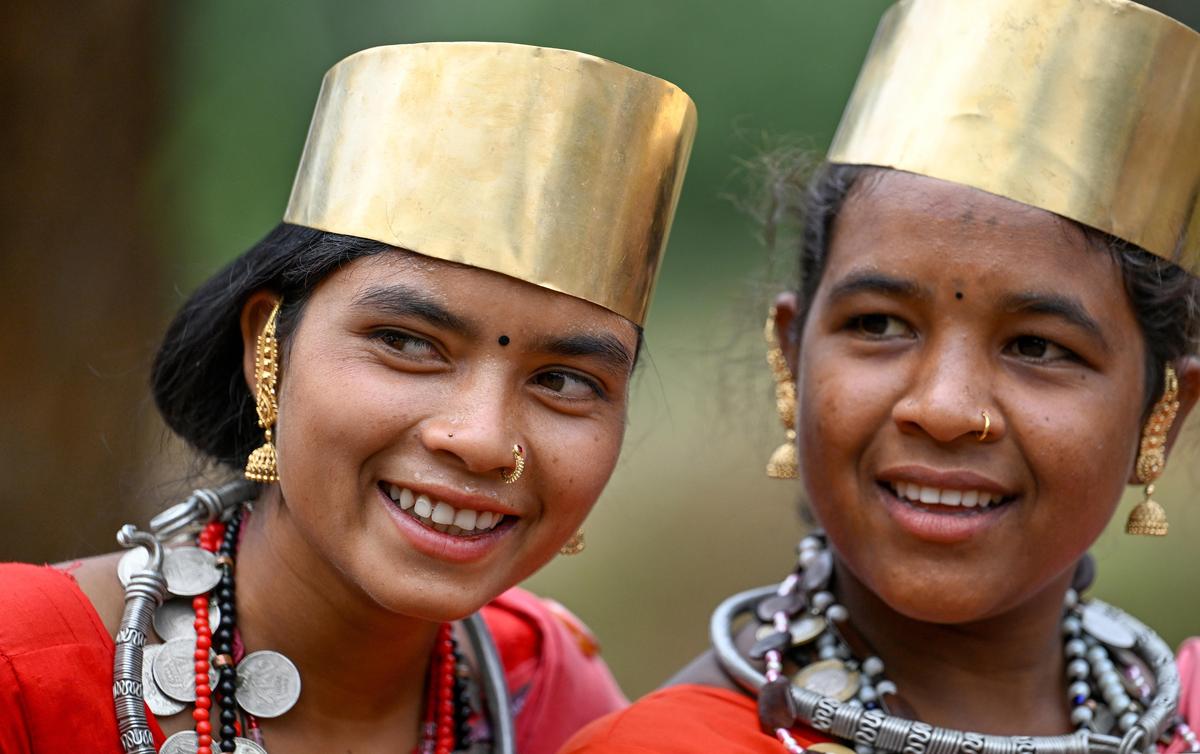
Photo:
K.R. Deepak
In high spirits: After the dance performance, two Dandami Madia women, share a light moment.
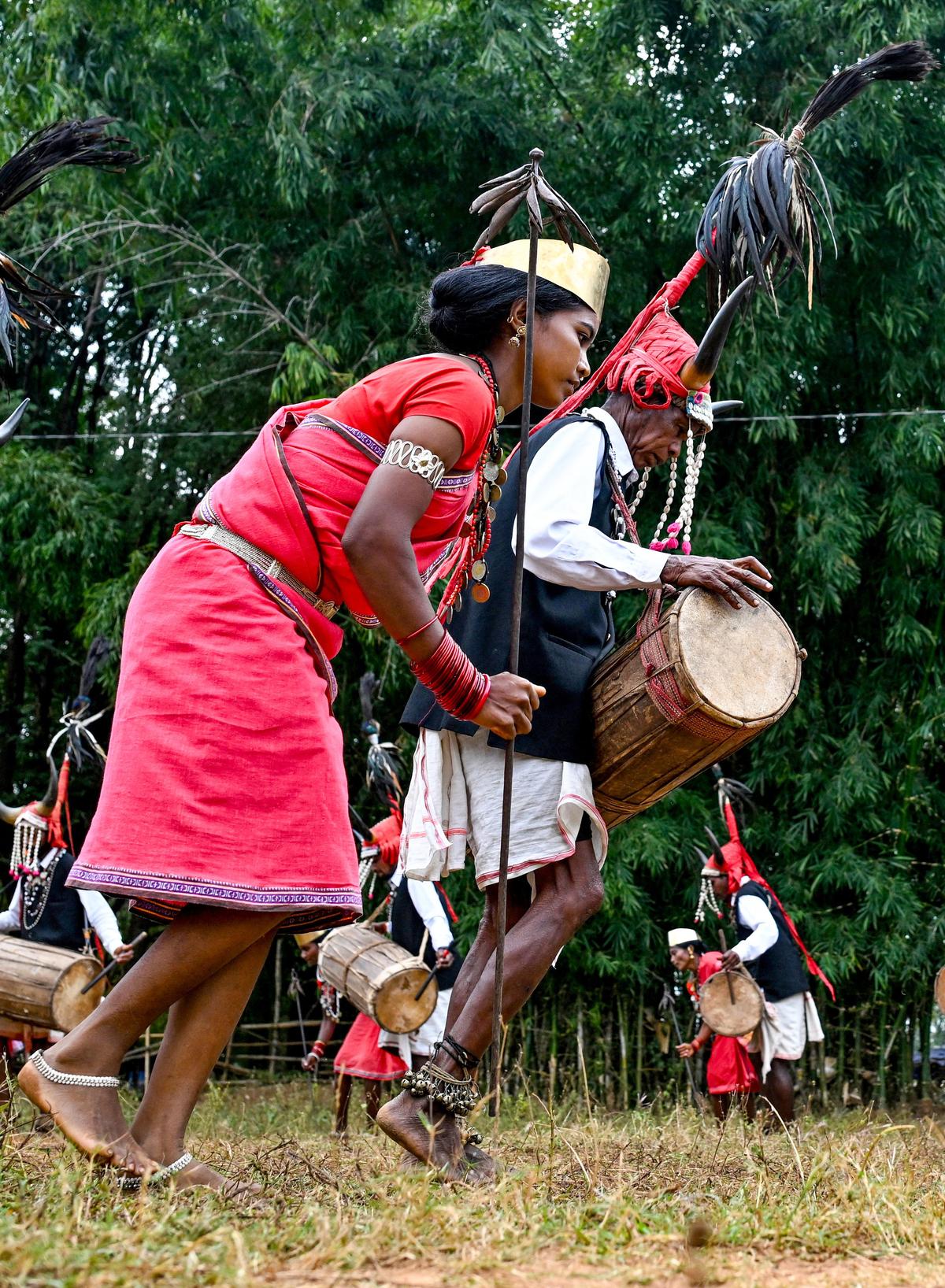
Photo:
K.R. Deepak
Festival beats: Men and women, their anklets jingling, stomp and circle, as they swirl and sway to the rhythm of the drums.
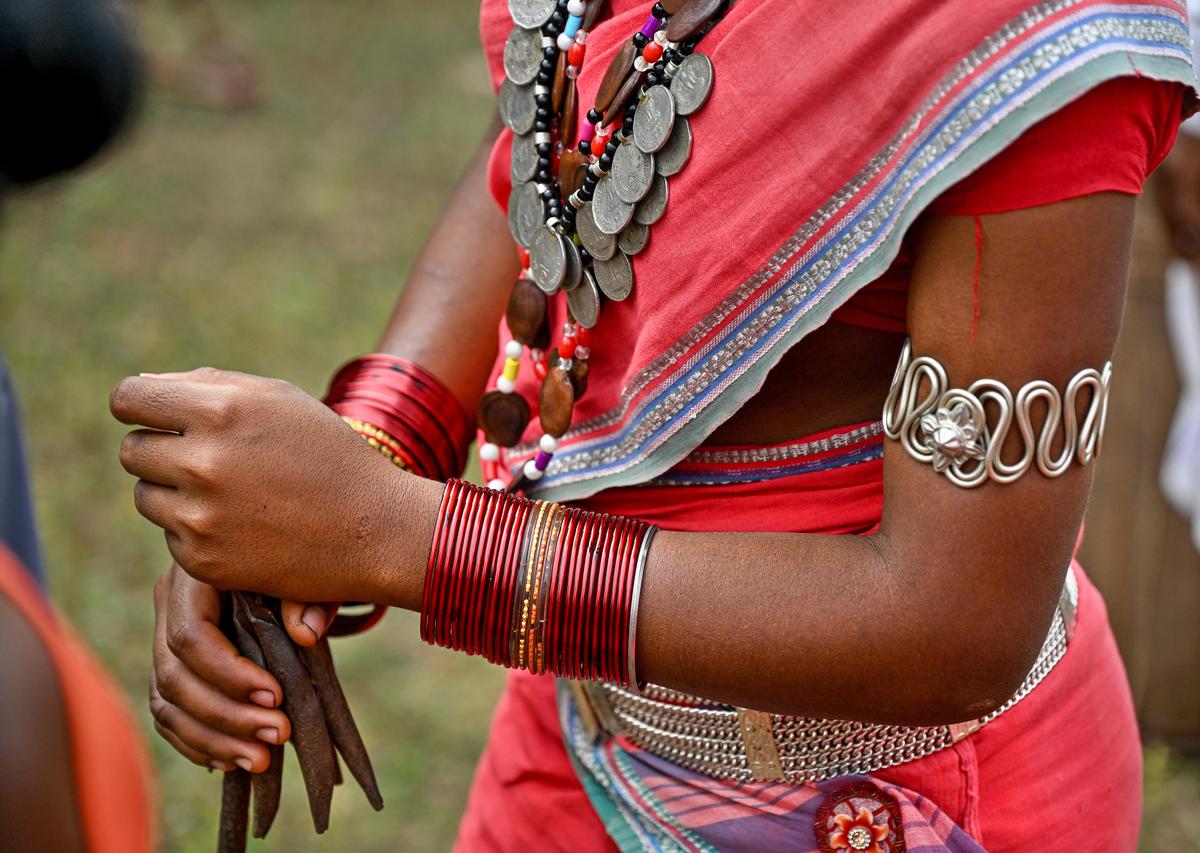
Photo:
K.R. Deepak
Layers of custom: A woman dons the traditional attire adorned with bangles, arm cuffs, a waistband and necklaces made from rupee coins.
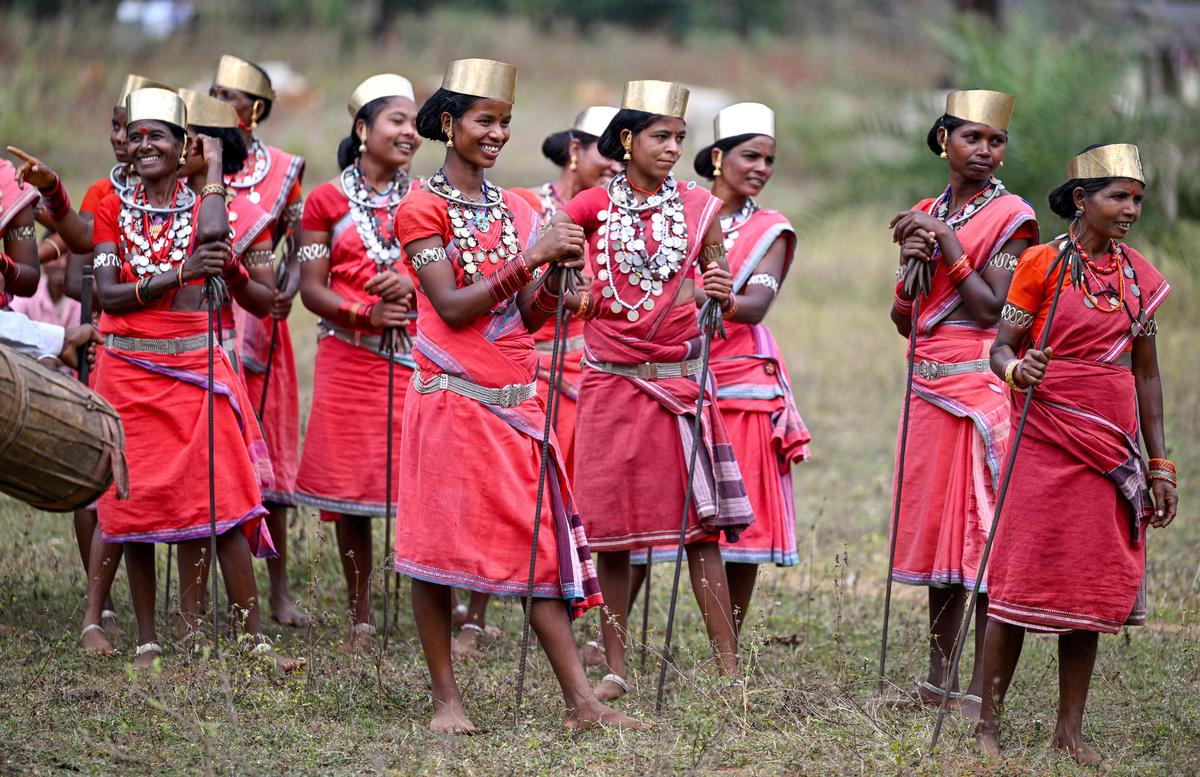
Photo:
K.R. Deepak
Ready for action: Women dancers gather ahead of the performance.
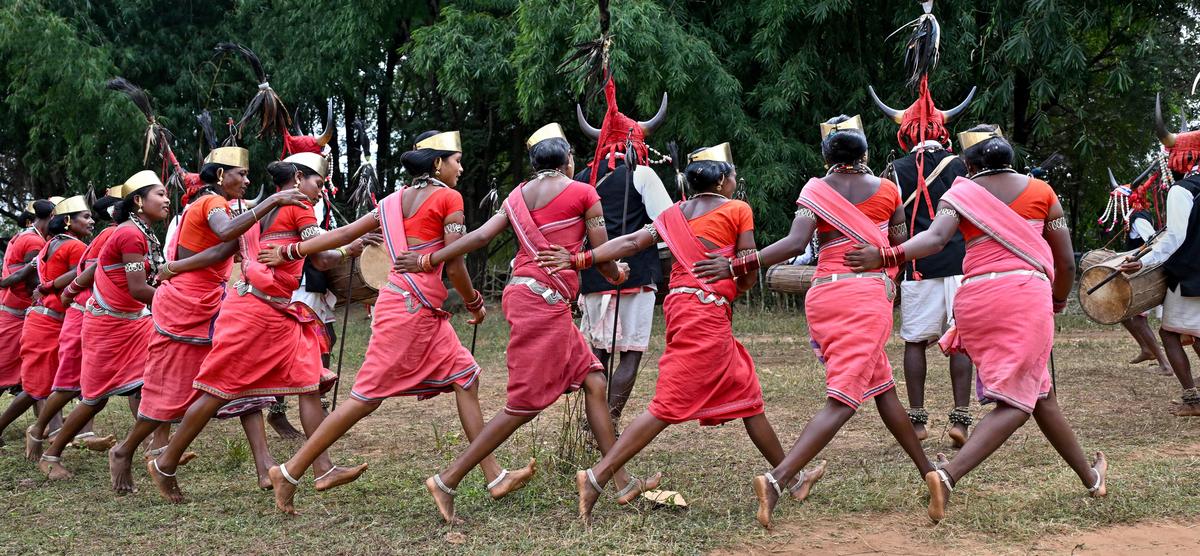
Photo:
K.R. Deepak
Step in time: Hands embracing each other, performers dance in a circle, moving in sync as drummers at the centre keep the beats alive during the festival in Judiya Para.
Published – December 14, 2025 09:37 am IST




