

By using this site, you agree to the Privacy Policy and Terms of Use.
Accept
India Times NowIndia Times NowIndia Times Now
Notification Show More
Font ResizerAa
  • Bharat Shreshtha Ratna Sanman
  • India News
  • Categories
    • Technology
    • Entertainment
    • The Escapist
    • Insider
    • Finance ₹
    • India News
    • Science
    • Health
Reading: La Niña, cold dry air from Siberia and local physics contributed to Karnataka’s winter chill
Share
India Times NowIndia Times Now
Font ResizerAa
  • Bharat Shreshtha Ratna Sanman
  • India News
  • Categories
Search
  • Bharat Shreshtha Ratna Sanman
  • India News
  • Categories
    • Technology
    • Entertainment
    • The Escapist
    • Insider
    • Finance ₹
    • India News
    • Science
    • Health
Have an existing account? Sign In
Follow US

Home » La Niña, cold dry air from Siberia and local physics contributed to Karnataka’s winter chill

India News

La Niña, cold dry air from Siberia and local physics contributed to Karnataka’s winter chill

Times Desk
Last updated: December 14, 2025 3:43 pm
Times Desk
Published: December 14, 2025
Share
SHARE


Contents
  • Why harsher
  • ‘Open window’ effect
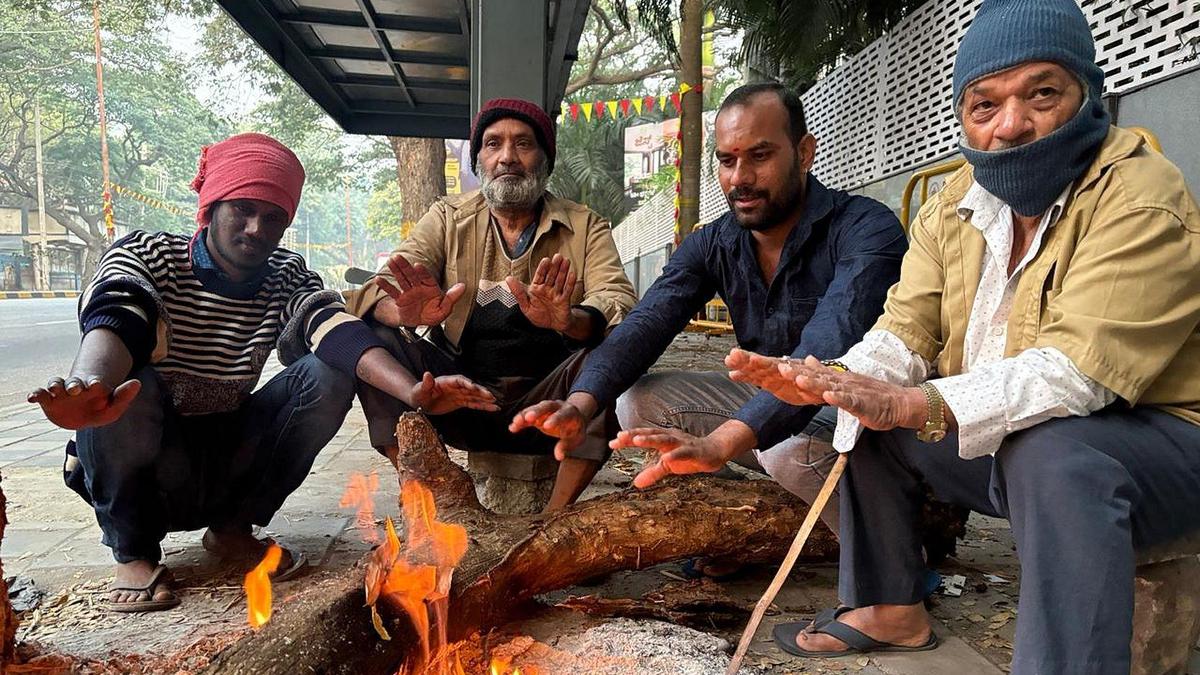
People warm themselves at a bonfire during morning cold weather in Mysuru.

People warm themselves at a bonfire during morning cold weather in Mysuru.
| Photo Credit: M.A. SRIRAM

Several districts in north interior Karnataka and Bengaluru experienced a steep drop in temperatures in the past week between December 8 and 14. What contributed to this? An India Meteorological Department (IMD) and a Bangalore Professor have decoded this.

They have cited an interplay between global La Niña conditions, synoptic advection from the Siberian High and local radiative physics for this phenomenon.

Kamsali Nagaraja, Professor at the Department of Physics, Bangalore University, and IMD Scientist Chanabasanagouda S. Patil said that to understand why a region geographically closer to the Equator experienced such biting cold, one must look thousands of kilometres away to the Pacific Ocean, where the 2025 winter unfolded under the shadow of La Niña.

The duo said that this global atmospheric phenomenon, characterised by cooler-than-average sea surface temperatures, acted as a conductor for the planetary weather orchestra.

Why harsher

It strengthened the trade winds and modified global circulation patterns, effectively loading the dice for a harsher winter over the Indian subcontinent. While La Niña set the stage, the primary actor was the Siberian High, a massive, semi-permanent collection of cold, dry air that accumulates over northern Asia. Typically blocked by the Himalayas, a specific pressure configuration this December unlocked the gates, allowing this continental air to escape its usual boundaries, the duo said.

They added that a perfect synoptic storm facilitated this southward migration of cold air, which resulted in Vijayapura district and Bidar district recording 7 °C and 7.4 °C with a departure of nearly 8°C from the normal. Besides, Bengaluru, which is usually insulated by its urban heat, saw airport temperatures drop to 12.9 °C.

Prof. Nagaraja and Mr. Patil said that the winds, however, only brought the cold air to Karnataka. They said that the extreme severity of the freeze was dictated by the microscopic physics of the boundary layer, specifically a process known as “nocturnal radiative cooling”.

‘Open window’ effect

The atmosphere during this week was exceptionally dry, particularly at the mid-tropospheric level, effectively stripping the earth of its natural blanket. Water vapour and clouds usually trap heat radiating from the ground, but with clear skies and arid air, the earth lost its warmth directly to space at a rapid rate after sunset. This “open window” effect caused the mercury to crash by 15 degrees or more from day to night, turning pleasant afternoons into biting nights, Prof. Nagaraja and Mr. Patil said.

Published – December 14, 2025 09:13 pm IST


Source link

Why is there controversy over the Central Armed Police Forces (General Administration) Bill?
Congress responsible for excluding PRLIS from AP Reorganisation Act’s Section 89, damaging Telangana’s interests: Bandi Sanjay
Woman sub-inspector among three Bengaluru police personnel trapped by ACB in Jaipur in bribery case
Looking into the continuing costs of India’s COVID-19 policy
Andhra Pradesh rides investment wave after CII Summit 2025, says Vijayawada MP
TAGGED:BengaluruChanabasanagouda S. Patilcold waveglobal atmospheric phenomenonIndia Meteorological DepartmentKamsali Nagarajakarnatakala nina
Share This Article
Facebook Email Print
Leave a Comment

Leave a Reply Cancel reply

Your email address will not be published. Required fields are marked *

Follow US

Find US on Social Medias
FacebookLike
XFollow
YoutubeSubscribe
TelegramFollow

Weekly Newsletter

Subscribe to our newsletter to get our newest articles instantly!
[mc4wp_form]
Popular News

Tamil Nadu Today newsletter: AIADMK promises free refrigerators in its manifesto

Times Desk
Times Desk
May 29, 2026
Stocks making the biggest moves after hours: AVGO, CRWD, PVH
Eleven migrants workers stranded in Dubai returns to Jharkhand; three wish to stay back
Systematic attempts in India to incite anti-Bangladesh sentiments: interim government
NCSC seeks report on Mamata Banerjee’s alleged ‘derogatory’ remark against SC community
- Advertisement -
Ad imageAd image
Global Coronavirus Cases

Confirmed

0

Death

0

More Information:Covid-19 Statistics
© INDIA TIMES NOW 2026 . All Rights Reserved.
Welcome Back!

Sign in to your account

Username or Email Address
Password

Lost your password?

