


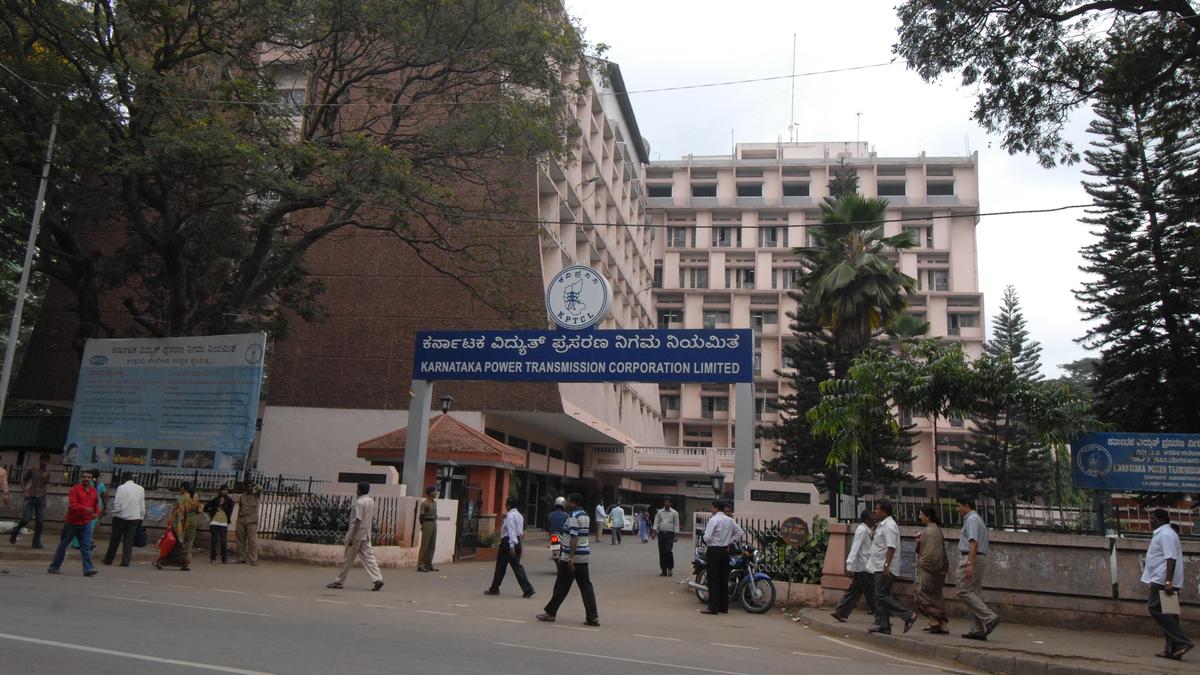
A view of the Karnataka Power Transmission Corporation Ltd building in Bengaluru. File
| Photo Credit: The Hindu
A division bench of the Karnataka High Court has set aside the single judge’s verdict, which had declared as unconstitutional the a regulation of the Karnataka Power Transmission Corporation Ltd. (KPTCL) that entrusted departmental inquiries against a delinquent employee to the inquiry wing of the Lokayukta after the corruption case was investigated by the police wing of the Lokayukta.
A division bench comprising Justice D.K. Singh and Justice S. Rachaiah passed the order while allowing the appeals filed by the Registrar of the Karnataka Lokyukta challenging the single judge’s October 16, 2024, judgement, which had declared Regulation 14-A of the Karnataka Electricity Board (KEB) Conduct, Discipline and Appeal Regulations, as unconstitutional with prospective effect.
The single judge had held that conduct of both the investigation and the departmental inquiry by the officers of the Lokayukta amounts to “inevitable bias” against the employee and offends Article 14 of the Constitution of India.
Also, the single judge had prohibited the KPTCL and the Electricity Supply Companies (ESCOMS) from assigning departmental inquiries to the Lokayukta in the matters probed by it under the Lokayukta Act or the Prevention of Corruption Act (PC Act).
However, the Bench found that the single judge’s finding was contrary to the observations made in the 2016 judgement of a division Bench, which had upheld Rule 14-A of the Karnataka Civil Services (Classification, Control and Appeal) Rules, 1957, which the KEB regulations adopted.
Pointing out that the investigation wing led by the senior police officers and the inquiry wing led by the judicial officers, though come under the administrative control of the Lokayukta, are separate and they discharge their duties independently, the bench said that “there is no real danger of bias as held by the single judge”.
The Bench also said that single judge’s observation that “the Lokayukta and Upalokayukta should not play the dual role of prosecutor as well as enquirer,” was “a result of incorrect reading’ of the provisions of the Lokayukta Act.”
Published – March 14, 2026 12:23 pm IST



