


- Why movement becomes more important with age
- Beyond flexibility: Physical and mental advantages of yoga
- A simple 20-minute routine that can fit into almost any schedule
- Tadasana (Mountain Pose)
- Parvatasana (Mountain Stretch Pose)
- Utkata Konasana (Goddess Pose)
- Siddha Walk
- Deep Yogic Breathing
- Bengaluru set to mark Yoga Day with a historic world record attempt
- Consistency matters more than intensity
Ageing is never instantaneous. Rather, it usually reveals itself through small changes that often go unnoticed at first. You may find yourself getting a little more winded while climbing stairs. Sitting cross-legged feels slightly less comfortable than it once did. Even bending down to tie your shoelaces may require more effort than before.
While these changes are a natural part of ageing, health experts believe they do not have to define how a person grows older. According to Himalayan Siddhaa Akshar, Founder of Akshar Yoga Kendraa, dedicating just 20 minutes a day to yoga can make a meaningful difference to overall fitness and well-being. The key, he says, is consistency rather than intensity.
Why movement becomes more important with age
As the years pass, muscles tend to weaken, joints may become less mobile and balance can become less stable. Modern lifestyles only add to the challenge. Long hours at a desk, low levels of physical activity and everyday stress can contribute to stiffness and reduced mobility.
Fortunately, staying active does not always require intense training sessions or lengthy workouts. Gentle movement performed consistently can be equally beneficial, especially when the goal is to maintain mobility and independence in the years ahead.
This is where yoga comes in.
Unlike many forms of exercise that focus on specific aspects of fitness, yoga combines movement, breathing and mindfulness into a single practice.
Beyond flexibility: Physical and mental advantages of yoga
Although yoga is often associated with flexibility, its benefits extend far beyond stretching muscles and joints.
Regular practice helps keep the joints mobile, muscles active and posture aligned, while also supporting healthy circulation. The controlled movements encourage the body to move naturally through a wider range of motion, which can help ease stiffness caused by prolonged sitting or inactivity.
Yoga also offers benefits beyond physical health. The combination of movement and mindful breathing can help calm the mind and reduce stress. For many people, a daily yoga session becomes as valuable for mental clarity as it is for physical fitness.
A simple 20-minute routine that can fit into almost any schedule
One of the biggest reasons people avoid exercise is the belief that they need large blocks of free time to see results. Akshar suggests that even a short routine can be effective when practised consistently.
Here are five simple practices that can be incorporated into a 20-minute yoga session.
Tadasana (Mountain Pose)
One of the simplest yet most effective yoga postures, Tadasana focuses on standing with awareness and proper alignment.
Although it appears easy, the pose helps improve posture, strengthen the legs and develop greater body awareness. Over time, it can contribute to better balance and stability, both of which become increasingly important with age.
Parvatasana (Mountain Stretch Pose)
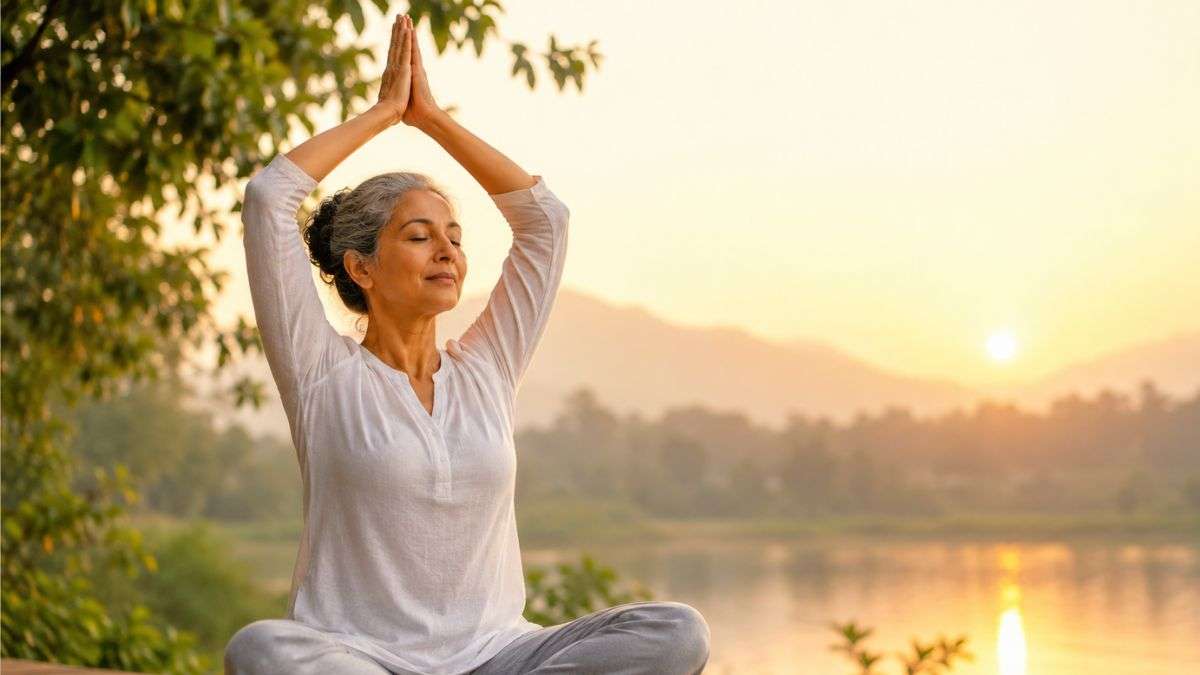
This seated stretch helps lengthen the spine while opening the shoulders and upper body.
It can be particularly beneficial for people who spend long hours working at a desk or in front of a computer. The pose improves flexibility in the shoulders, arms and spine while encouraging deeper breathing.
Utkata Konasana (Goddess Pose)
Strong legs play a vital role in maintaining mobility as we age, which is why this pose focuses on strengthening the lower body.
By engaging the legs, hips and core muscles, Utkata Konasana helps build endurance and stability. These qualities are essential for activities such as walking, climbing stairs and maintaining balance.
Siddha Walk
Unlike traditional yoga poses that involve holding a posture, Siddha Walk combines movement with awareness.
The practice involves walking slowly in a figure-eight pattern while maintaining relaxed breathing and focus. It can be particularly beneficial for improving balance, coordination and concentration.
Deep Yogic Breathing
Sometimes the most powerful practice requires the least movement.
Deep Yogic Breathing focuses on slow, controlled breaths that expand both the chest and abdomen. The technique supports lung function, improves oxygen circulation and promotes a sense of calm. It can also help reduce feelings of stress and mental fatigue.
Bengaluru set to mark Yoga Day with a historic world record attempt
The focus on healthy ageing is also reflected in this year’s International Day of Yoga celebrations.
On June 21, Bengaluru is expected to host one of the largest Yoga Day events in the country as Akshar Yoga Kendraa prepares to attempt 21 Guinness World Records in a single day. More than 5,000 participants from India and around the world are expected to take part in the celebrations.
Consistency matters more than intensity
Today’s fitness culture is often dominated by demanding workout routines and dramatic transformation stories.
Yoga offers a different approach. Rather than encouraging people to push their bodies to the limit every day, it focuses on building a sustainable habit that can be maintained over the long term.
Twenty minutes may not sound like much. Yet over weeks, months and years, those minutes can add up to stronger muscles, better balance, improved flexibility and greater ease in everyday life. Sometimes, healthy ageing is not about doing more. It is about doing the right things consistently.
Also read: 50+ International Yoga Day 2026 wishes, messages and greetings to share with loved ones



