


Amulti-course traditional mutton feast, Wazwan is a symbol of hospitality, culture, and Kashmir’s deep-rooted connections with Central Asia. The feast is traditionally prepared for weddings, festivals, and other grand occasions. The word wazwan is derived from two Persian terms — waza, meaning “cook,” and wan, meaning “shop” or “place.”
The wazas, or master chefs, have inherited their exceptional culinary skills through generations. They are in high demand during the wedding season, which begins in spring and continues until late autumn in Kashmir.
The preparation ofwazwanis an elaborate process that begins long before the guests arrive. Under the supervision of the head chef, a team of cooks works together — often through the night — to create a variety of dishes, ranging from the basic course of seven to more than 36, depending on the host’s means and the chef’s creativity.
Lamb is the main ingredient in this feast, and its signature dishes include rista(soft meatballs in red gravy), roganjosh(spiced lamb curry), gushtaba(minced mutton balls in yoghurt sauce), and tabakh maaz(fried lamb ribs). Each dish is cooked in large copper utensils called deegover firewood, which imparts a distinctive aroma.
The meat is traditionally pounded overnight on flat stones — a unique preparatory technique that enhances texture and flavour.
Guests are seated in groups of four around large copper plates called tramis, heaped with fragrant rice and topped with the array of delicacies.
Before and after the meal, the hosts offer a mobile basin called tash naerfor guests to wash their hands — a ritual that embodies cleanliness and respect.
The waywazwanis prepared, served, and shared represents far more than a meal; it is a cherished expression of Kashmiri hospitality — a gesture of warmth, intimacy, and honour.
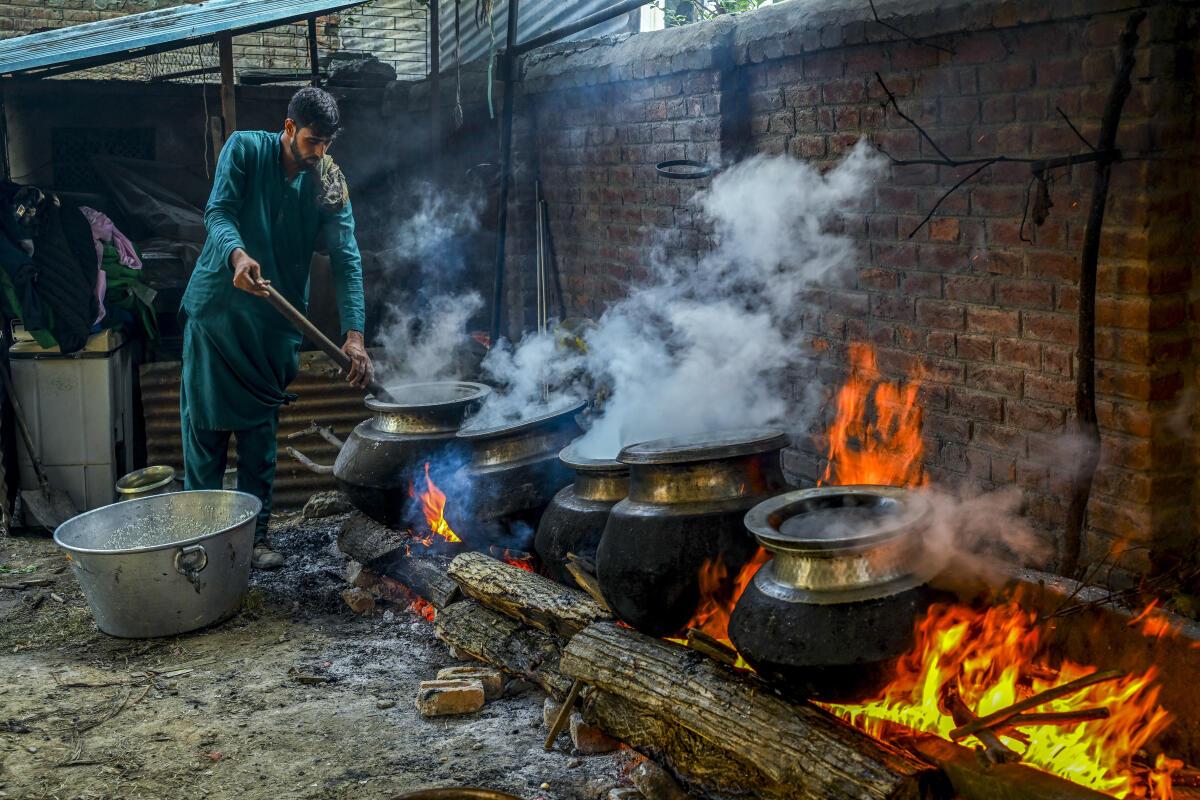
Photo:
Imran Nissar
Cauldrons of flavour: Steam hisses and curls over the deegs lined over the wood fire as a waza oversees the dishes.
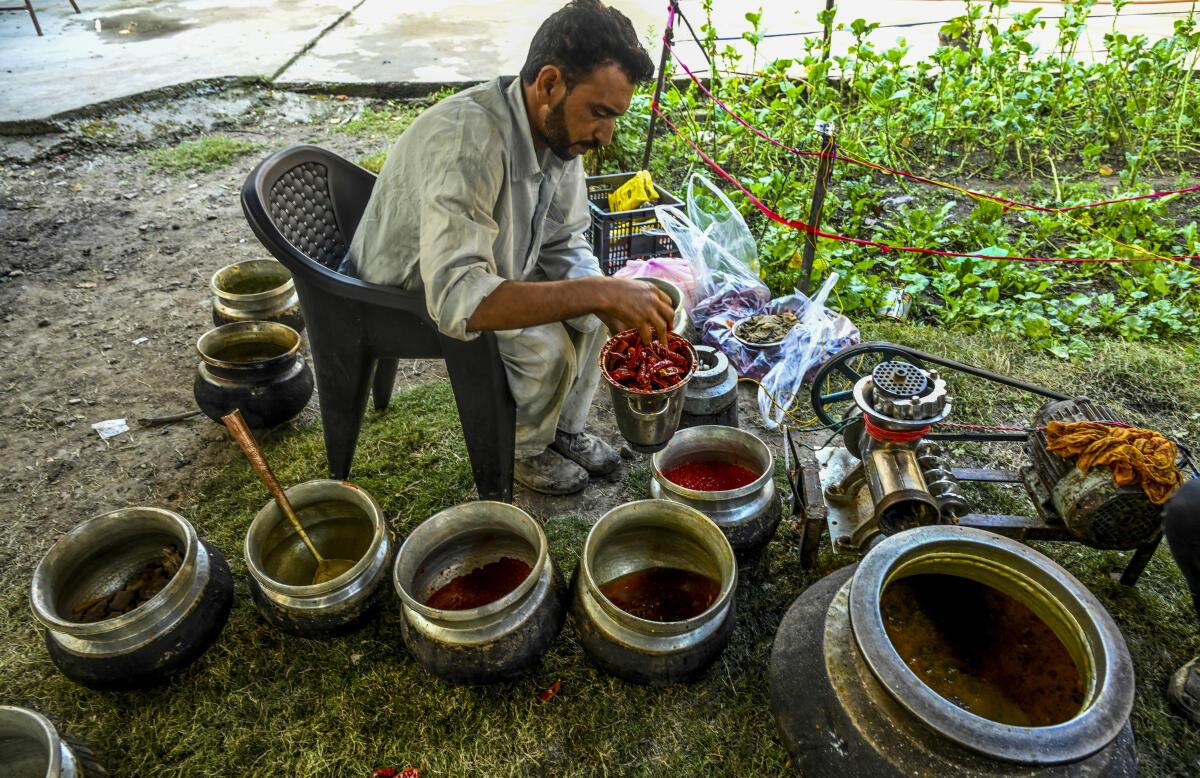
Photo:
Imran Nissar
A Kashmiri chef or Waza pre-preps (putting in place) ingredients before getting into cooking of the
wazwan during a wedding ceremony in Srinagar.
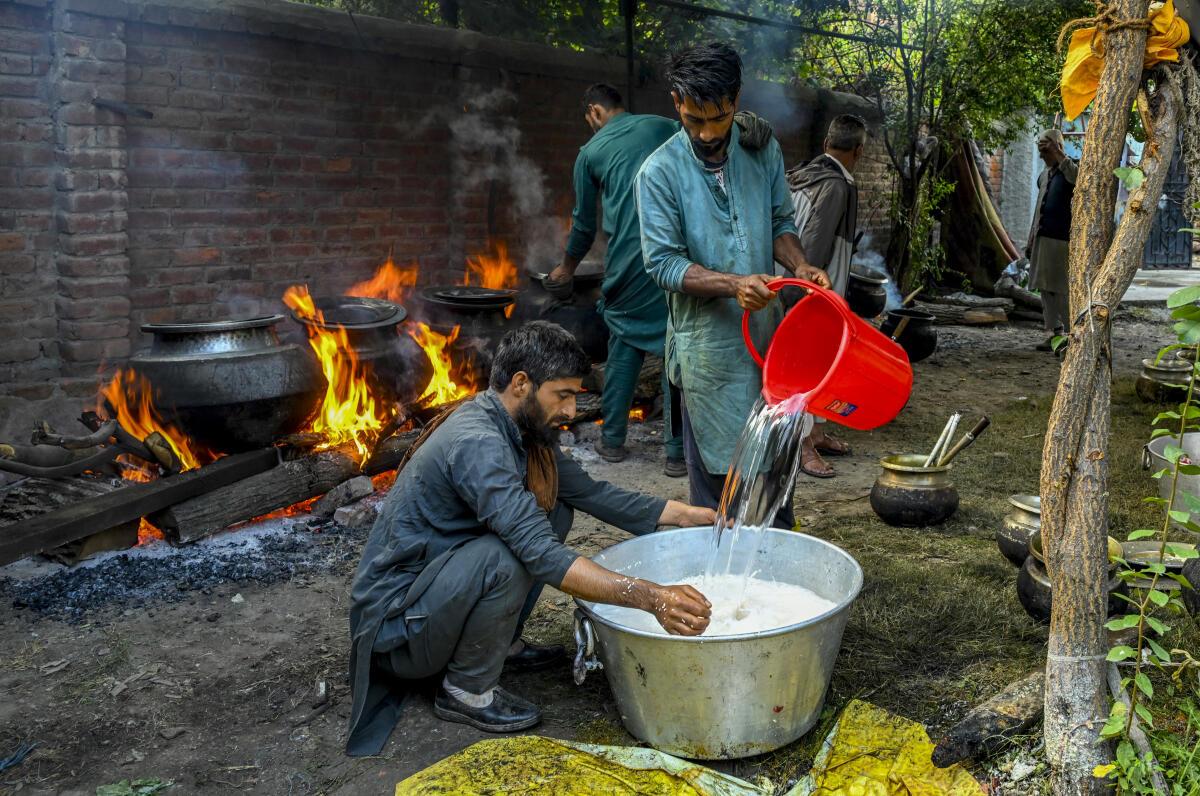
Photo:
Imran Nissar
Team work: In the outdoor kitchen, a chef pours water into a large vessel full of rice while his partner
rinses it. The steamed rice will be served along with mutton dishes.
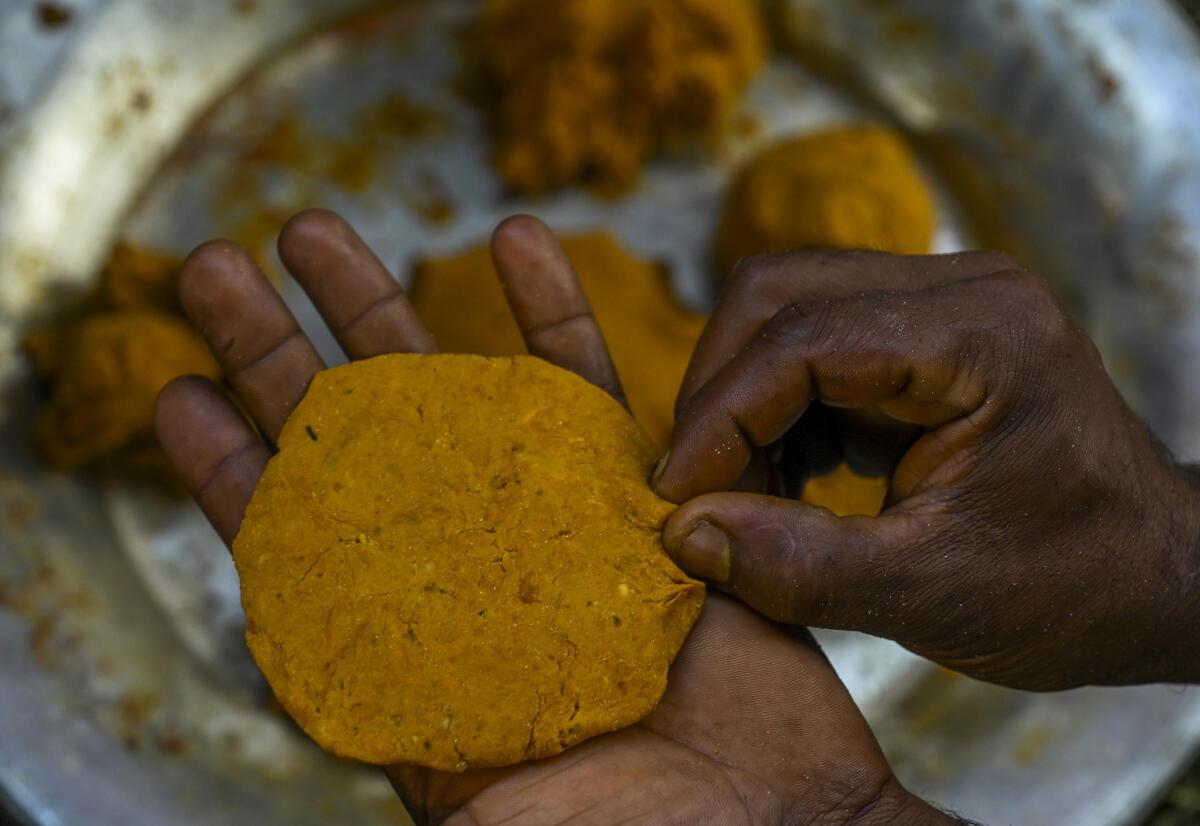
Photo:
Imran Nissar
One at a time: In skilled hands, shami kebabs-to-be are carefully
shaped to perfection for the wedding banquet.
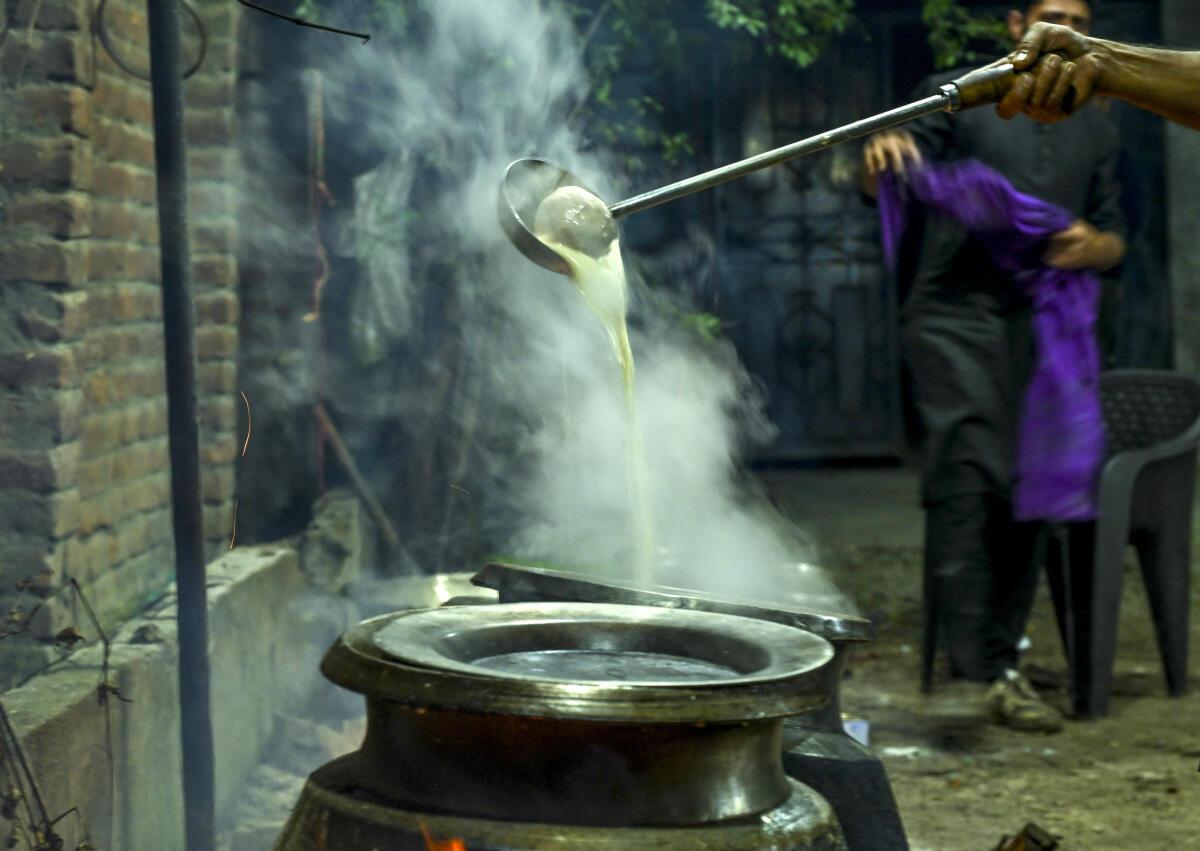
Photo:
The Hindu
Soulful swirls: Rich and aromatic fragrance of the gushtaba fills the air from a gleaming copper deeg as a waza slowly stirs it to a simmer.
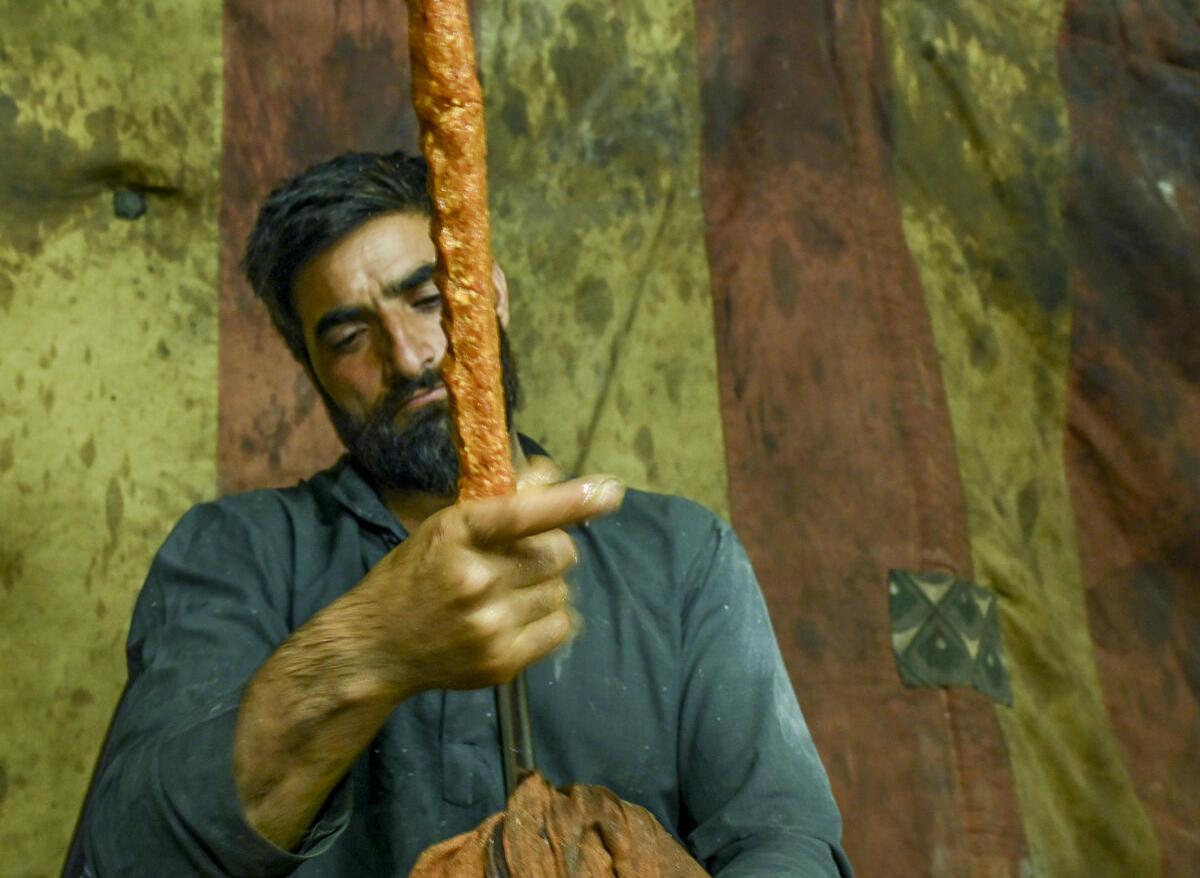
Photo:
Imran Nissar
In seasoned hands: A waza deftly threads seekh kebabs onto a
metal rod, before he grills them to juicy tenderness.
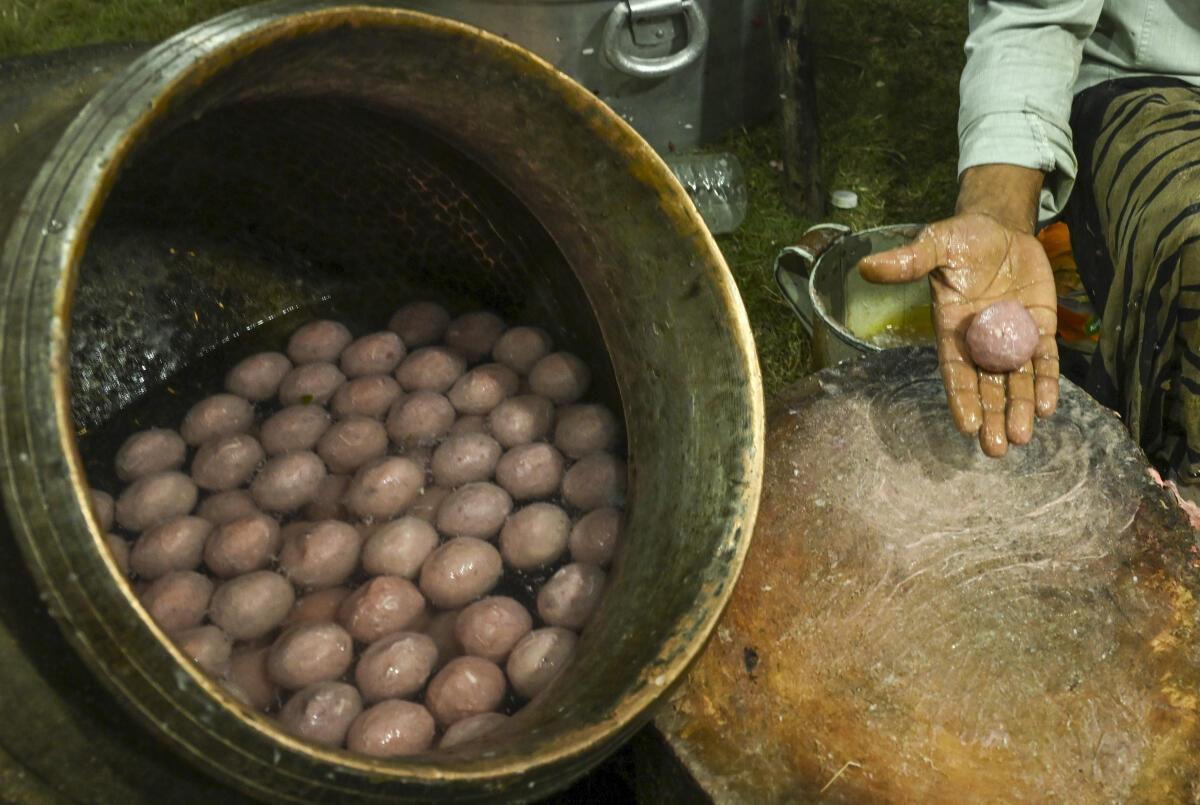
Photo:
Imran Nissar
Traditional taste: Meatballs are prepared to go into the Kashmiri Rista, an essential dish of the
wazwan, in Srinagar.
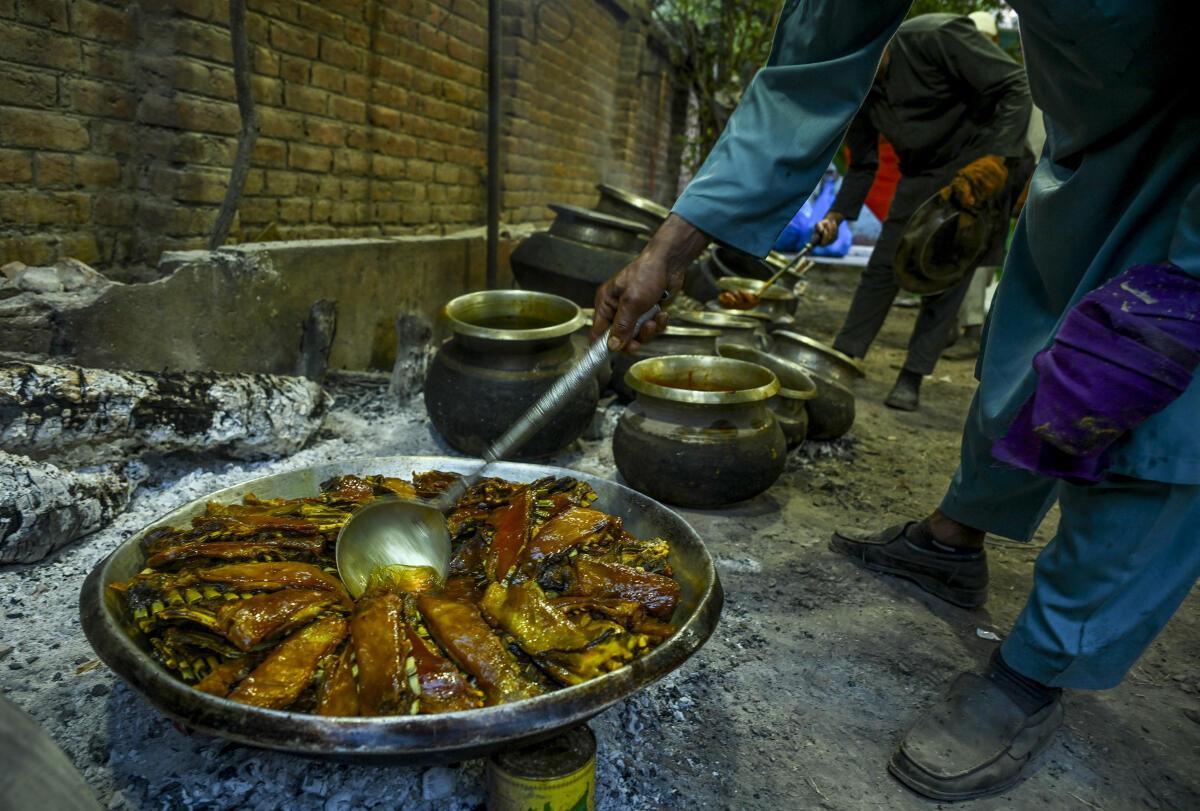
Photo:
Imran Nissar
A smoky shimmer: The head chef pours sizzling hot oil onto
chopped lamb ribs in the tabakh maaz.
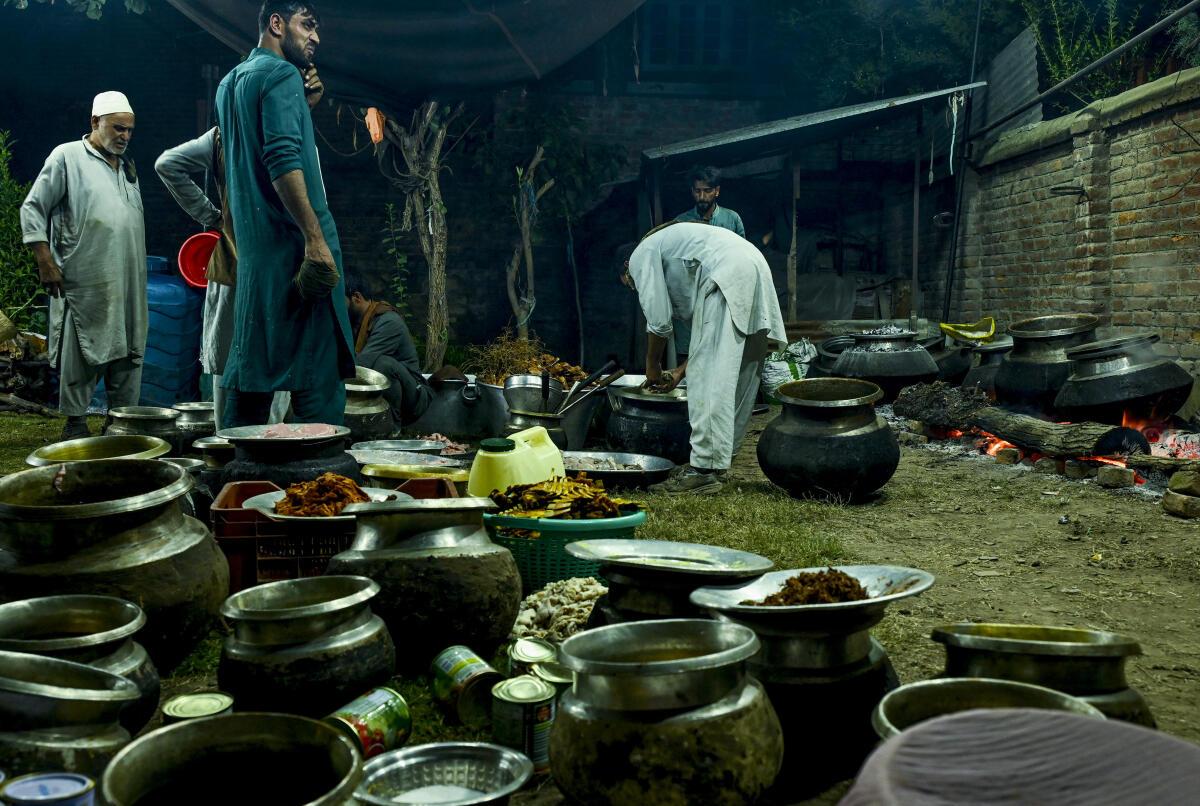
Photo:
Imran Nissar
Labour of love: The open-air kitchen hums with activity as practised wazas meticulously cook the
elaborate dishes of the wazwan for the wedding guests.
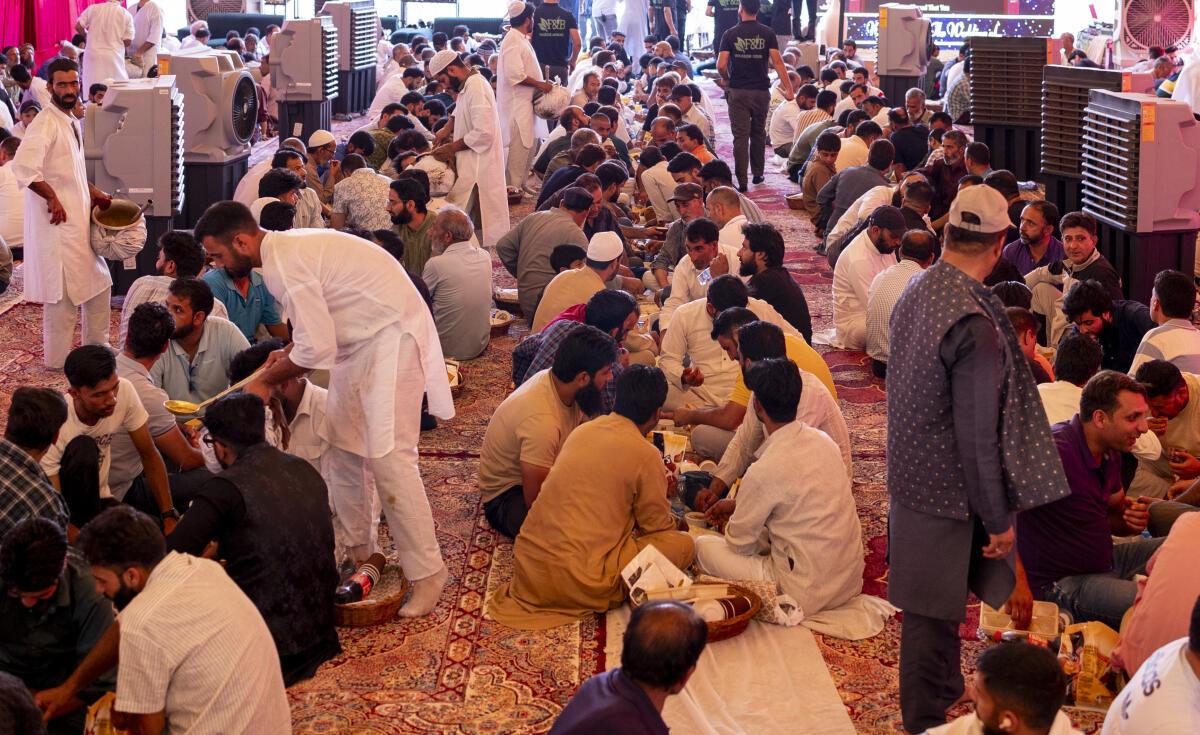
Photo:
Imran Nissar
Spirit of togetherness: The guests are seated in quartets around copper platters overflowing with fragrant rice and an assortment of
delicacies. The tradition encourages friends and strangers to share a meal.
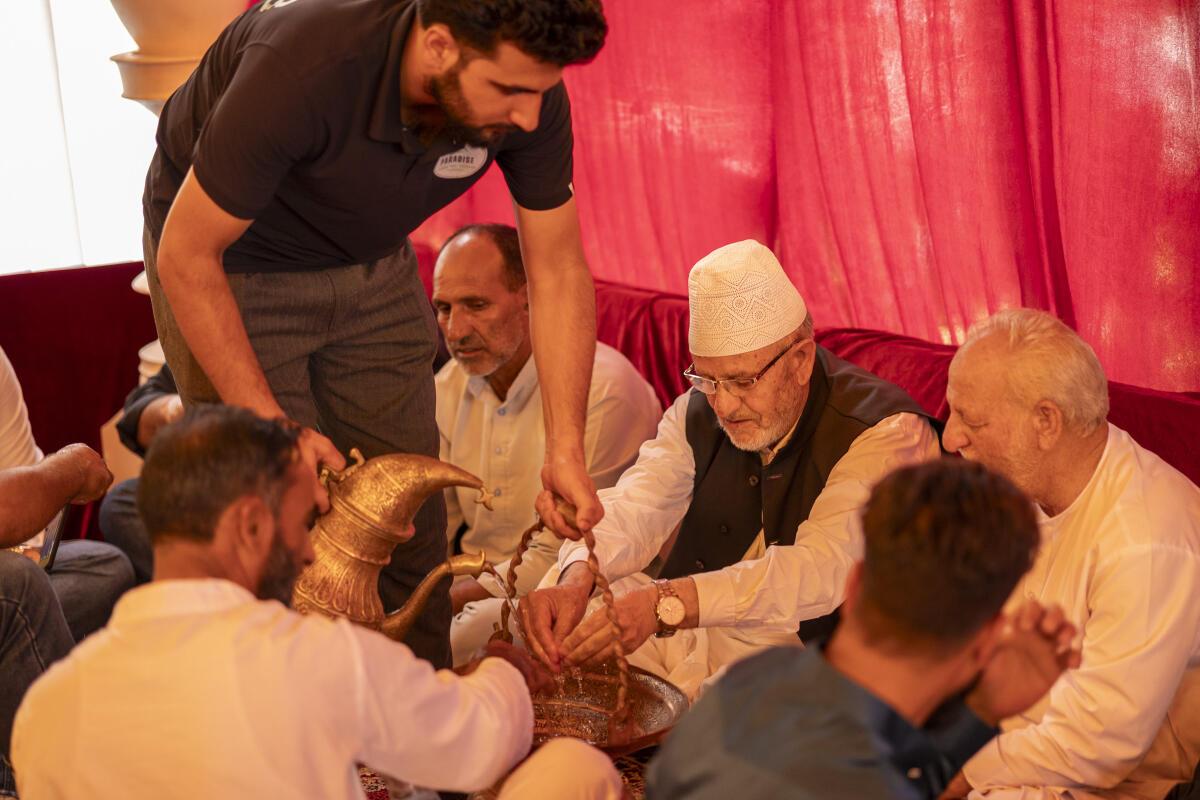
Photo:
Imran Nissar
Lavish hospitality: Guests are offered ‘tash naer’ to wash their hands before the group meal. This ceremony is repeated when the wazwan
ends as well.
Published – November 02, 2025 11:27 am IST



