


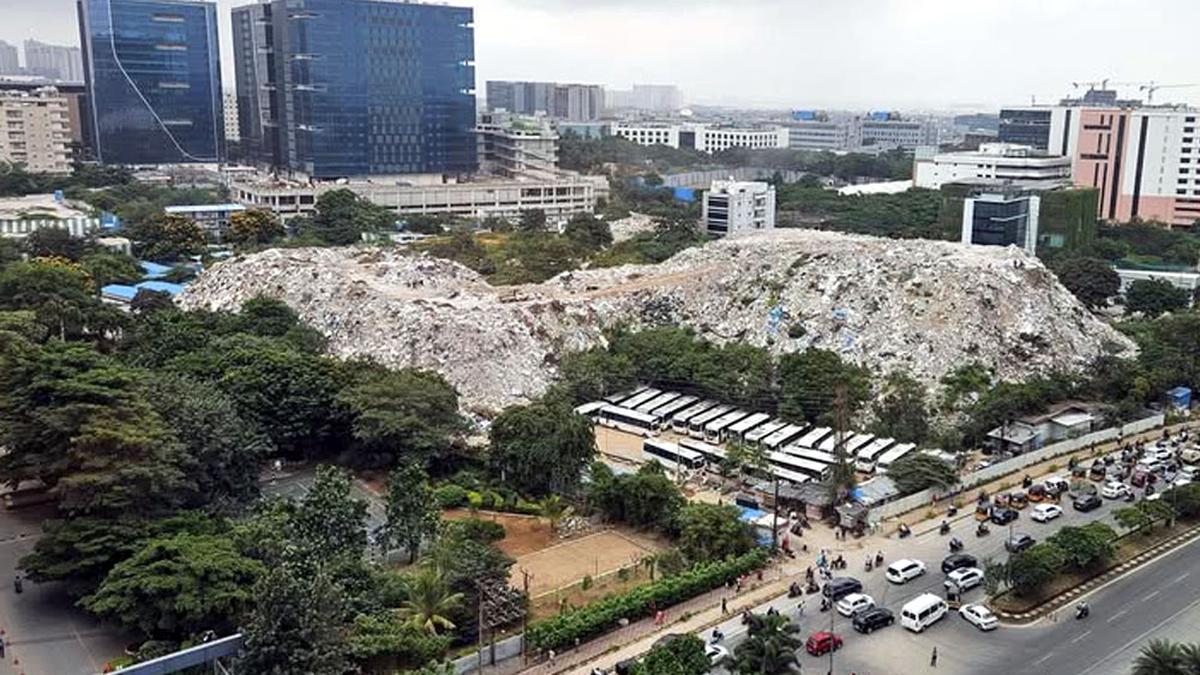
Mountains of construction and demolition waste rise beside Hyderabad’s IT corridor near IKEA in Gachibowli, where officials estimate nearly 15 lakh tonnes of debris has accumulated over the years. Photo: Special Arrangement
On the road leading to Hyderabad’s gleaming IT corridor near IKEA in Gachibowli, the skyline abruptly changes. Glass office towers and premium commercial complexes give way to mountains of debris. Piles of broken concrete, soil and construction waste now rise to the height of six- to seven-storey buildings, forming what has easily become one of the city’s largest urban dumping crises.

For thousands who pass through the stretch every day, the heaps have become part of the landscape. But officials now estimate that nearly 15 lakh tonnes of construction and demolition (C&D) waste may have accumulated in the area over the years, so much that even under ideal conditions, clearing it could take more than a year.
The problem is no longer just about waste. It has evolved into a complicated question involving logistics, cost, environmental sustainability, accountability and an unresolved land dispute that continues to delay long-term action.
Cyberabad Municipal Corporation (CMC) Commissioner G. Srijana said authorities are currently weighing two broad approaches to tackle the issue, each carrying its own operational and financial challenges.
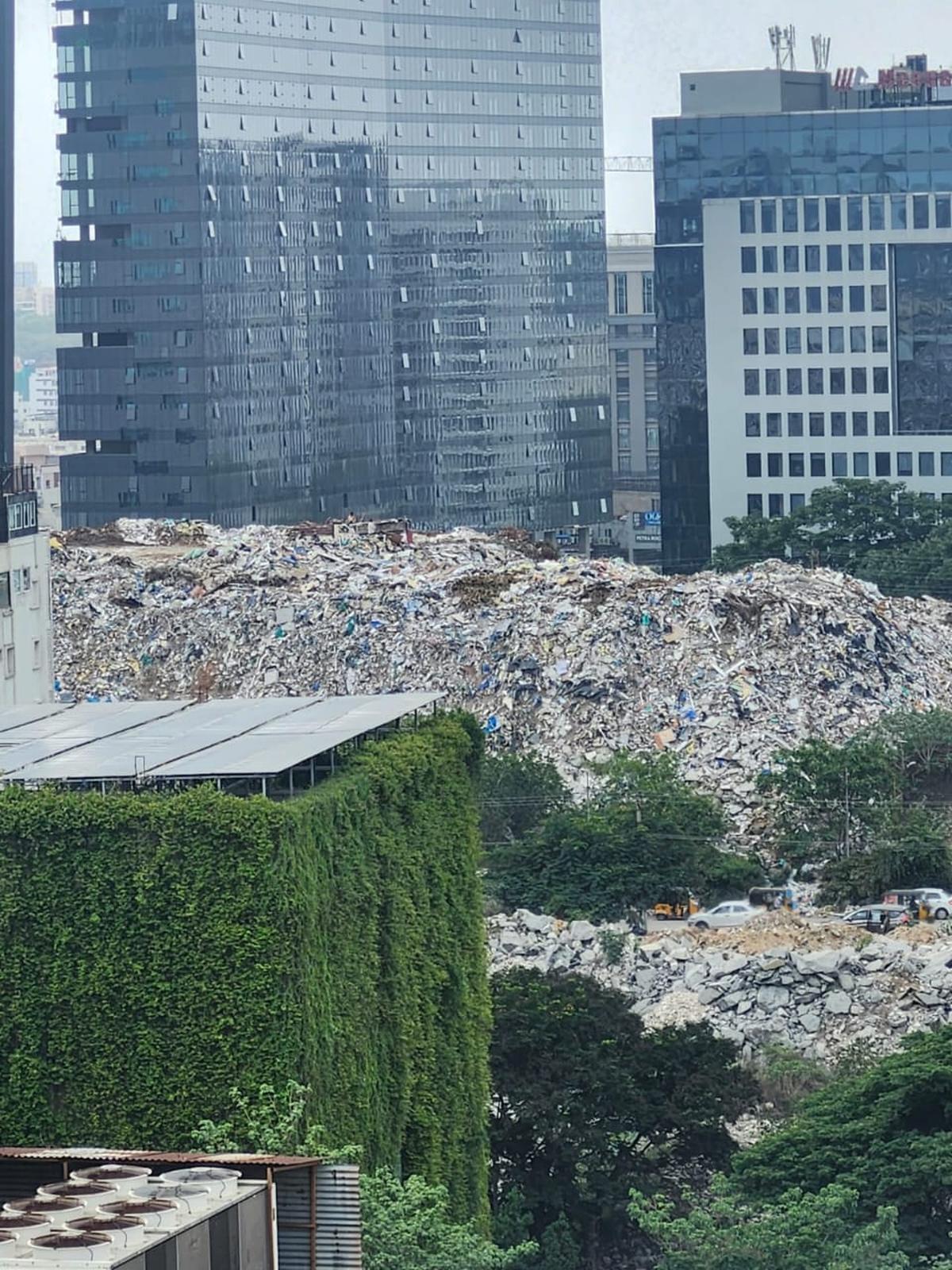
A massive heap of construction and demolition waste stands amid commercial towers near Hyderabad’s IT corridor in Gachibowli, highlighting the scale of the city’s growing urban waste challenge. Photo: Special Arrangement
One option is to process the debris directly at the site. Construction waste, if systematically handled, can be converted into reusable materials such as manufactured sand and other aggregates that can be fed back into the construction ecosystem. “This approach is environmentally sustainable and reduces the need to identify fresh dumping locations elsewhere in the city,” she said.
However, the process is slow. Given the volume of waste already accumulated, on-site processing would require sustained operations over several years along with significant infrastructure and machinery support.
The second option is to remove the debris entirely from the location. On paper, that appears to be the faster solution. In practice, it presents a logistical challenge of an entirely different scale. “Transporting thousands of tonnes of debris every day would require a constant movement of heavy vehicles through one of Hyderabad’s busiest traffic corridors,” said Ms. Srijana adding that transportation operations are restricted by road conditions, congestion and limited operational windows, making round-the-clock clearance virtually impossible.
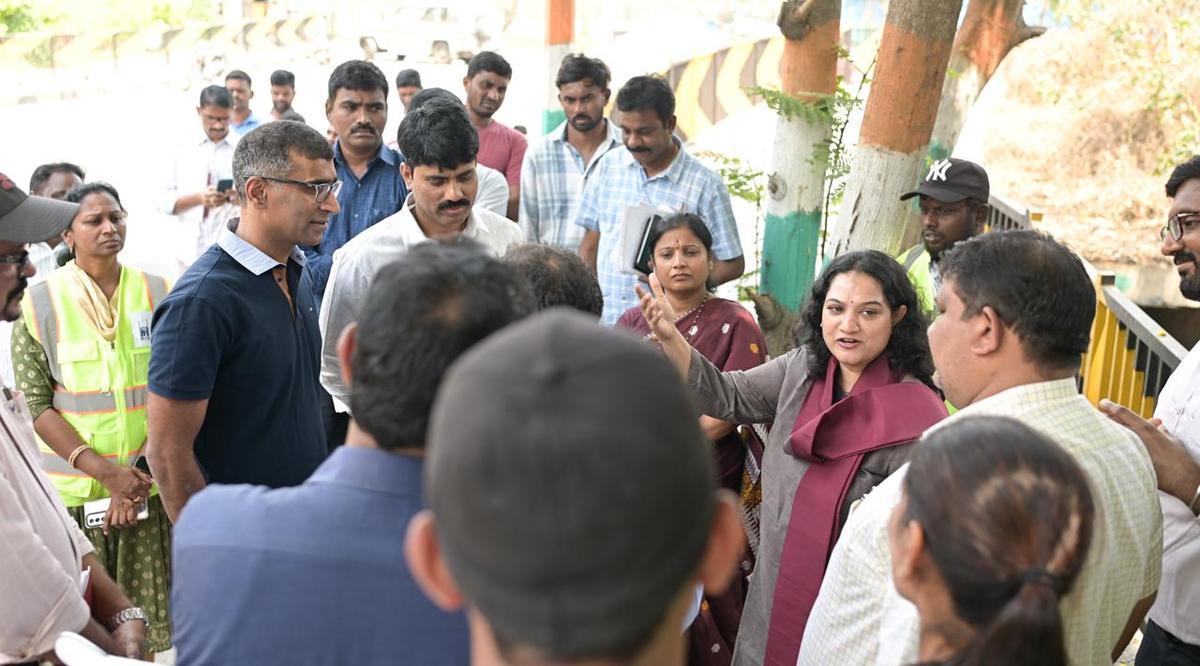
Cyberabad Municipal Corporation (CMC) Commissioner G. Srijana inspecting the debris site in Gachibowli. Photo: Special Arrangement
“We estimate that addressing the issue could require an expenditure ranging between ₹70 crore and ₹90 crore. What looks like a dumping ground is actually a highly complex urban management issue involving environmental concerns, infrastructure limitations and legal complications,” she added.
Beneath the visible crisis lies an even more complicated dispute. The land on which the debris has accumulated remains under litigation between government authorities and private parties, leaving ownership unclear and restricting the scope of decisive intervention. Ms. Srijana said that while assessments and planning exercises are underway, a comprehensive and permanent solution cannot be implemented until the ownership dispute is resolved through the courts.
Published – May 09, 2026 12:56 pm IST



