


Is the LPG cylinder delivered to your home actually carrying the amount of gas you paid for, or is it part of a wider black-market diversion network thriving on a fabricated shortage narrative across Hyderabad? Investigators say multiple illegal supply chains involving delivery personnel, intermediaries and local operators are siphoning cylinders from authorised distribution channels and rerouting them into the black market, where households, roadside vendors and restaurants are allegedly being forced to pay inflated prices amid an artificially created perception of scarcity.

Hyderabad police and task force officials clarified that there is no actual shortage of LPG supply in the city and that local-level diversion by agency staff and intermediaries is creating a false perception of scarcity to exploit customers.
The issue has come under renewed scrutiny following multiple recent cases, including the seizure of 129 commercial cylinders worth ₹7.5 lakh in Secunderabad earlier this week, where four persons, including two delivery boys, were arrested for allegedly diverting authorised stock and selling it in black.
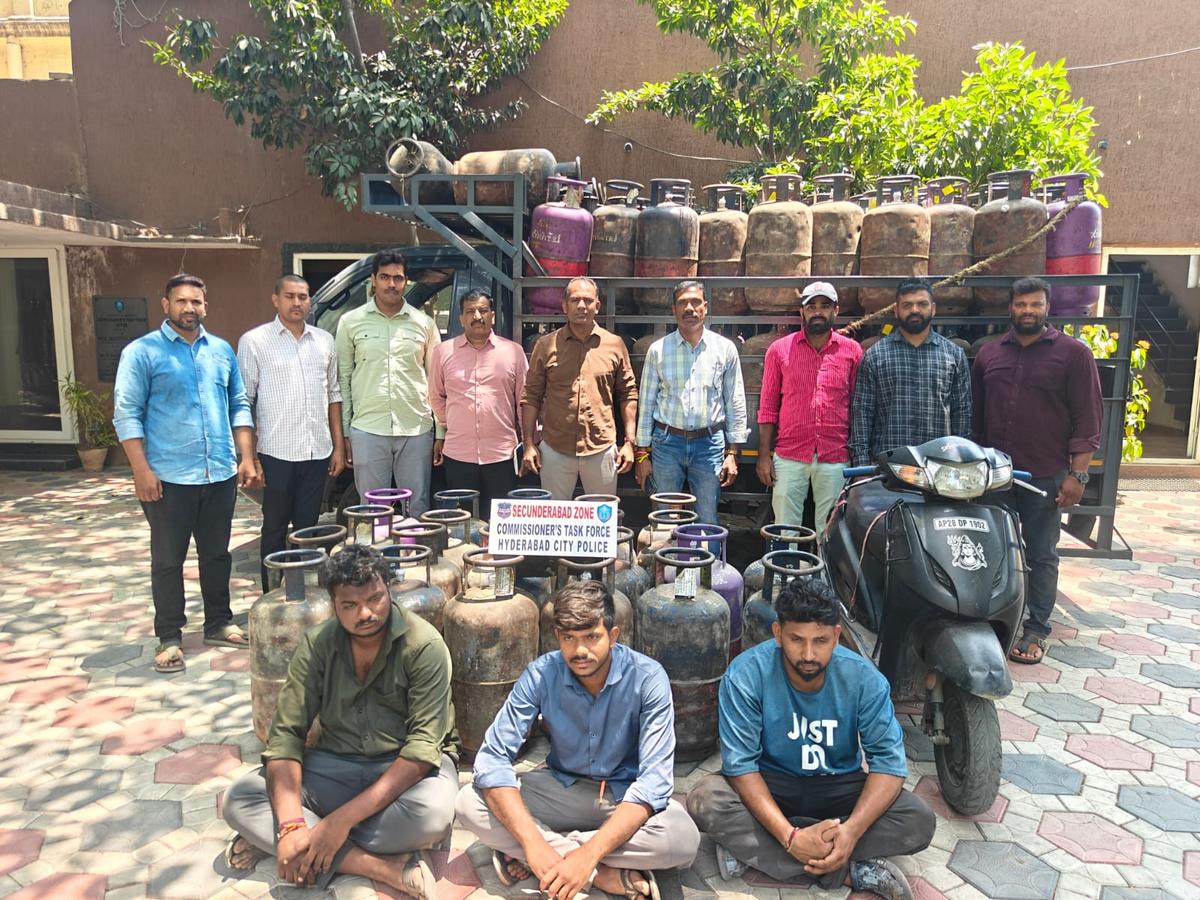
Commissioner’s Task Force, Secunderabad Zone, along with Gandhi Nagar police seized 129 cylinders and transport vehicles worth ₹7.5 lakh from a gang selling cylinders at inflated prices illegally.
| Photo Credit:
By Arrangement
Deputy Commissioner of Police (Task Force) Vaibhav Gaikwad said a meeting was held on Wednesday (May 6, 2026) with gas agencies and sales managers to review the complaints.
“Commercial cylinder sale is fully permitted. Restaurant owners can purchase any number up to 100 kilos, depending on their requirement. Some restaurants require 10 cylinders a day, while others may need only three. The agencies and sales managers have clarified there is no shortage in supply,” he said.
According to Mr. Gaikwad, the shortage narrative is being fabricated at the delivery level. “Artificial scarcity is being projected by some agency personnel and delivery boys. They divert stock and route cylinders through unauthorised intermediaries, who then sell them to roadside vendors and small establishments for ₹5,000 to ₹6,000 per cylinder, though the actual commercial rate is around ₹3,315,” he said.

He said delivery personnel had emerged as the main link in several cases detected by the task force.
“The maximum nuisance is from gas delivery boys. In some cases, they are supplying multiple cylinders to non-commercial persons, who then resell them to roadside vendors for profit,” an officer from the TasK Force said.
Police officials said subsidised domestic cylinders were also being diverted into the commercial market. “Domestic cylinders are subsidised by the government strictly for household use. Some members of the public are diverting them into commercial use to make money. That is illegal and poses a serious concern,” Mr. Gaikwad said.
A recent case in the Golconda zone exposed another method being used by operators. Goshamahal police registered a case against an agency and five others for allegedly siphoning gas from domestic cylinders and refilling smaller cylinders used by hostels and roadside food outlets.
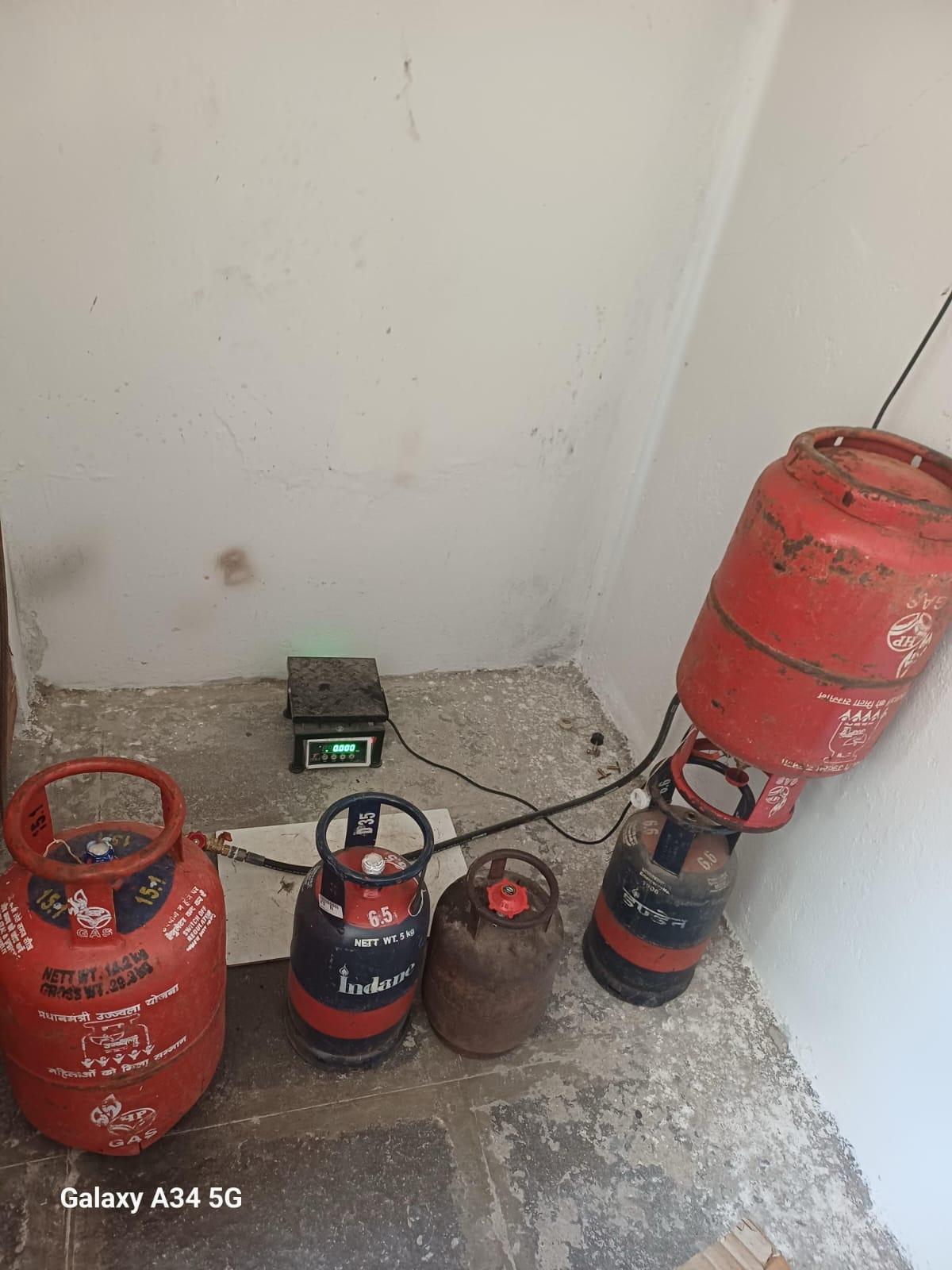
The tools used to illegally refill cylinders as photographed by the Pahadishareef police who apprehended a man involved in unauthorised handling and sale of LPG cylinders.
| Photo Credit:
By Arrangement
The case surfaced after a teenager in Goshamahal found a cylinder delivered to their home to be underweight. After weighing it and finding it nearly two kilograms short, they lodged a complaint, leading police to an alleged illegal refilling operation in Jumerat Bazaar.
Investigators said gas was allegedly removed from domestic cylinders, transferred into smaller commercial-use cylinders and sold locally, while the partially emptied domestic cylinders were resealed and supplied to customers.
A restaurant owner in Secunderabad said businesses were often left vulnerable to such practices. “When regular supply is delayed, middlemen start offering immediate delivery at much higher rates. For small outlets, there is pressure to buy because daily business depends on uninterrupted supply,” he said.
Prashant Dixit, a domestic consumer from Himayatnagar said the recent cases had made residents more cautious. “Earlier, we never checked cylinder weights. Now we insist on weighing it before accepting delivery,” he said.
Police and gas agencies have now launched an awareness drive, distributing stickers and pamphlets to alert customers. “We have advised agencies to display notices such as ‘Do not buy without weighing’ and ensure that delivery personnel weigh every cylinder in front of the customer,” Mr. Gaikwad said.
Task force teams are continuing inspections across the city, focusing on delivery chains, illegal refill points and commercial establishments suspected of sourcing diverted cylinders. Officials said further action is likely as investigations continue into what they described as an organised attempt to exploit consumers through a fabricated perception of shortage.
Published – May 08, 2026 10:39 am IST



