


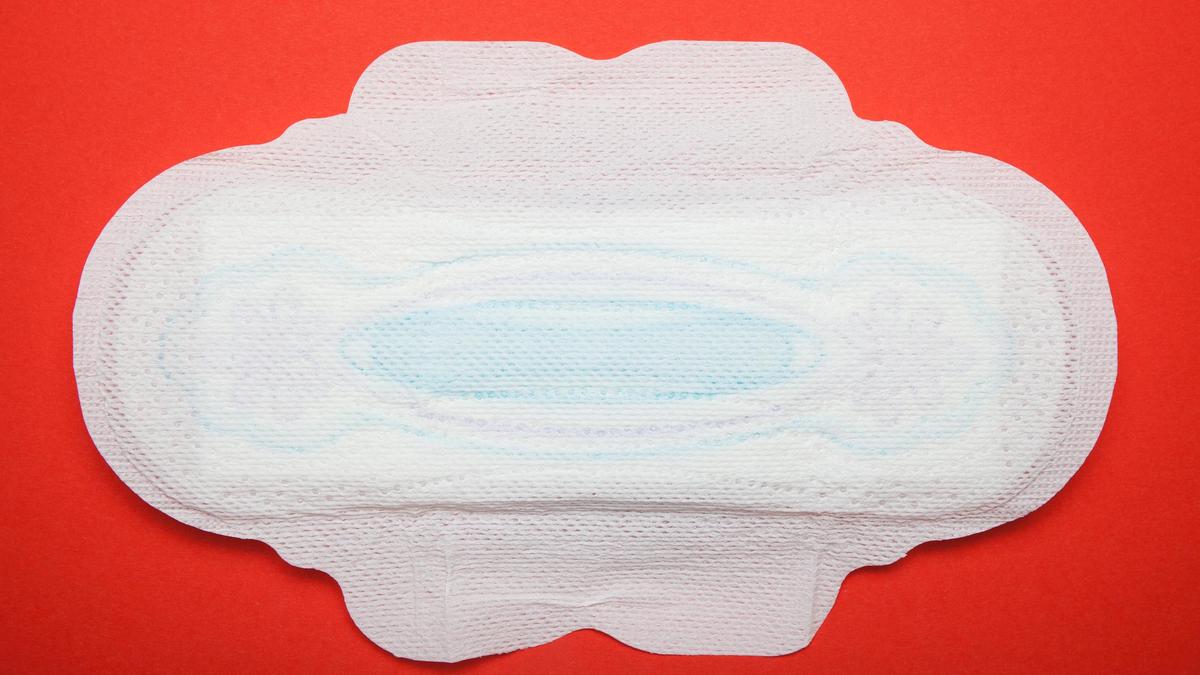
A sanitary pad. Image used for representation
| Photo Credit: Getty Images
The Madras High Court on Thursday (March 26, 2026) sought the response of the Centre to a public interest litigation (PIL) petition filed for prohibiting the use of carcinogenic and other hazardous chemicals in the manufacture of sanitary napkins, tampons, panty liners, and baby diapers.
The First Division Bench of Chief Justice Sushrut Arvind Dharmadhikari and Justice G. Arul Murugan ordered notices to the Union Ministries of Health and Family as well as Textiles after being convinced with the arguments advanced by senior counsel T. Mohan for the PIL petitioner.
S. Subadra, an advocate based in Chennai, had filed the case also seeking a direction to the Centre to frame appropriate rules/regulations mandating full disclosure of raw materials used in the manufacture of sanitary napkins, menstrual products, and baby diapers sold in the country.
The litigant told the court that a person who menstruates ends up spending about 60,000 hours of their lifetime on menstrual periods and that unlike products used on other skin surfaces, it was essential to use absolutely non-toxic substances in sanitary pads to prevent the toxins from entering the body.
Stating that sanitary pads had undergone several changes over the years, she said, initially, they were made mostly of flannel or woven fabric. Thereafter, sanitary pads were made with gauze and cotton and later, they were manufactured using cellulose, which had a higher absorption power than cotton pads.
“These superabsorbent pads underwent further modification. First came the belt pad, which was soon replaced by beltless pad with adhesives. More recent additions to sanitary pads include fragrance,” she said. The petitioner added the plastic upsurge, too, changed the way the sanitary pads were designed and manufactured.
The petitioner said, a typical sanitary pad sold at present could be divided into four parts: a fluid-permeable top sheet, an acquisition layer or transfer layer, an absorbent core, and an impermeable backing containing glue (back sheet). She also said, most of the commercially available sanitary pads use plastics as the main constituent.
“Sanitary pads include various chemicals which are added by manufacturers to improve presentation, functionality, and consumer acceptance… Synthetic plastic is used in sanitary pads and diapers as liquid absorbent to improve functionality and softness,” the petitioner’s affidavit read.
‘Harmful to health’
Ms. Subadra said, health experts had opined that plastics in sanitary pads disturb the balance of the vaginal micro flora and could cause health problems including, but not limited to, uro-genital tract infection and rashes. She said, the plasticisers of concern were: bisphenol, parabens, and triclocarban.
“Most of these added plasticisers are widely considered to be ‘endocrine disrupting chemicals’ that are known to have a negative effect on female reproductive health. Exposure to parabens is linked to breast cancer while Bisphenol A (BPA) is linked to reducing the viability of germ cells involved in reproduction,” she claimed.
The petitioner brought to the notice of the court that a New Delhi-based non-profit environmental organisation named Toxics Link had published a study report titled ‘Wrapped in Secrecy: Toxic Chemicals in Menstrual Products’ on November 21, 2022, indicating that most popular brands of sanitary napkins sold in the country contained harmful chemicals.
The court was further told that Member of Parliament Kanimozhi had raised the issue in the Lok Sabha. She wanted to know if the Centre was aware of the study report and whether there were any regulations regarding permissible limitls for chemical contents in sanitary pads.
Responding to her questions, Union Minister of State for Health and Family Welfare Anupriya Patel had merely said, that the Bureau of Indian Standards had published the Indian standards on sanitary napkins. However, contending that the BIS standards required updation, the petitioner urged the court to issue a direction to the amend the standards and thereby, prohibit the use of hazardous chemicals.
Published – March 26, 2026 02:56 pm IST




