


The Sammakka-Saralamma Maha Jatara, popularly known as Medaram Jatara, is regarded as Asia’s largest tribal congregation. This extraordinary biennial festival takes place in Medaram, a small forest village nestled deep within the Eturnagaram Wildlife Sanctuary in the Mulugu district of Telangana. Rooted in ancient Koya tribal traditions, the Jatara honours the forest goddesses Sammakka and Saralamma, commemorating their valour and sacrifice.
Recognised as a State festival in 1998, the Medaram Jatara has grown from a modest tribal observance into one of the world’s most remarkable spiritual gatherings. During the festival, the otherwise quiet village transforms into a vast spiritual arena, drawing crores of devotees, tribal and non-tribal alike, from Telangana, Andhra Pradesh, Odisha, Maharashtra, Madhya Pradesh, and neighbouring regions. Pilgrims gather to seek the blessings of Sammakka and Saralamma.
The festivities begin with the arrival of Saralamma, who is ceremoniously brought from Kannepally village, about 6 km from the Medaram shrine, by Koya tribal priests. Her procession crosses the sacred Jampannavagu rivulet before reaching her “gadde” (holy platform) on the first day of the four-day Maha Jatara. The rituals commence on Magha Suddha Pournami, a full-moon day that is considered auspicious.
Ahead of Saralamma’s arrival, the deities Pagididdaraju and Govindaraju are installed on their respective platforms. Govindaraju arrives from Kondai, while Pagididdaraju is brought from Ponugonda, located about 80 km from Medaram in Mahabubabad district.
The Jatara reaches its spiritual peak with the arrival of Sammakka from Chilakalagutta, symbolically represented in a revered vermilion casket. Her arrival marks the most sacred phase of the celebrations.
Traditionally, the District Superintendent of Police conducts a ceremonial welcome in the presence of officials and public representatives by firing rounds into the air using an AK-47 rifle, an age-old gesture signifying the State’s formal welcome to the tribal goddess.
A multi-layered security arrangement ensures the smooth movement of the processions. Thousands of tribal devotees follow in deep reverence, some dancing, others in a trance, moving to the rhythmic beats of traditional drums.
According to local legend, Meda Raju, the erstwhile ruler of the region, once discovered an infant girl in the forest, guarded by wild animals. Enchanted by the sight, he adopted the child, named her Sammakka, and raised her alongside his daughter Nagulamma. In time, both were married to Pagididdaraju.
Sammakka, her consort Pagididdaraju, their son Jampanna, and daughter Saralamma are believed to have been martyred in a fierce battle against the Kakatiya rulers.
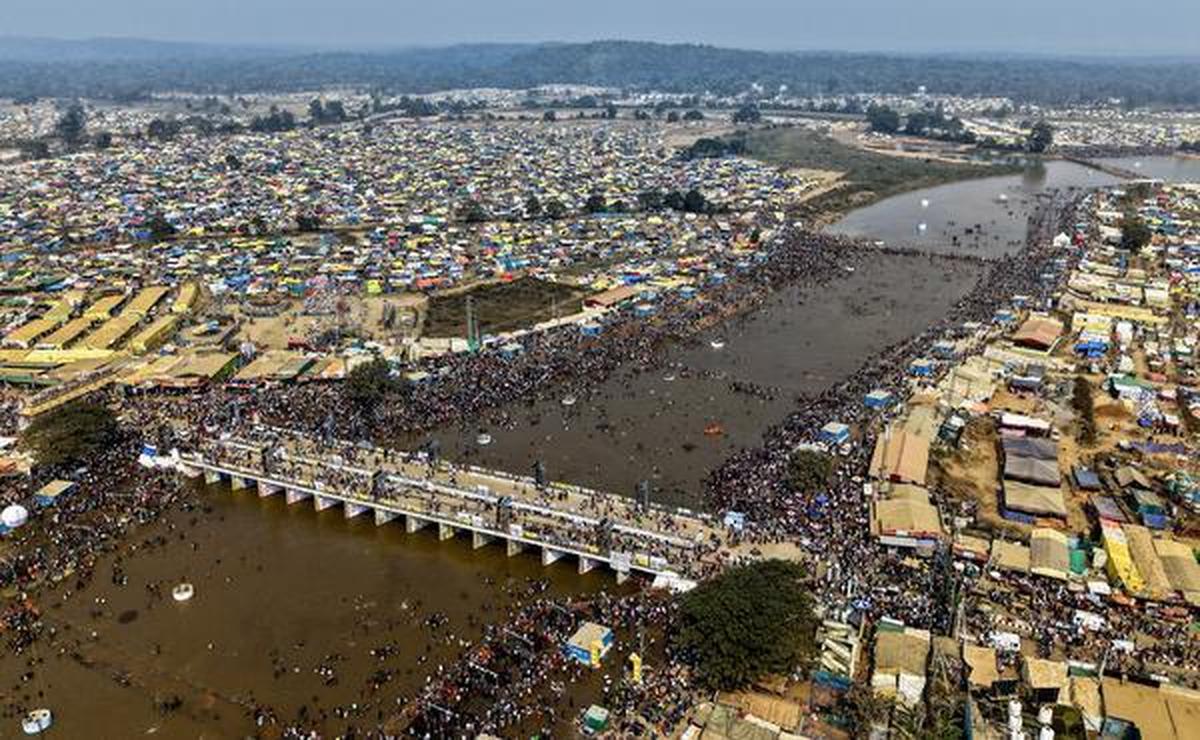
Photo:
Nagara Gopal
Sacred waters: Pilgrims take a holy bath in the Jampanna Vagu as temporary tents line the riverbanks, accommodating devotees who stay through the days of the Sammakka-Saralamma Maha Jatara.
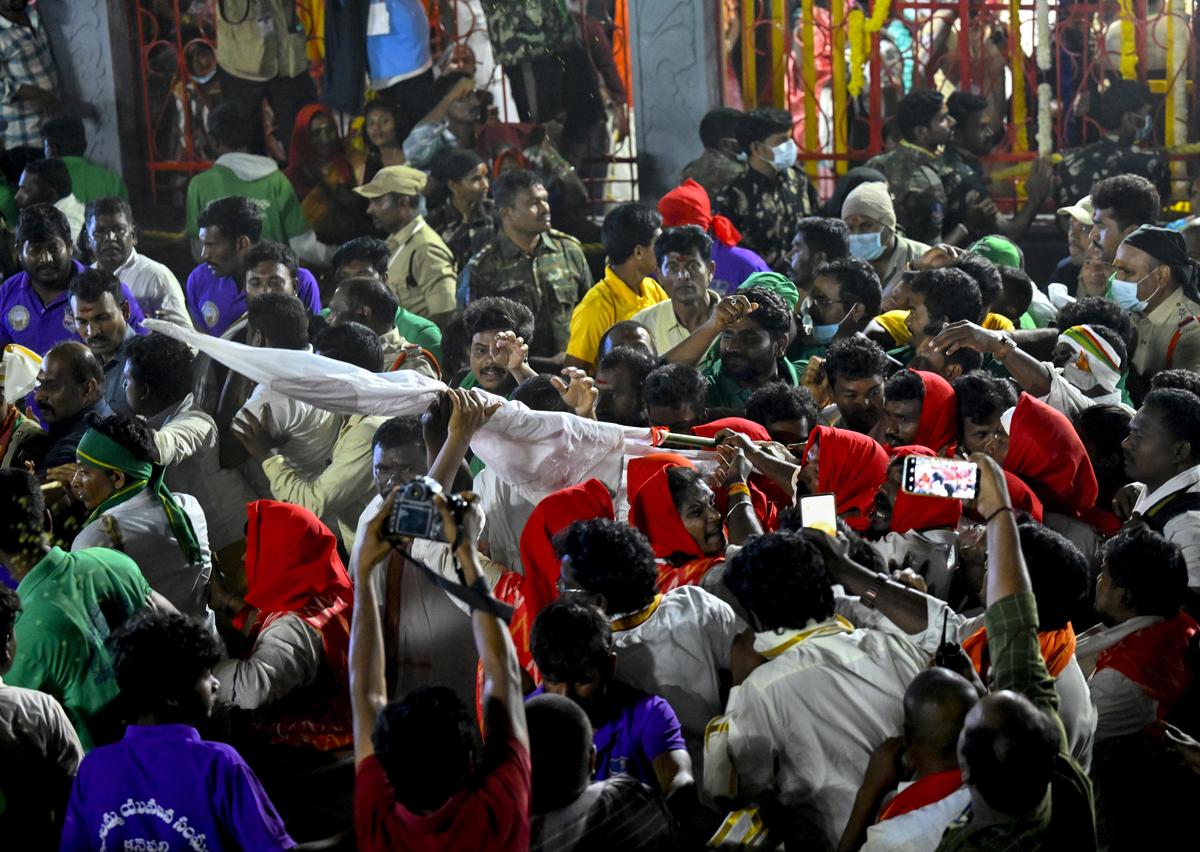
Photo:
Nagara Gopal
Ritual order: The four-day festival takes shape with the arrival of Saralamma, Govindaraju and Pagididdaraju at the Medaram tribal shrine, ahead of the arrival of Sammakka.
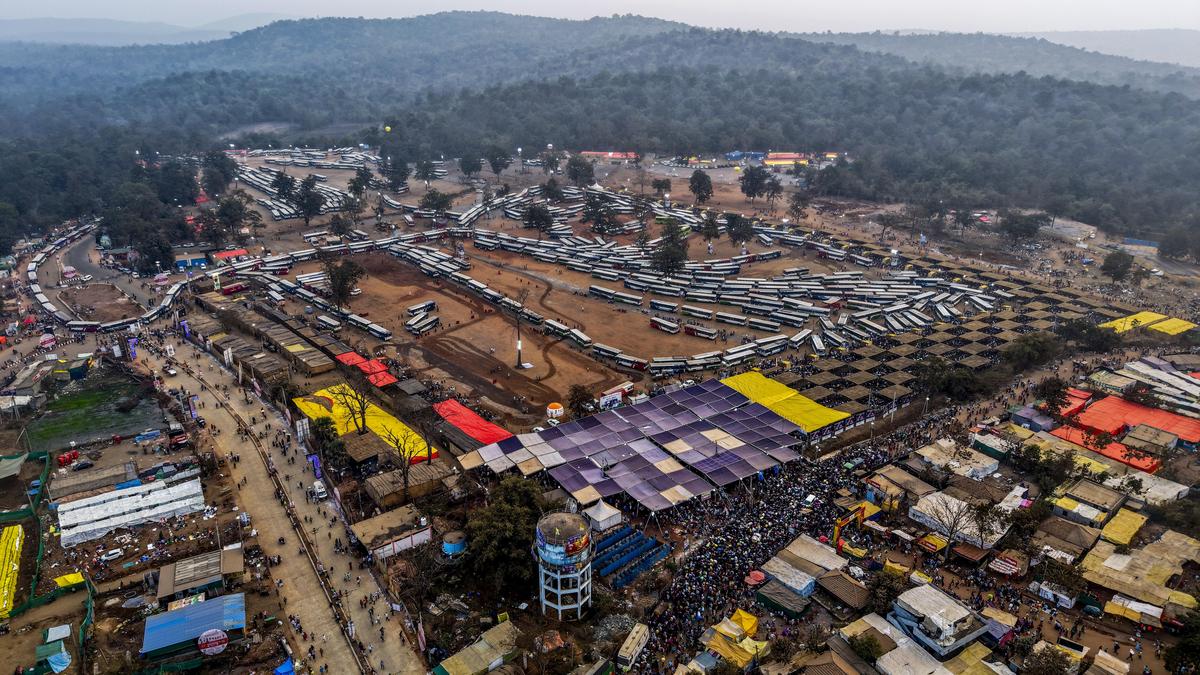
Photo:
Nagara Gopal
Journeys begin: A temporary TSRTC bus stand set up at Medaram village to manage the steady influx of devotees arriving for darshan during Sammakka-Saralamma Maha Jatara.
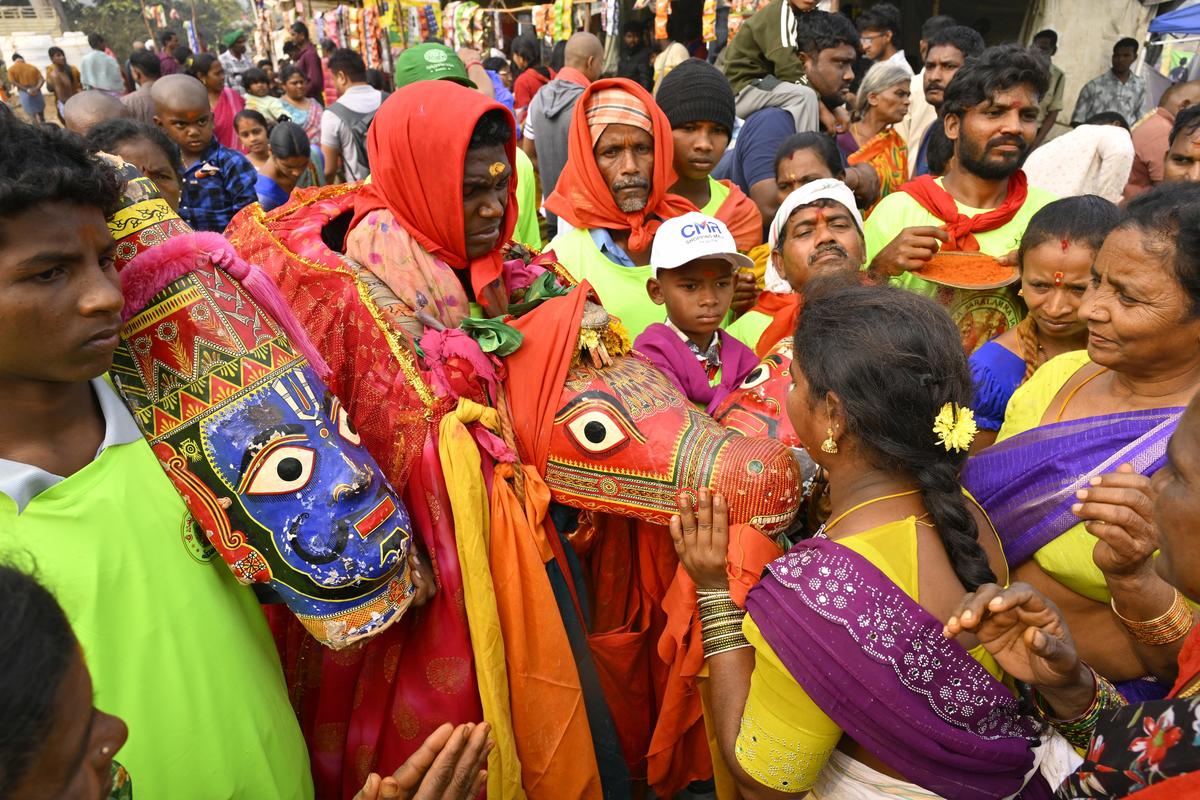
Photo:
Nagara Gopal
Gathering of faith: Devotees from different parts of the country gather at Medaram village as the festival draws lakhs to the forest shrine.
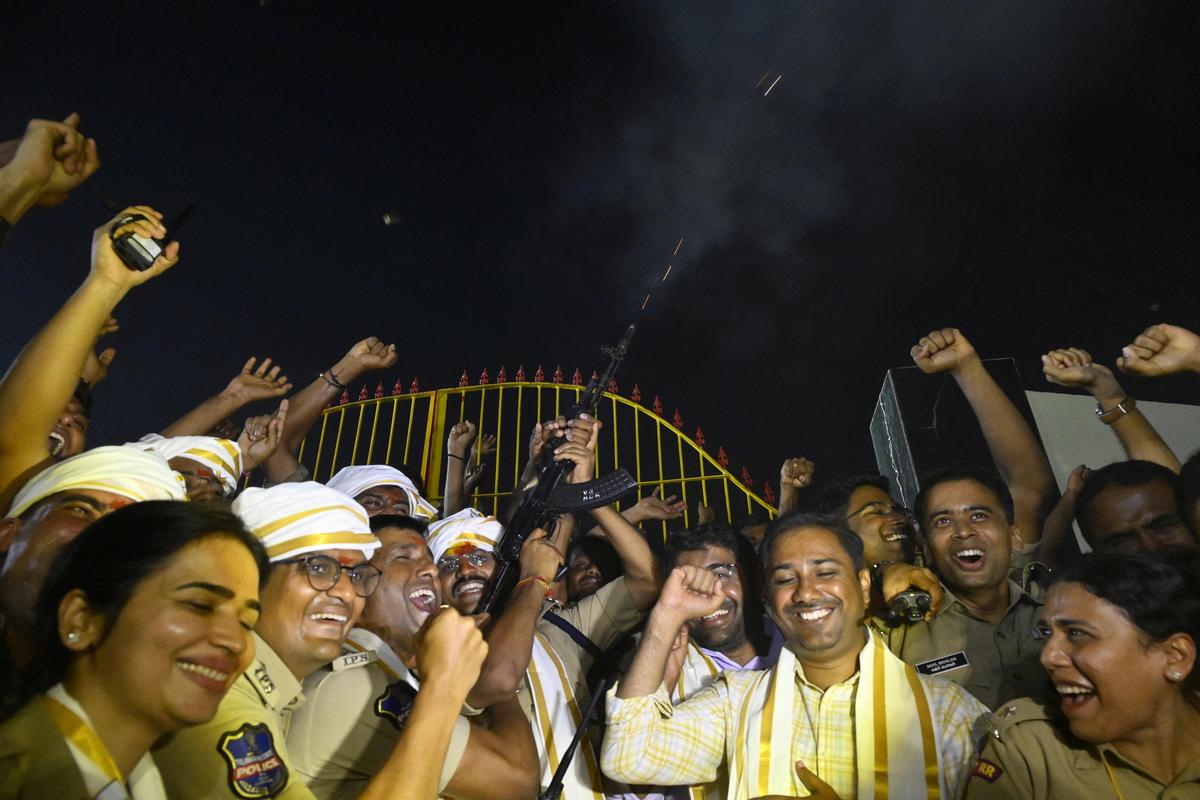
Photo:
Nagara Gopal
State salute: Mulugu Superintendent of Police Sudhir R. Kekan, along with other officials, fires a ceremonial round into the air at Chilakalagutta ahead of the arrival of Sammakka.
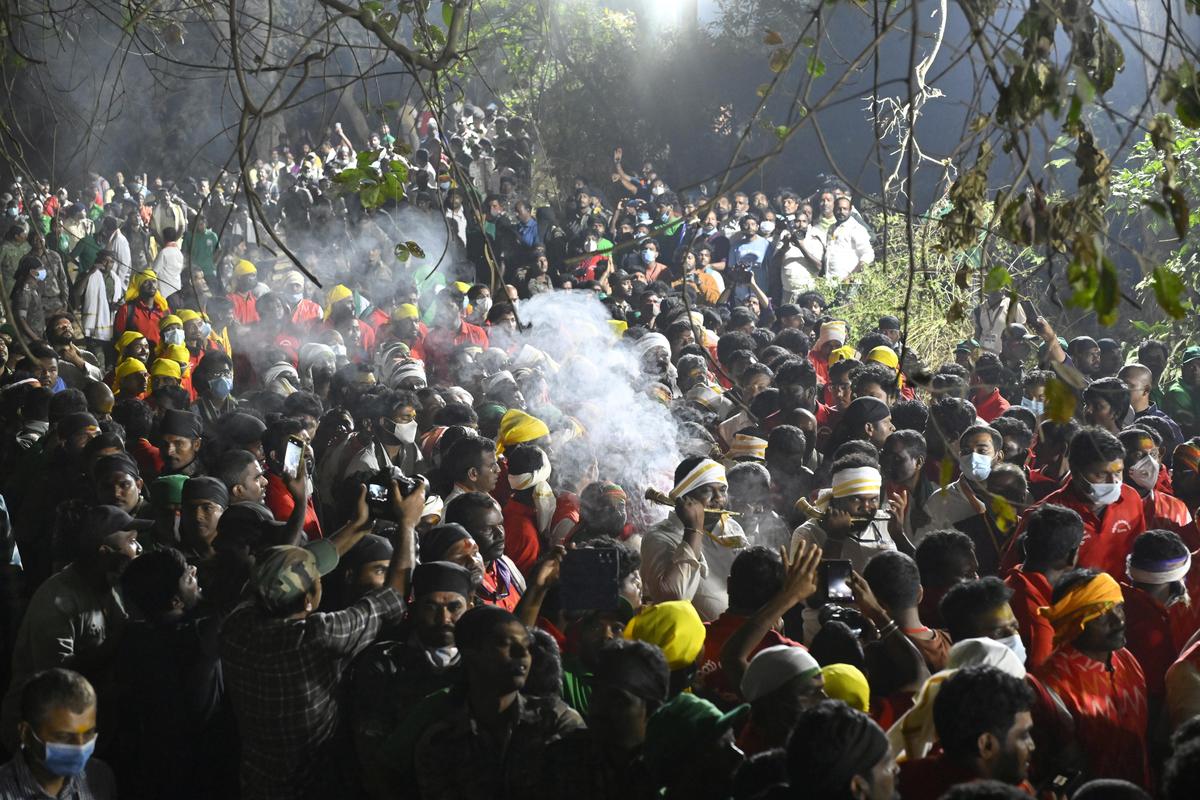
Photo:
Nagara Gopal
Living tradition: Koya tribal priests, led by Kokkera Krishnaiah, carry the presiding deity Sammakka in the form of a vermilion casket from a secluded spot at Chilakalagutta to the Medaram shrine.
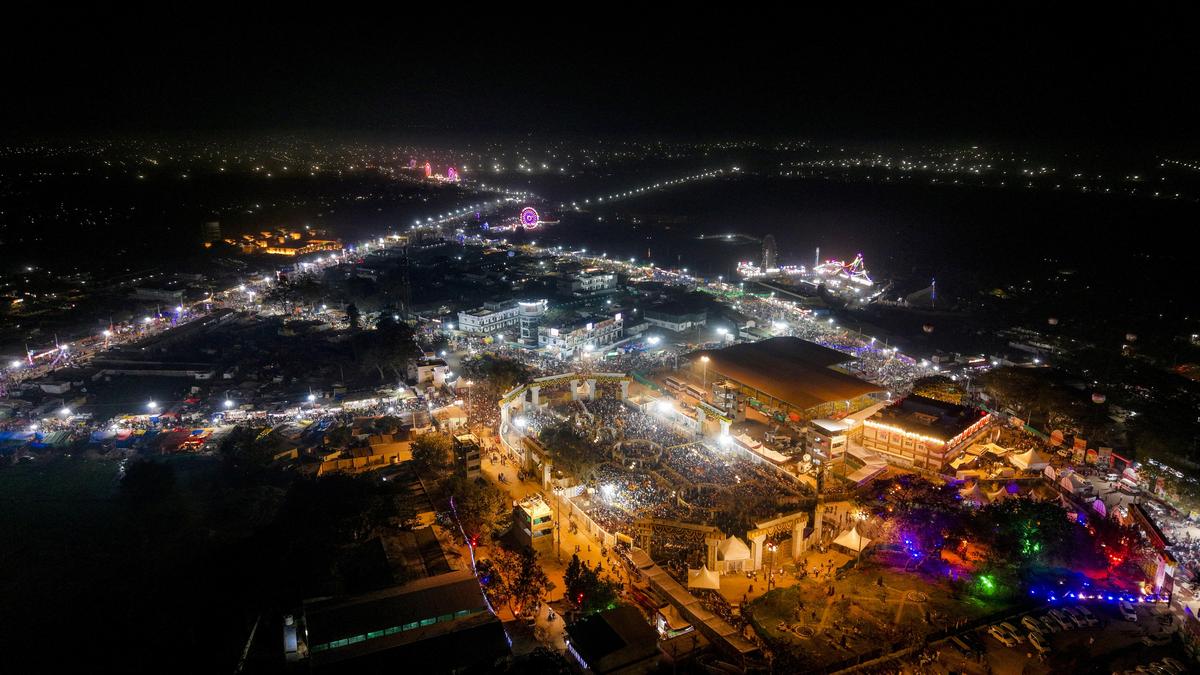
Photo:
Nagara Gopal
Bustling hub: A vast congregation fills Medaram village during the Maha Jatara, one of the largest tribal gatherings in the country.
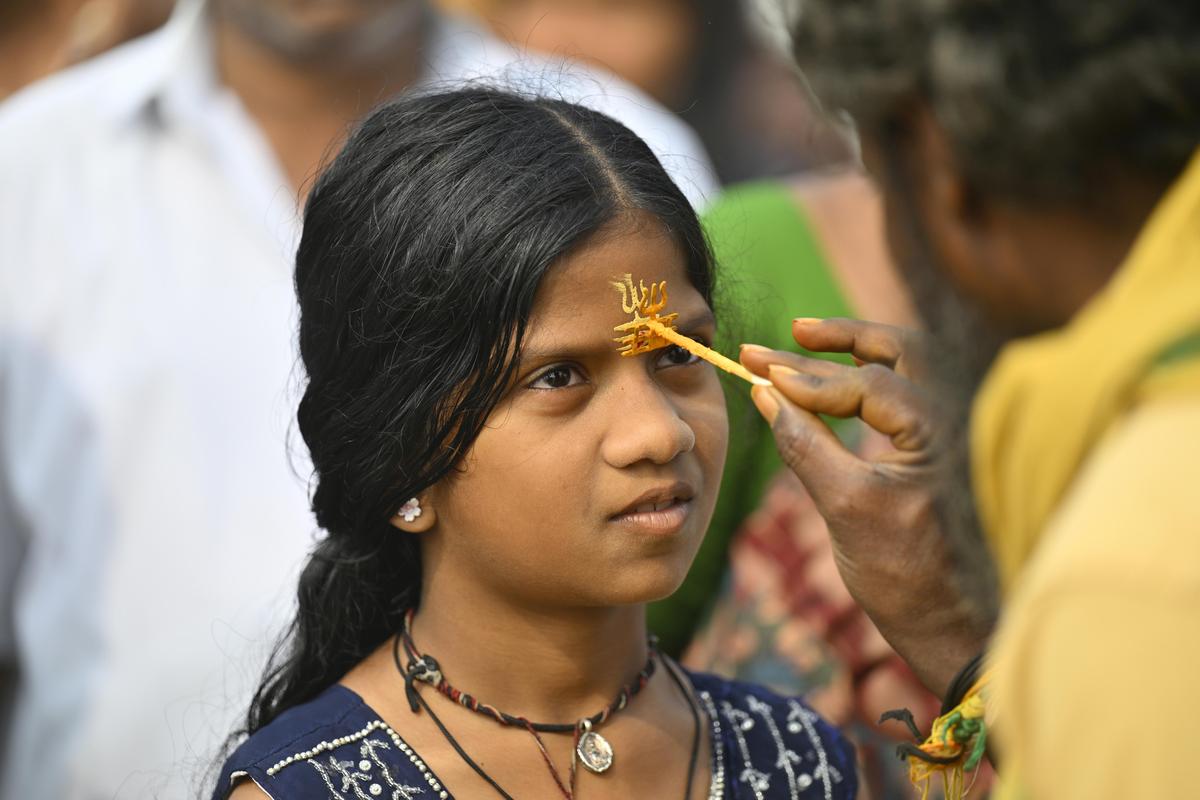
Photo:
Nagara Gopal
Symbol in sandal: A girl has a sacred mark drawn on her forehead during darshan at the Sammakka-Saralamma shrine.
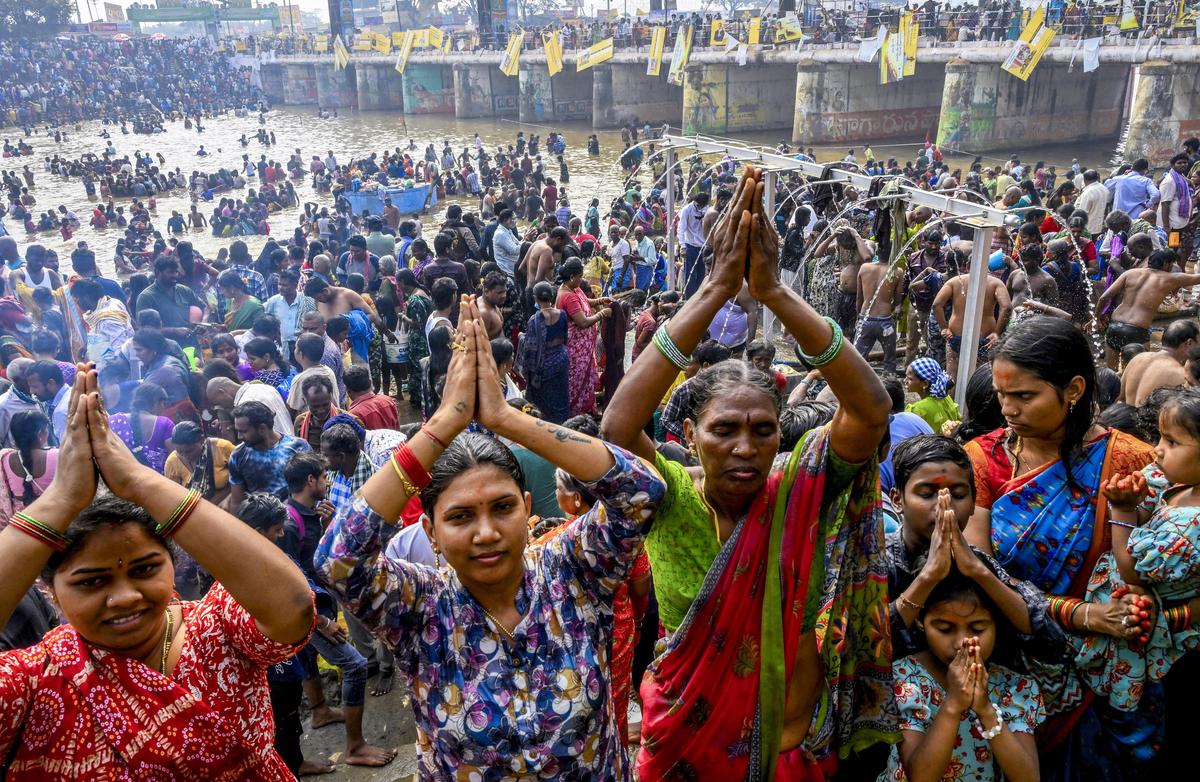
Photo:
Nagara Gopal
Holy immersion: A view from the Jampanna Vagu as devotees perform ritual bathing, an integral part of the historic festival.
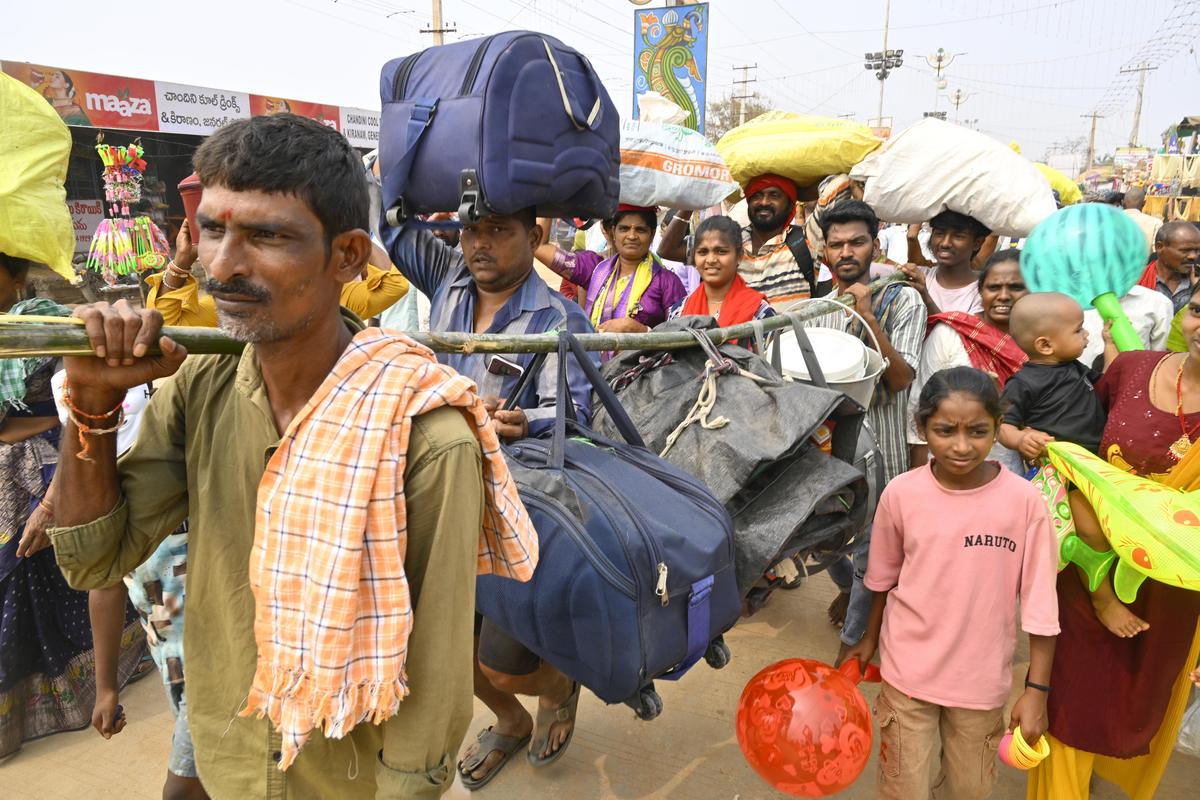
Photo:
Nagara Gopal
Homeward bound: Devotees begin their return journey after darshan of Sammakka and Saralamma, as the festival draws to a close at Medaram.
Published – February 08, 2026 10:52 am IST



