


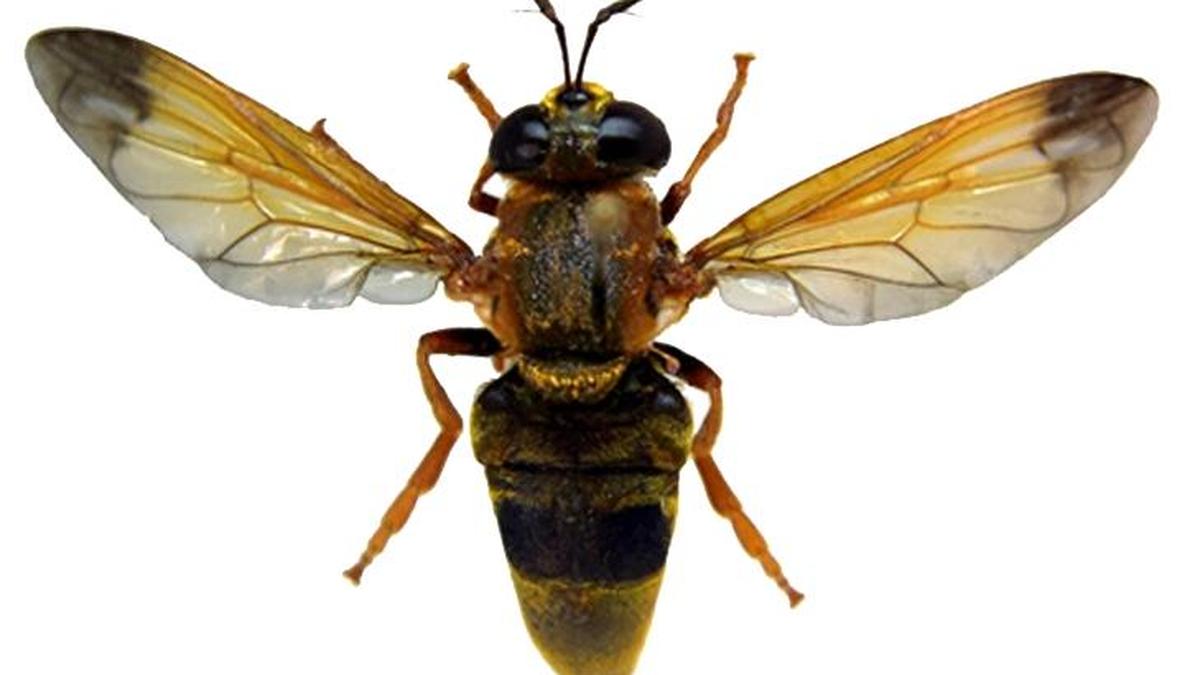
The newly discovered species of ant fly Metadon reemeri, belonging to the sub family Microdontinae (Syrphidae), discovered in the Sirvuvani hills of Western Ghats in Tamil Nadu.
| Photo Credit: Special Arrangement
Researchers from Kerala and Tamil Nadu have discovered two new species of extremely rare ant flies from India—one from a disturbed urban forest in Delhi and other from the Western Ghats in Tamil Nadu— highlighting the importance of conserving both urban green spaces and biodiversity hotspots.
The newly discovered species, Metadon ghorpadei and Metadon reemeri, belong to the sub family Microdontinae (Syrphidae). These flies are known for their unique association with ants, as their larvae live inside ant nest and feed on ant brood, a specialised behaviour called myrmecophily that makes them exceptionally rare and difficult to detect. Until now, only six species of the genus Metadon have been reported from India.
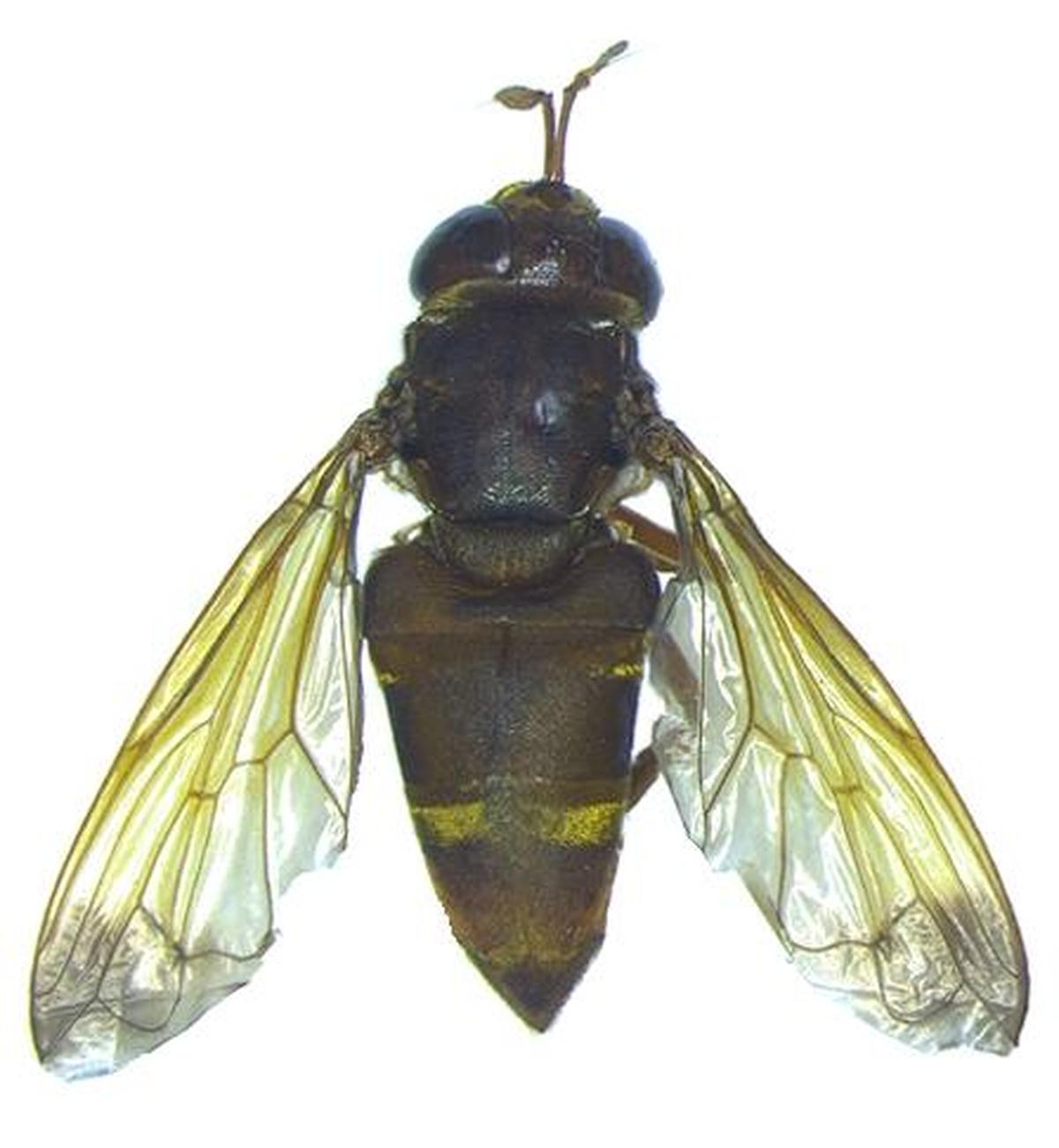
The new species of ant fly, Metadon ghorpadei, belonging to the sub family Microdontinae (Syrphidae), discovered in the northern ridge forest of Delhi.
| Photo Credit:
Special Arrangement
The species were discovered by H. Sankararaman, Assistant Professor, School of Agricultural Sciences, Amrita Vishwa Vidyapeetam, Coimbatore, and S.S. Anooj, Assistant Professor at the College of Agriculture, Vellayani, under Kerala Agricultural University. The findings based on detailed morphological studies and DNA analysis were published in the international journal Zootaxa.
According to Mr. Anooj, both morphological characteristics and DNA analysis were used to establish the novelty of the two species. The study also reviewed the Indian fauna of the genus Metadon and redescribed six previously known species.
He said Metadon ghorpadei was discovered in the northern ridge forest of Delhi, a disturbed urban forest patch surrounded by roads, traffic and dense residential areas.
The northern ridge is part of the Delhi ridge, an extension of the ancient Aravalli hill range and constitutes only about one per cent of its original extent due to fragmentation and human pressure.
Mr. Anooj said the species was found in a patch of moderately dense vegetation within the otherwise thorny scrub forest, underscoring the hidden faunal value of urban forests. The researchers warn that conservation efforts in Indian cities largely focus on green cover rather than habitat specific biodiversity, putting such rare species at risk.
The second species, Metadon reemeri, was discovered in the Siruvani hills of Western Ghats in Tamil Nadu. The Western Ghats, a globally recognised biodiversity hotspot with high endemism, are largely protected, yet lesser known insect groups like Microdontinae remain poorly studied, Mr. Anooj said..
He said members of Microdontinae are rarely encountered because adult flies seldom visit flowers and tend to remain close to ant nest.
Globally, many Microdontinae species are considered rare or threatened due to their specialised habitat requirements and patchy distribution. Of the 454 species reported worldwide, only 27 are known from the Indian subcontinent.
The researchers stress the need for targeted survey, detailed mapping of Microdontinae habitat and stricter regulation of human activities in sensitive areas. Controlling invasive plant species and restoring indigenous vegetation are also recommended to support habitat recovery.
The researchers call for extensive surveys across other Indian regions, including the Vindhya range, Deccan Plateau and northern plains, along the with molecular phylogenetic studies to better understand species divergence and endemism.
Published – January 20, 2026 08:05 pm IST



