When the case came up for hearing before a Bench headed by Justice Vikram Nath, the government counsel said a draft response was being circulated, but “certain international events” had arisen in the meanwhile.
| Photo Credit: Reuters
The Supreme Court on Monday (March 23, 2026) gave the government a four-week leeway to respond to a petition highlighting the need for accountability in the civil aviation sector for “arbitrary” airfare hikes and cancellations, saying “there are bigger problems the government is handling now”, in an oblique reference to the potential blowbacks from the ongoing Iran-Israel conflict.

When the case came up for hearing before a Bench headed by Justice Vikram Nath, the government counsel said a draft response was being circulated, but “certain international events” had arisen in the meanwhile. The counsel said the international situation was still evolving.
The Bench of Justices Vikram Nath and Sandeep Mehta advised senior advocate Ravindra Shrivastava and advocate Charu Mathur, for petitioner S. Laxminarayanan, to agree to an adjournment and listed the case again on April 27.
‘Predatory’ practices
The petition had sought regulatory intervention in the civil aviation sector to address fare fluctuation, fare transparency, and continuity of essential air services. It said the roller-coaster airfares resulted in denial of mobility and an unjust imposition of financial burden in violation of the Constitutional guarantees. “Air travel, being regulated by statute, cannot be subjected to predatory market mechanisms,” the petitioner submitted.
It urged the court to direct the Union government and the Directorate General of Civil Aviation to employ their statutory authority to stabilise tariffs and enforce service obligations.
The Airports Economic Regulatory Authority (AERA) had in mid-February submitted a response claiming it had no role in the relief sought by the petitioner. AERA said its sole statutory objective was the regulation of tariffs and other charges for “aeronautical services” rendered at major airports.
“AERA is not a price regulator for airline tickets and airfares charged by the airlines. The AERA Act does not confer any power upon AERA to regulate airline business models, pricing strategies, dynamic pricing, seat inventory management, ancillary airline fees, or route-level fare fixation, etc,” the affidavit said.

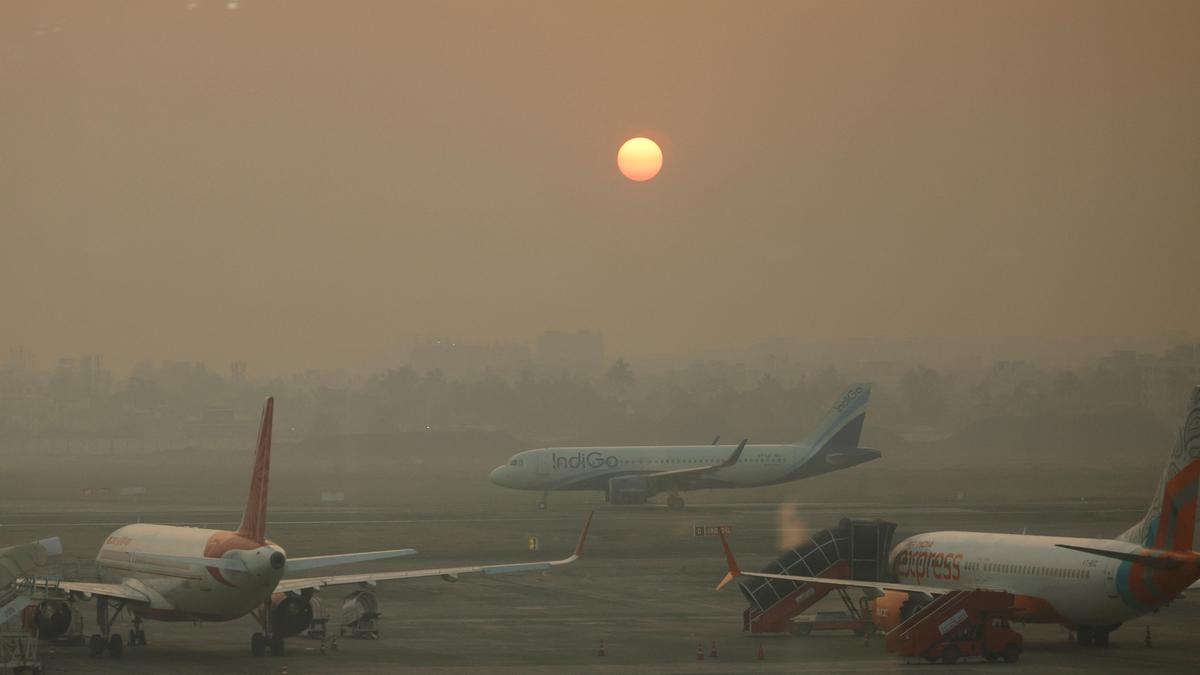
The petitioner had also filed an interim application in December last year following the Indigo airlines crisis, highlighting the “vulnerability of passengers due to abrupt service failures”. “A grave and unforeseen situation has emerged in the aviation sector, particularly concerning IndiGo airlines, India’s largest carrier. Beginning late November 2025, a large-scale operational collapse due to crew shortage resulted in massive cancellations and delays affecting passengers throughout the country… Disruption has triggered extraordinary escalation in airfare prices. Reports from leading national dailies reveal that airfares on several routes have risen five to 10 times the ordinary levels, forcing stranded passengers to pay exorbitant sums or wait indefinitely without support,” the application had noted.
Published – March 23, 2026 09:46 pm IST