

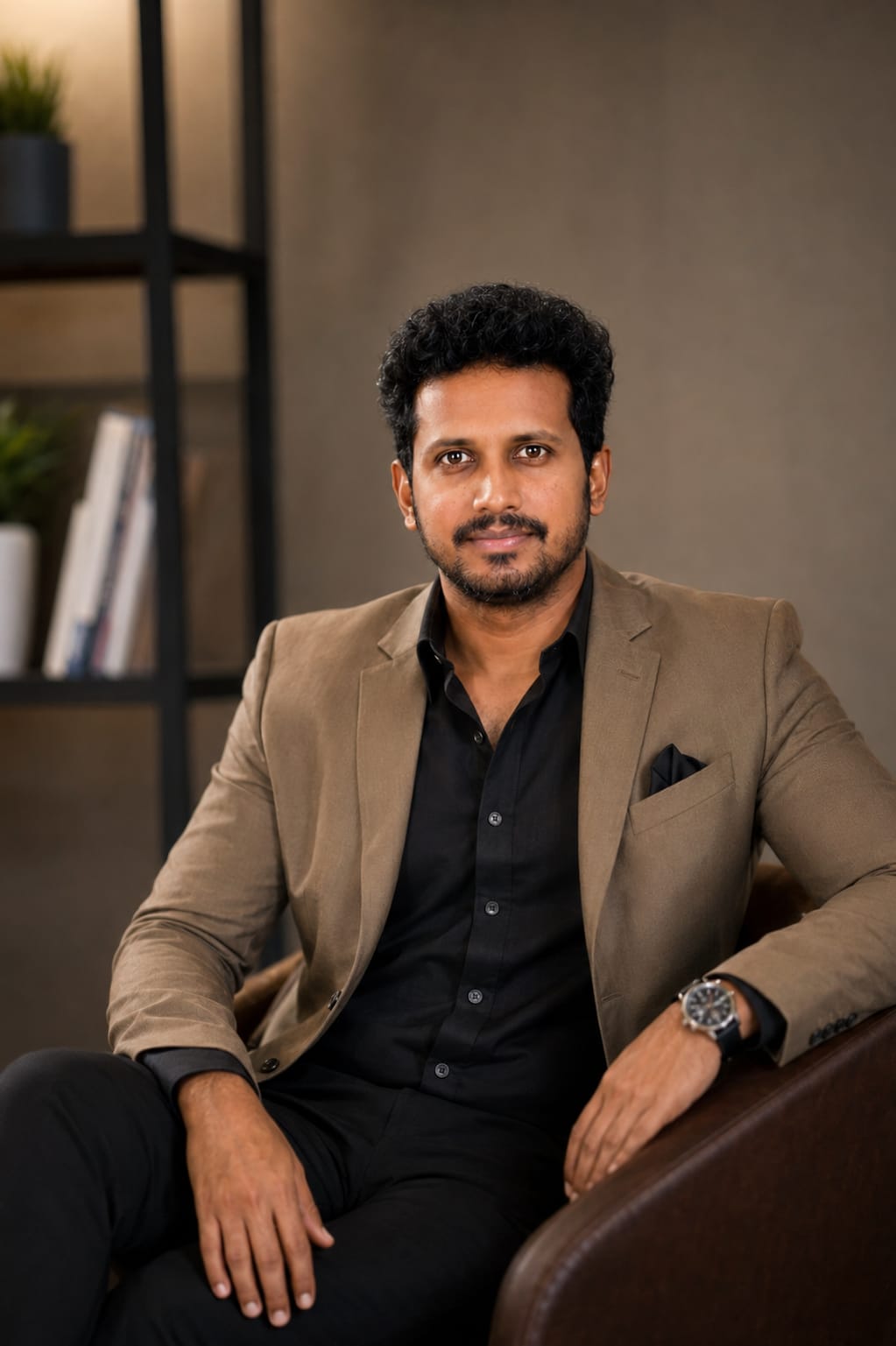

If there is one question that perfectly captures Dr. Manesh Sathyanathan’s educational philosophy, it is the title of one of his research papers: “Are Kids Being Cooked or Learning the Art of Cooking?” Behind this thought-provoking title lies a profound critique of modern education. According to him, too many schools continue to “cook” children by prescribing what to think, how to think, and when to think. Genuine education, however, should teach students the “art of cooking” equipping them with the confidence, curiosity, and critical thinking needed to solve unfamiliar problems, generate new ideas, and continue learning throughout life.
In an age where information is available within seconds, memorisation is no longer enough. Independent thinking has become the defining skill of the twenty-first century. This philosophy has become even more relevant with the rise of Artificial Intelligence. While many fear AI will replace human talent, Dr. Manesh Sathyanathan believes technology should complement education rather than replace its human essence. Artificial Intelligence can personalise learning, automate routine tasks, and provide instant information. What it cannot replace is empathy, encouragement, resilience, integrity, or the meaningful connection between a teacher and a student. For this reason, his vision of future-ready education extends far beyond digital literacy. At Bodhi International School, students learn Robotics, Artificial Intelligence, Entrepreneurship, and emerging technologies while receiving equal emphasis on emotional intelligence, leadership, communication, ethics, collaboration, and social responsibility.
As he often says, “Knowledge gives us the ability to succeed; values teach us how to succeed responsibly.”
His background in psychology further strengthens this approach. Every child, he believes, possesses unique strengths, aspirations, fears, and learning styles. Education should therefore focus not merely on delivering content but on understanding the learner. Children who feel safe asking questions become confident learners. Students encouraged to make mistakes develop resilience that no examination can measure. These principles have inspired classrooms where curiosity is celebrated rather than restricted. Equally important in his philosophy is the role of teachers. Educational reform, he believes, cannot begin with technology alone it must begin with educators who never stop learning. He frequently reminds teachers that students may forget lessons, but they rarely forget the teacher who believed in them.
“The day a teacher stops learning is the day a classroom stops growing,” he says, emphasising that lifelong learning remains the foundation of meaningful education.
Dr. Manesh Sathyanathan also believes education succeeds when schools and parents work as partners rather than separate institutions. Parents are a child’s first teachers, while schools become an extension of that foundation. Trust, transparency, and shared responsibility create an environment where children flourish academically, emotionally, and socially.
Looking ahead, he sees India standing at a defining moment. With one of the world’s youngest populations, the country has an extraordinary opportunity but only if education evolves quickly enough to prepare learners for a future shaped by Artificial Intelligence, automation, global competition, and rapid technological change.
Yet, despite embracing innovation, he remains equally committed to preserving culture, ethics, and humanity. Children, he believes, should understand Artificial Intelligence while remaining deeply connected to their language, traditions, and values. Progress and heritage are not opposing forces they are complementary strengths that create responsible global citizens.
Today, Dr. Manesh Sathyanathan is recognised not merely as a school leader but as an educational futurist whose ideas continue to influence teachers, parents, and policymakers alike. His journey reminds us that meaningful education is never about preparing children simply to earn a living. Its highest purpose is to help them discover their potential, build their character, and contribute meaningfully to society.
In the end, that is the future he envisions one where classrooms do not merely produce successful professionals, but compassionate human beings capable of making a lasting difference.




