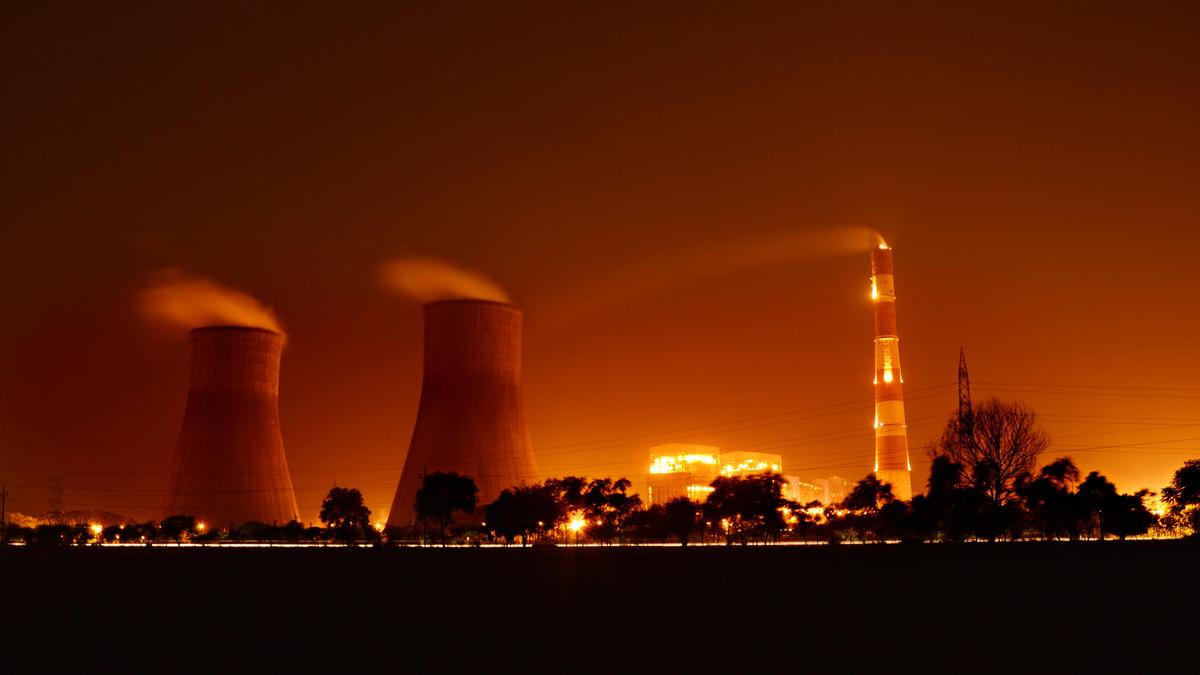
Representative image.
| Photo Credit: Getty Images
As India opens its nuclear power sector to private participation under the newly enacted SHANTI Act, former regulators of the nuclear energy establishment and policy veterans said that nuclear power required “lifetime commitment,” and maintaining “financial security” to account for “waste management, settlement of claims (caused by radiation), decommissioning (nuclear power plants).
The Sustainable Harnessing and Advancement of Nuclear Energy for Transforming India (SHANTI) Act, 2025, as the government has articulated repeatedly, is to help India raise its installed nuclear power capacity from the existing 8.7 gigawatt (GW) to 100 GW by 2047. Unlike the previous half-century, it hopes to achieve this by allowing, in theory, private companies to run nuclear power plants and harness foreign funds for the purpose.
Published – April 19, 2026 03:29 pm IST