

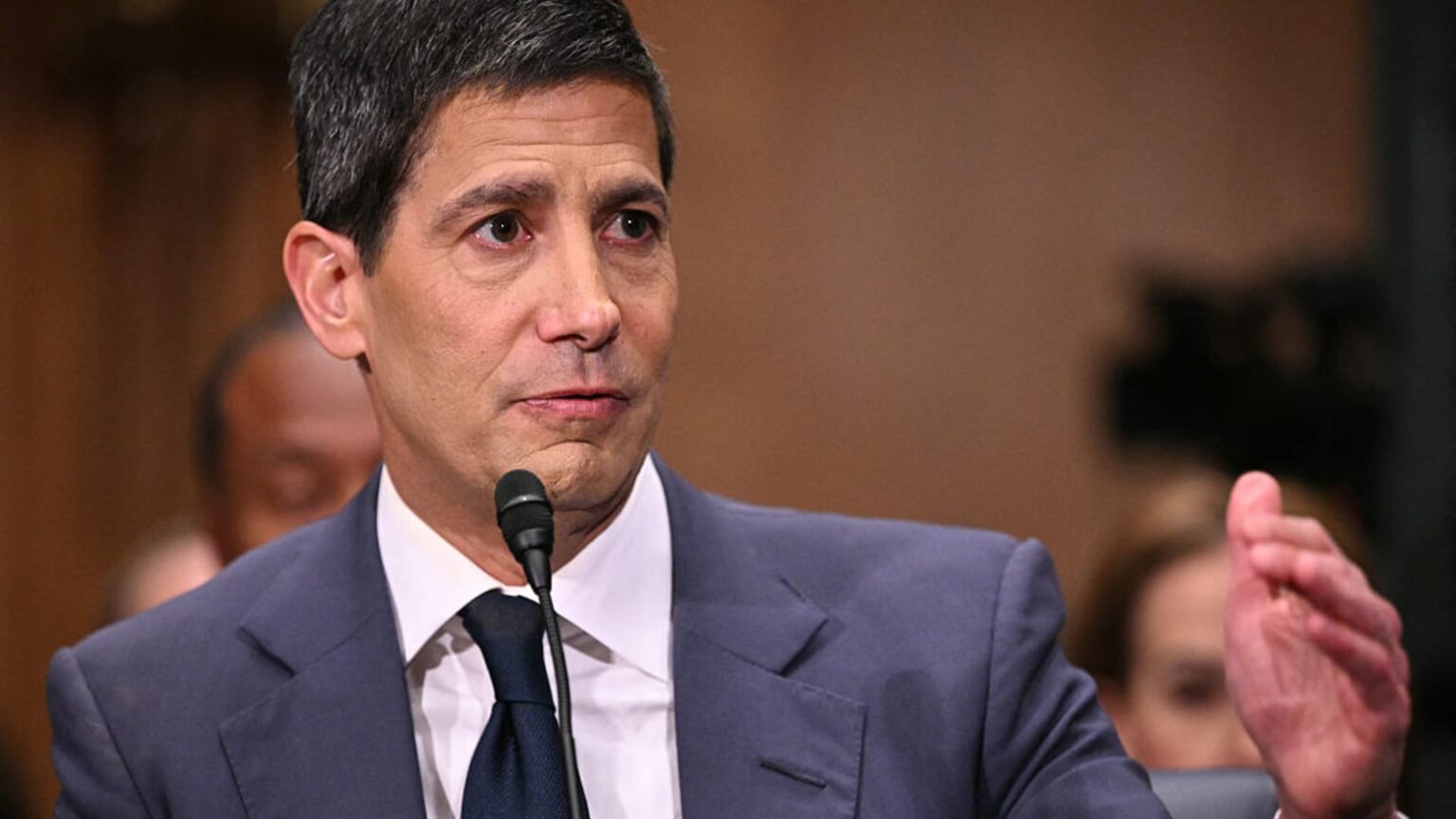

As investors focus on the likely confirmation of a new Federal Reserve chair, Kevin Warsh, many may be overlooking the market that could have the more volatile reaction: bonds. Whenever there is a Fed transition, treasury yields, duration risk, and credit spreads usually move faster as the markets begin to reassess monetary policy.
“What is really important over the next several weeks is this changing of the guard at the Fed chair level,” Paisley Nardini, Simplify Asset Management managing director and head of multi-asset solutions, said on the podcast portion of CNBC’s “ETF Edge” on Monday.
Nardini explained that even when there is no immediate policy move, markets can start pricing in the future quickly. A new Fed chair can change the communications style and alter the pace of future rate hikes or cuts. She said this could send ripples through the treasury market before equities fully react.
“I think the markets are really going to be cautious as to what this might mean. Anytime there is a changing of the guard, markets are going to experience some volatility and we are going to have to start to price in what that means,” she said.
There was a lot of Fed news to digest this week. The Federal Reserve held interest rates steady at its meeting Wednesday, with the federal funds rate unchanged in a 3.50% to 3.75% range. But the war and the surge in oil prices has upended the policymaking assumptions of the central bank and bond traders, who are now betting against another rate cut in 2026. Fed Chair Jerome Powell said the added the pressure on the economy from higher oil prices is likely to remain, even if it hasn’t yet upended the longer-term inflation outlook.
But there is more disagreement than ever inside the Fed, with a shift within the FOMC as more members say there should be no indication at all from the institution that the bias remains towards cutting rates. Chair Powell also said he has no intention to leave his position as Fed governor even when his term as chairman ends, further complicating an already heightened political environment at the Fed.
This backdrop can make the bond market more sensitive, and inflation remains above target with the latest personal consumption expenditures index hovering around 3.5% annually. Core PCE rose to 3.2%.
“If we remember the role of the Fed, we have a dual mandate and that is data driven. And so we have employment on one side of the spectrum and inflation on the other side,” Nardini said, referring to the goal of maximum employment for the economy and 2% inflation. “In a portfolio, often times we forget about bonds until it is front and center and it is too late to react or adjust your portfolio accordingly,” she said.
There is reason to believe more investors may have chosen to ignore bonds during Powell’s tenure at the Fed: they’ve done terribly. The Bloomberg US Aggregate Bond Index that aims to track all U.S. investment-grade debt returned just under 2% annually during Powell’s tenure, far below the average of 6.5% since the 1970s, according to Bespoke. The era of higher interest rates due to inflation, with multiple shocks from Covid to Russia’s invasion of Ukraine and the current U.S.-Iran war, were causes.
Nardini says with the Fed currently in hold mode, the first major risk for bond investors is duration. If investors are loaded up on longer-dated bonds and expecting cuts, they may be vulnerable if they arrive late or not at all. The 10-year treasury has already swung sharply this year, with its current yield over 4%.
The second risk is credit strength. Nardini says corporate spreads remain relatively tight, meaning investors have not been paid significantly more for taking on additional risk in bonds beyond the risk-free treasuries rate. That dynamic can become more important late in the cycle if economic and credit weakness grow. “You really have to dissect how much of a yield within credit is coming from treasuries vs. that spread component,” she said.
The historically tight levels for credit spreads, recently testing multi-decade lows, represents belief among investors that risk of default is low and the economic outlook is strong. But at the same time, even with a Fed on hold, markets had been increasing bets this year that the yield curve will steepen, as short-term rates remain more sensitive to an eventual Fed cut while longer-term rates confront prospects of sticky inflation and higher levels of public debt.
The situation in the credit markets has the attention of the head of the nation’s biggest bank, JPMorgan CEO Jamie Dimon, who warned this week, though not pointing specifically to any current credit market signals, that “We haven’t had a credit recession in so long, so when we have one, it would be worse than people think. It might be terrible.”
Nardini says during periods of relative calm, it is important to remember that calm can be deceptive. “Anytime the markets get complacent, whether that is in equities or within bonds, that is usually when volatility strikes,” she said.
Sign up for our weekly newsletter that goes beyond the livestream, offering a closer look at the trends and figures shaping the ETF market.



