While TASMAC has argued that it was denied access to the ECIR in the present proceedings, the ED maintained that the ECIR is merely an “internal administrative document” and that no legal right exists for the accused to obtain a copy. File
| Photo Credit: The Hindu
Extending the stay on the Enforcement Directorate’s (ED) probe into money laundering cases registered against the Tamil Nadu State Marketing Corporation (TASMAC) in connection with an alleged liquor retail scam, the Supreme Court on Tuesday (October 14, 2025) orally questioned whether the agency’s investigation encroached upon the State’s authority to investigate offences.
Hearing petitions filed by TASMAC and the Tamil Nadu government, a Bench of Chief Justice of India B.R. Gavai and Justice K. Vinod Chandran directed that the case be listed after the court pronounces its judgment on the review petitions challenging its 2022 ruling in Vijay Madanlal Choudhary vs Union of Indiacase.
During the hearing, Chief Justice Gavai asked Additional Solicitor-General S.V. Raju, appearing for the ED, “What happens to the federal structure? Would this not amount to encroachment upon the State’s right to investigate? Can’t the local police look into the matter?”

In its 2022 judgment in Vijay Madanlal, the apex court had held that providing a copy of the Enforcement Case Information Report (ECIR) to the accused is not mandatory in every instance.
While TASMAC has argued that it was denied access to the ECIR in the present proceedings, the ED maintained that the ECIR is merely an “internal administrative document” and that no legal right exists for the accused to obtain a copy.
This marks the second occasion in six months that the top court has questioned the ED’s conduct in the case. In a previous hearing on May 22, the Chief Justice had orally observed that the agency was “crossing all limits” while ordering an interim stay on its probe. The Madras High Court had earlier declined to grant such a stay.
Appearing for TASMAC, senior advocate Kapil Sibal submitted that the State Vigilance Department had already registered 47 FIRs relating to alleged irregularities between 2014 and 2021. Referring to ED’s searches at TASMAC’s corporate offices in 2015, he asked, “How can you raid government offices? What happens to the federal structure of this country?”

Citing Section 66 (2) of the Prevention of Money Laundering Act (PMLA), Mr. Sibal contended that the provision requires the ED to share information regarding offences with the State authorities conducting parallel investigations, which had not been done. He further argued that the ED had also expanded its remit to probe the underlying aspect of corruption.
Mr. Raju, for the ED, countered that there was “large-scale corruption” and that the agency was investigating only the money-laundering component. He maintained that the “predicate offence”, which forms the basis for ED action, was established through FIRs registered by the State itself, and that the agency had uncovered incriminating material during its probe.
To this, the Chief Justice remarked, “Law and order must operate within its own domain… what happens to the federal structure otherwise?”
When the Bench pointed out that the State had already filed multiple FIRs, Mr. Raju remarked, “They have also closed 37 FIRs in a short time. Once the predicate offences go, the ED’s case collapses. They are attempting to cut off the ED by closing the FIRs.”

As the hearing progressed, the Chief Justice, however, refrained from making any adverse comments on the ED’s functioning. “In the last six years, I have seen many cases of the ED. But I do not want to say something, else it will again be reported (in the media),” he said.
Responding to this, Mr. Raju said the media seldom reported favourably on the agency’s work. “Anything in our favour is hardly reported, and that is my grievance,” he said.
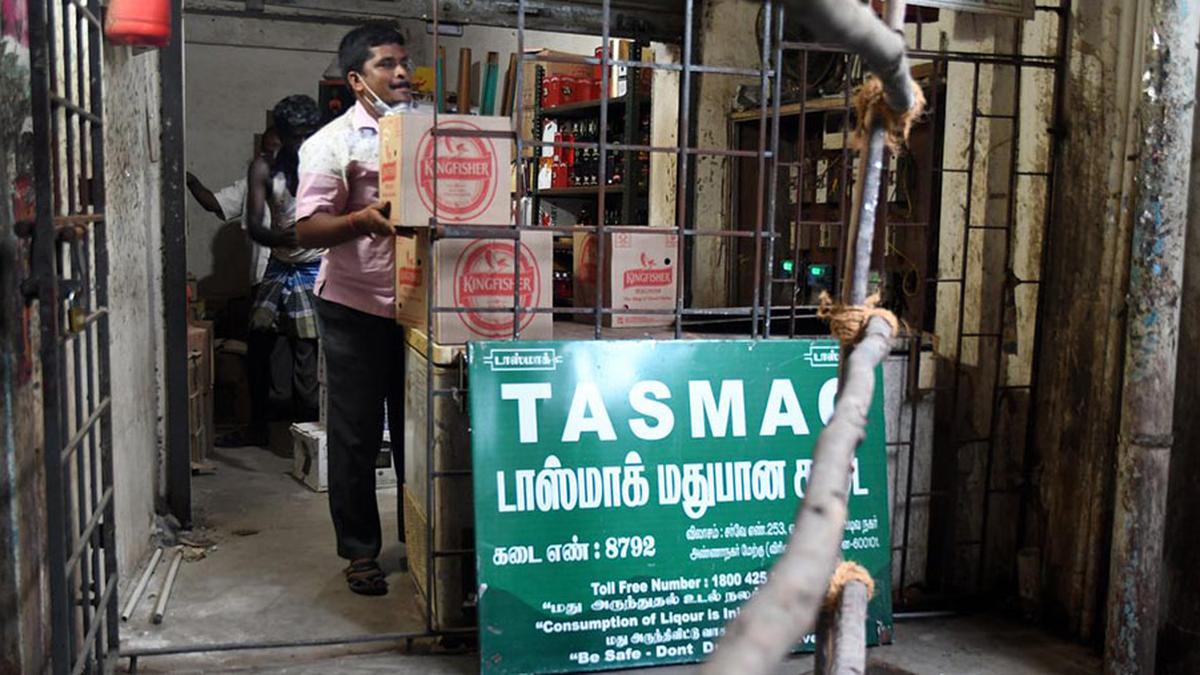
The dispute pertains to the ED’s search and seizure operations at the headquarters of TASMAC, the State’s public sector liquor retailer. The agency has alleged large-scale financial irregularities involving kickbacks, manipulation in procurement, and laundering of illicit proceeds linked to TASMAC’s business activities. The Tamil Nadu government, under Chief Minister M.K. Stalin, has firmly rejected these claims, accusing the BJP-led Union government of misusing Central agencies to harass political rivals and undermine the State’s autonomy.
Published – October 14, 2025 11:30 pm IST