

By using this site, you agree to the Privacy Policy and Terms of Use.
Accept
India Times NowIndia Times NowIndia Times Now
Notification Show More
Font ResizerAa
  • India News
    India News
    Politics is the art of looking for trouble, finding it everywhere, diagnosing it incorrectly and applying the wrong remedies.
    Show More
    Top News
    The States Braces for Protests Over New COVID Rules
    August 29, 2021
    Ajaneesh Loknath interview: On ‘Kantara: Chapter 1’ and his hit journey with Rishab Shetty
    October 29, 2025
    N. Ram calls on Chief Minister, presents him The Hindu Year Book 2026
    January 1, 2026
    Latest News
    BCCI fines Rajasthan Royals manager Bhinder ₹1 lakh for PMOA protocol breach, issues warning
    April 17, 2026
    Mob attacks Assam forest range office over alleged land encroachment, several injured
    April 17, 2026
    EWS can’t seek age relaxation, enhanced attempts like SC,ST, OBC: Delhi High Court
    April 17, 2026
    From ultra left to campaigner for Tamil Brahmins
    April 17, 2026
  • Technology
    TechnologyShow More
    Strengthening the Team: Thryve PR Onboards Pranjal Patil as PR Executive & Project Manager
    October 1, 2025
    How to Take the Perfect Instagram Selfie: Dos & Don’ts
    October 1, 2021
    Apple iMac M1 Review: the All-In-One for Almost Everyone
    Hands-On With the iPhone 13, Pro, Max, and Mini
    September 4, 2021
    Apple VS Samsung– Can a Good Smartwatch Save Your Life?
    August 30, 2021
  • Posts
    • Post Layouts
      • Standard 1
      • Standard 2
      • Standard 3
      • Standard 4
      • Standard 5
      • Standard 6
      • Standard 7
      • Standard 8
      • No Featured
    • Gallery Layouts
      • Layout 1
      • Layout 2
      • layout 3
    • Video Layouts
      • Layout 1
      • Layout 2
      • Layout 3
      • Layout 4
    • Audio Layouts
      • Layout 1
      • Layout 2
      • Layout 3
      • Layout 4
    • Post Sidebar
      • Right Sidebar
      • Left Sidebar
      • No Sidebar
    • Review
      • Stars
      • Scores
      • User Rating
    • Content Features
      • Inline Mailchimp
      • Highlight Shares
      • Print Post
      • Inline Related
      • Source/Via Tag
      • Reading Indicator
      • Content Size Resizer
    • Break Page Selection
    • Table of Contents
      • Full Width
      • Left Side
    • Reaction Post
  • Pages
    • Blog Index
    • Contact US
    • Search Page
    • 404 Page
    • Customize Interests
    • My Bookmarks
  • Join Us
Reading: India needs to invest more in accelerating diversification of food production: FAO Chief Economist
Share
Font ResizerAa
India Times NowIndia Times Now
  • Finance ₹
  • India News
  • The Escapist
  • Entertainment
  • Science
  • Technology
  • Insider
Search
  • Home
    • India Times Now
    • Home 2
    • Home 3
    • Home 4
    • Home 5
  • Categories
    • Technology
    • Entertainment
    • The Escapist
    • Insider
    • Finance ₹
    • India News
    • Science
    • Health
  • Bookmarks
    • Customize Interests
    • My Bookmarks
  • More Foxiz
    • Blog Index
    • Sitemap
Have an existing account? Sign In
Follow US
Home » Blog » India needs to invest more in accelerating diversification of food production: FAO Chief Economist

India needs to invest more in accelerating diversification of food production: FAO Chief Economist

krutikadalvibiz
Last updated: September 14, 2025 2:01 pm
krutikadalvibiz
Published: September 14, 2025
Share
SHARE


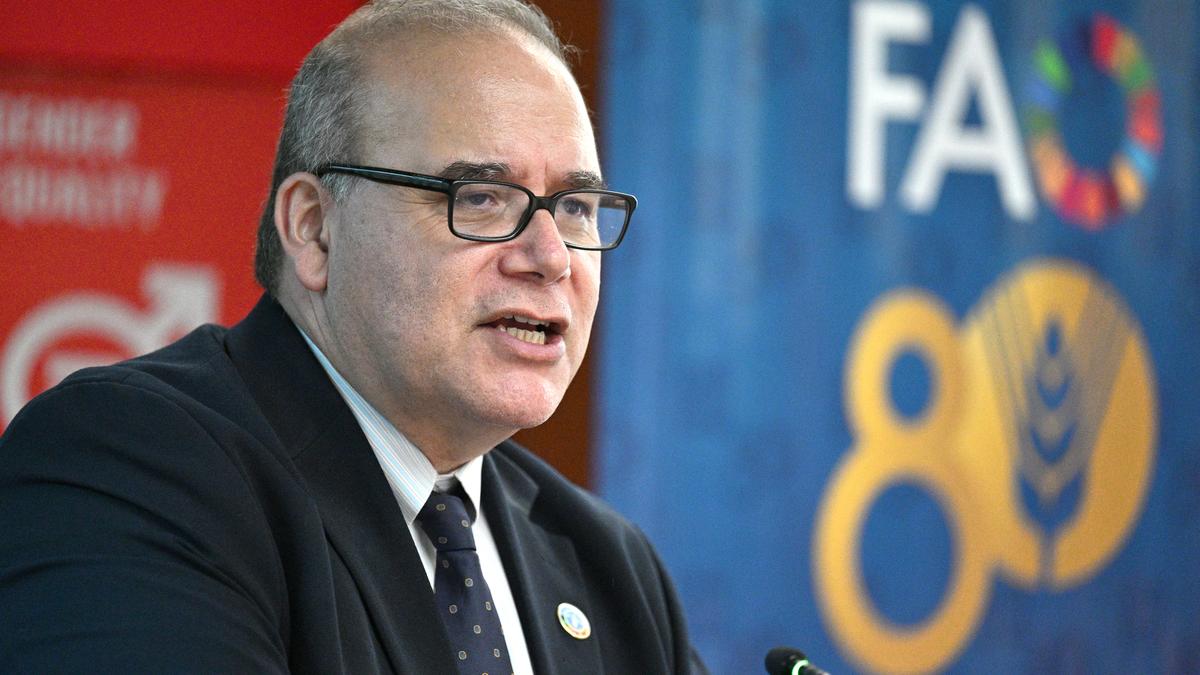
Maximo Torero Cullen, Chief Economist of the Food and Agriculture Organisation of the United Nations (FAO) in New Delhi, on September 09, 2025.

Maximo Torero Cullen, Chief Economist of the Food and Agriculture Organisation of the United Nations (FAO) in New Delhi, on September 09, 2025.
| Photo Credit: Shashi Shekhar Kashyap

About 40.4% of the Indian population (approximately 60 crore people) are unable to afford a healthy meal, said Maximo Torero Cullen, Chief Economist, Food and Agriculture Organisation (FAO) of the United Nations.

Talking to The Hindu, Dr. Cullen said the number was a significant decrease compared to FAO’s assessment in 2023 that 74.1% of India’s population was unable to afford a healthy diet in 2021. He said India needed to start to invest more in accelerating the diversification of food production.

Dr. Cullen said India played a crucial role in achieving the Sustainable Development Goals of zero hunger by 2030 because of the level, the size and the population of the country.

“Reduction of hunger in India affects the world and affects, of course, South Asia. So India, I think, has a huge role to play. That’s why we believe it’s so important that they continue and accelerate the transformation. India needs to move to the higher level — that is access to healthy diets, which right now is 40.4% of the population. So we need to improve that even more and also to find ways to assure this today and tomorrow,” he said.

“The Green Revolution played its role, but now it’s time to do more. So don’t forget about it, but do more. We need to do more,” Dr. Cullen said.

On FAO’s assessment in 2023 that 74.1% of India’s population was unable to afford a healthy diet in 2021, he said that in 2024, the percentage of the population that could not afford a healthy meal was 40.4.

“The methodology is improved. So yes, there is an important decrease. So the number to compare is basically to look at the State of Food Security and Nutrition in the World [SOFI] of this year to look at the previous year’s number. But yes, there is a significant improvement, but still it’s too high. Healthy diet is diversity. It means fruits and vegetables, proteins, and also means cereals. More than 40% of the country’s population cannot afford a healthy diet. So it’s a minimum cost to healthy diet,” the FAO Chief Economist said.

Dr. Cullen added that the immediate step the Indian government should take to address the situation was diversification. “India needs to start to invest more in accelerating the diversification of production. To move from cereals to high-value commodities. Pulses could be an option because they are more nutritious, they also have proteins. So pulses is an option and this is very consistent with your culture. But India should move more to fruits and vegetables and that requires an effort because you will need to substitute at some point,” he said.

Tariff war

On the tariff war, he said the first problem of tariffs was inefficiencies. “You will be more inefficient in the way you move commodities. Because before you were optimising the world, now the world is segmented. The world that wants low tariffs, but the world that has now high tariffs. The second issue is uncertainty. The changes of tariffs every day has created a lot of uncertainty and that complicates markets. Although markets have already learned how to manage this uncertainty, so things don’t change too much,” he said.

Dr. Cullen, however, said the impact of food insecurity due to tariffs was not so high, but inefficiencies would be high. “But assume that they get into a situation where you play tit-for-tat, then this could be very dangerous. It’s not happening at this point, countries are not responding. So let’s see how it evolves, but uncertainty and inefficiencies will make us less resilient for sure, because we will have less places where to have food access because of the tariffs. It will affect farmers, it will affect the smallholders, especially will affect the farmers who are more linked to the markets. But what will happen at the end is that you will have a segmented trade. Instead of having a spaghetti bowl of the whole world, you will have segments. This is spaghetti bowl here, this little spaghetti bowl here. So a lot of inefficiency,” he added.

Relative to the impact of COVID-19, the impact of Ukraine on the food security was significantly smaller, Dr. Cullen said. “The impact of Ukraine was on 19 million people only. The impact of COVID was on 180 million people. Big difference,” he said, adding that there were a huge increase in the gender disparity in food security during COVID-19. “Now we are seeing a little increase again because food prices affect more women. Empowering women to more access to assets is important so that they can get more access to resources. Reducing wage inequalities for the same skill sets is also important as normally women earn less than men, 0.8 of a dollar of a man,” he said.

Published – September 14, 2025 07:27 pm IST


Source link

Violinists Lalitha, Nandini honoured – The Hindu
Telangana | Heatwave alert for multiple parts from April 14 to 18
Sargun Mehta shuts down pregnancy rumours with firm note, tells people to ‘calm down’
Revanth campaigns in Kerala, says LDF and BJP have secret pact
ISRO to launch U.S. satellite on December 24
Share This Article
Facebook Email Print
Leave a Comment

Leave a Reply Cancel reply

Your email address will not be published. Required fields are marked *

Follow US

Find US on Social Medias
FacebookLike
XFollow
YoutubeSubscribe
TelegramFollow

Weekly Newsletter

Subscribe to our newsletter to get our newest articles instantly!
[mc4wp_form]
Popular News
CryptocurrencyFinance ₹Investment

CRM, SNOW, HRL, FIVE and more

Times Desk
Times Desk
December 4, 2025
Row in Lok Sabha after Trinamool MP objects to deportation of Bangla-speaking people
Right to dignified death prevails over interest of the state: Supreme Court
Warangal, Nalagonda to get T-Hub like incubation centres: Minister Sridhar Babu
SWR to roll out ride-booking kiosks, global food chains at Bengaluru railway stations
- Advertisement -
Ad imageAd image
Global Coronavirus Cases

Confirmed

0

Death

0

More Information:Covid-19 Statistics
© INDIA TIMES NOW 2026 . All Rights Reserved.
Welcome Back!

Sign in to your account

Username or Email Address
Password

Lost your password?

