


The controversy surrounding the Subramaniya Swamy Temple at Thirupparankundram in Madurai has taken a new turn with a plea in the Supreme Court praying for the “takeover and control” of the temple by the Archaeological Survey of India (ASI). But, about 25 years ago, a well-intentioned initiative of the ASI to “take over and control” the Chola-period Arunachaleswara temple in Tiruvannamalai, about 200 km west of Chennai, ended in failure.
The Ancient Monuments and Archaeological Sites and Remains Act and Rules do not permit the ASI to take over or control any temple. At most, the agency can declare a temple a “monument of national importance” and designate areas near a protected monument as prohibited (up to 100 meters) or regulated (up to 200 meters) for the purposes of mining operations and construction.
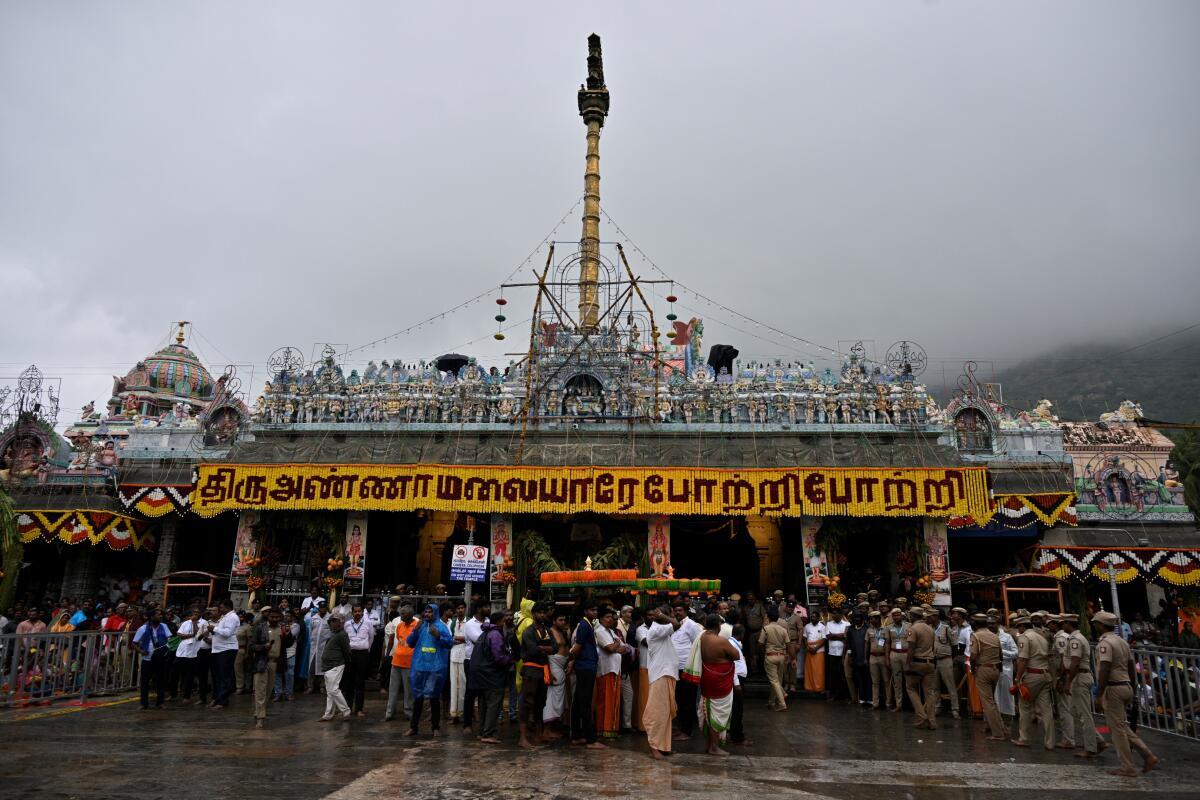
Devotees at Arunachaleswara temple in Tiruvannamalai
| Photo Credit:
C. Venkatachalapathy
Perhaps without this basic understanding, a row was fomented by vested interests – both political and commercial – over the ASI’s move to declare the Arunachaleswara temple a “monument of national importance.” Subsequently, those who protested the Central agency’s decision succeeded in blocking the Tiruvannamalai temple from getting developed on the lines of the Vaishno Devi temple in Jammu and Kashmir.
Situated at the foothills of a 2,668-foot-high hill, the Arunachaleshwara temple, spanning over a campus of 24.35 acres, is a fine illustration of Dravidian (South Indian) architecture and sculpture. According to inscriptions found there, the temple was built during the early Chola period (9th Century CE) and expanded during the periods of the later Chola, Hoysala, and Nayak kings. The temple has about 300 shrines that cover the Amman shrine; nine towers with four rajagopurams in four directions; many mandapams, including a 1,000-pillared one; and two huge tanks, the Sivaganga Punniya Theertham and the Brahma Theertham. Maintained by the Hindu Religious and Charitable Endowments Department of the State government, the temple had its last kumbabishekam in February 2017.
Rampant encroachments
It all began in April 2002 when then Union Minister for Tourism and Culture Jagmohan visited the temple town. Though impressed by the beauty of several features of the temple – the architecture, sculpture, structural engineering, and art – he was disturbed by the sight of umpteen shops and encroachments in the vicinity of the temple.
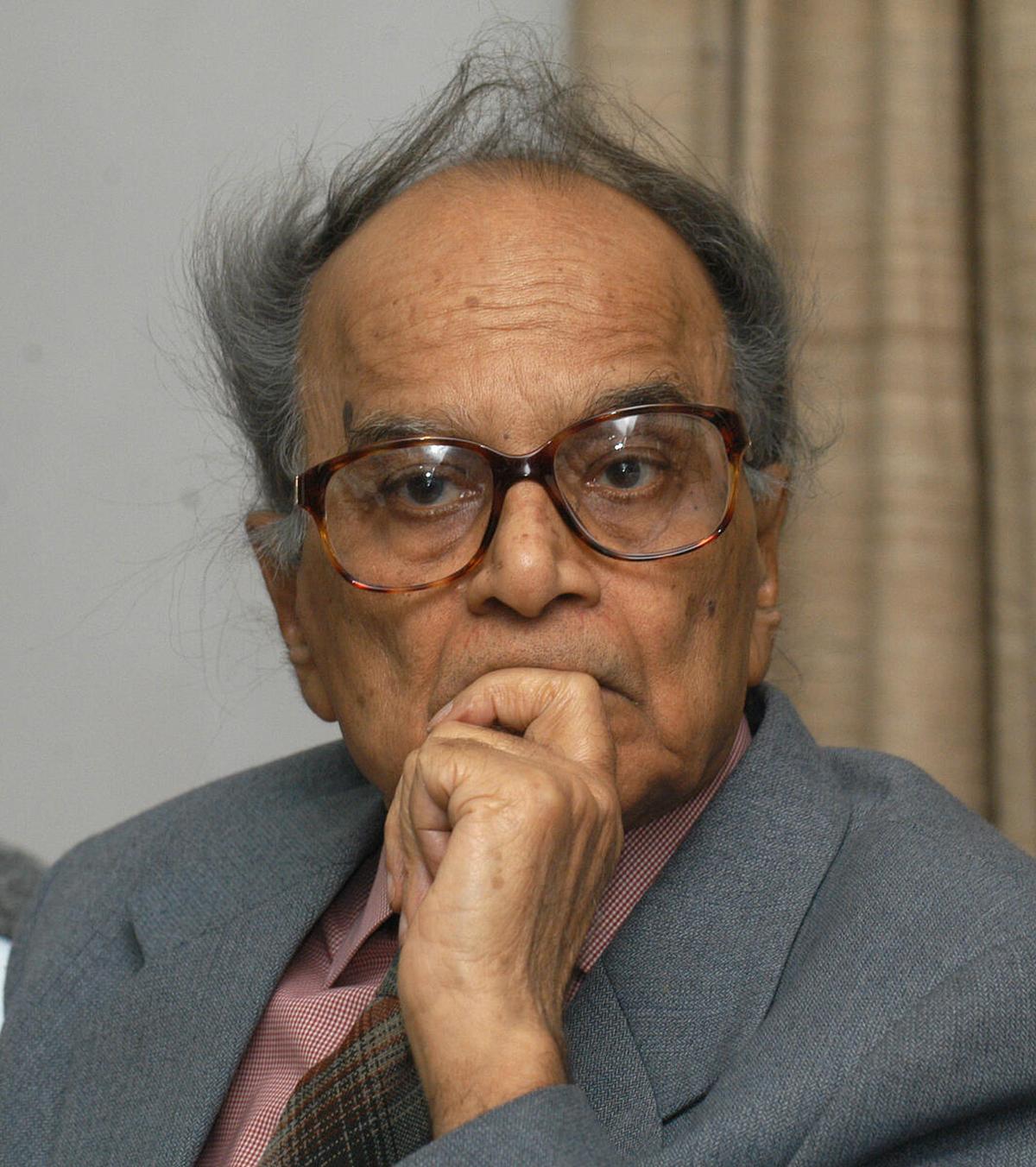
Union Minister Jagmohan
| Photo Credit:
V. Sudershan
In fact, the problem of encroachments has only grown bigger over the years, even as the authorities, at regular intervals, have been carrying out their removal. About two months ago, encroachments – mostly roadside outlets and extensions of existing shops on all four Mada Streets around the temple – were demolished to provide more space for pilgrims during the Karthigai Deepam festival in December. The problem has become acute; a portion of the hill and the 14-km-long Girivalam Path near the temple has witnessed illegal settlements to such an extent that they had become vulnerable to landslips. On December 1, 2024, seven persons died after heavy rain triggered a landslip in the hills. The authorities are now taking steps to notify certain places near the temple as a reserve forest to prevent the occurrence of landslips. Structurally too, damages were caused to the temple in the absence of a conservation plan, as the skin of the granite stones at the base of the gopuram on the northern side peeled off due to sand blasting, according to the Manual on Conservation and Restoration of Monuments authored by R. Kannan, former officer of the Indian Administrative Service (IAS) of the 1981 batch, known for his passion for heritage conservation, in 2007.
Controversial plan
Notwithstanding the problem of encroachments, Jagmohan had advised his officials to draw up a plan for the development of the temple. “Normally, either a proposal is sent from the local unit of the ASI or from its Director-General’s office. However, at Tiruvannamalai, it was the Minister who initiated the proposal, they [local traders] claim,” stated a report of The Hindu on November 9, 2002. The traders and the real estate lobby had apprehended that the restrictions, to be imposed by the ASI in the event of implementation of the conservation plan, would hit their business badly.
C.P. Singh, Dr. Kannan’s batchmate in the IAS and who was the State Commissioner of Tourism and Managing Director of the Tamil Nadu Tourism Development Corporation in 2002-2003, recalls that he was present during a discussion that Jagmohan had had with then Tourism Secretary at the Centre, Rathi Vinay Jha, in Chennai. Ms. Jha had impressed upon the Minister about the need for developing the Tiruvannamalai town and the temple, which had suffered from a lack of facilities for devotees who would come there in large numbers. It was then that the decision was taken to get the development plan executed through the ASI, Mr. Singh adds.
The fact that the ASI in September issued a preliminary notification under Section 4(1) of the Act came to the fore only when the traders and political parties, at the local level, began their protest in the first week of November. The notification had expressed the Central agency’s intention to declare the Arunachaleswara temple a “monument of national importance.” It was pasted in the precincts of the temple and in other public places of Tiruvannamalai to enable persons and organisations having objections to the proposal to send in their views within six weeks, before November 20. The law stipulates that the Director-General, ASI, considers all objections, and if a final notification were to come through, an area with a radius of up to 300 metres from the temple would be declared “prohibited and regulated.”
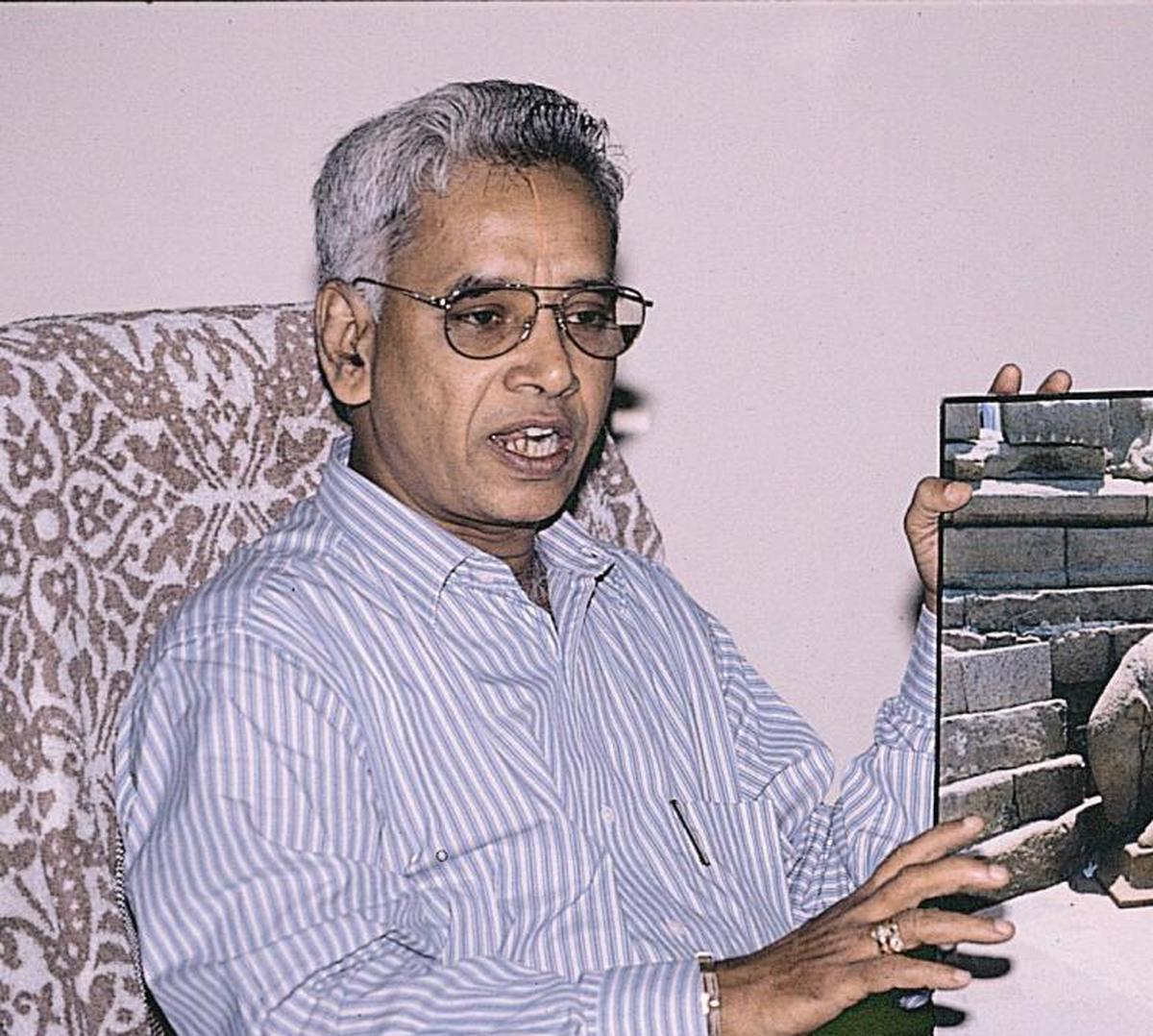
K.T. Narasimhan
On November 5, 2002, then superintending archaeologist of the ASI for Chennai circle, K.T. Narasimhan, held a meeting with representatives of the Arunachaleswara Temple Protection Committee in Tiruvannamalai and explained to them the rationale behind the ASI’s plan. But, the representatives had walked out of the meeting. The next day, the town observed a bandh as a mark of protest against the proposed “takeover.” Possibly seeing in this episode as an opportunity to corner the Union government, which had representatives of her party’s principal adversary, the DMK, then Chief Minister Jayalalithaa, who headed the AIADMK, had decided to challenge the ASI’s notification in the Madras High Court. This newspaper on November 7, 2002, reported four reasons, as ascribed by the State government. Among them were the “constant and strenuous efforts” made by the government in enabling the growth of the temple in stature and the “unilateral move” made by the ASI without consulting the State government.
In New Delhi, Jagmohan himself had clarified the position to the media that the idea behind the ASI’s efforts to declare any site a monument of national importance was to restore such a site to its original glory. Echoing the Minister’s position, Mr. Narasimhan told journalists in Chennai that “our primary duty is to preserve the grandeur of the temple for posterity,” said this daily on November 8, 2002. “We will not interfere with the religious administration or levy any fee on devotees for temple upkeep,” he explained. His organisation had “preserved” as many as 410 ancient structures and sites in Tamil Nadu, including the Brahadeeswarar temple at Thanjavur and the St. Mary’s Church at the Secretariat, but the State government did not raise any objection in the past to any of these being brought under “our purview,” Mr. Narasimhan added. The Hindu, in its editorial titled “Conserving a heritage” published on November 11, 2002, supported the ASI’s initiative and argued that “it would be against the long-term interests to block it by orchestrated ‘public protests’ on specious grounds or to blow it up as a ‘Centre versus State’ issue or by resorting to legal quibbles.”

Jayalalithaa
| Photo Credit:
M. Prabhu
Political row
Meanwhile, the critics of the move had mobilised support from almost the entire political class comprising the AIADMK, DMK, Congress, and Marumalarchi Dravida Munnetra Kazhagam (MDMK). A former official of the ASI recounts that even the State unit of the Bharatiya Janata Party, which had headed a coalition ministry at that time, was opposed to the proposed conservation project. Kanchi Sankaracharya Jayendra Saraswathi, too, jumped onto the protest bandwagon.
On November 13, the Madras High Court stayed the notification. The next day, the Centre approached the Supreme Court with a petition, giving its justification, according to a news item of this daily on November 15, 2002. Despite being one of the venerated places of the country, Tiruvannmalai had been desecrated by “rampant and illegal” construction at its base, between the path of the hill and the hill itself. In August 1997, two natural caverns, Skandashramam and Virupakshi ashram, and the passage leading to Skandashramam from Ramanashramam were declared monuments of national importance, the Centre had submitted before the Supreme Court. However, the State government contended that the degree of encroachments in the area was “minimal” and it did not require Central intervention as it could be tackled by the district administration and the local body, according to a report of The Hindu on May 1, 2004.
With the Congress-led United Progressive Alliance government [in which the DMK was a major constituent] taking charge at the Centre subsequently, the Union government informed the Court on July 12 that year that it had withdrawn the September 2002 notification, shelving the Tiruvannamalai temple conservation project.



