

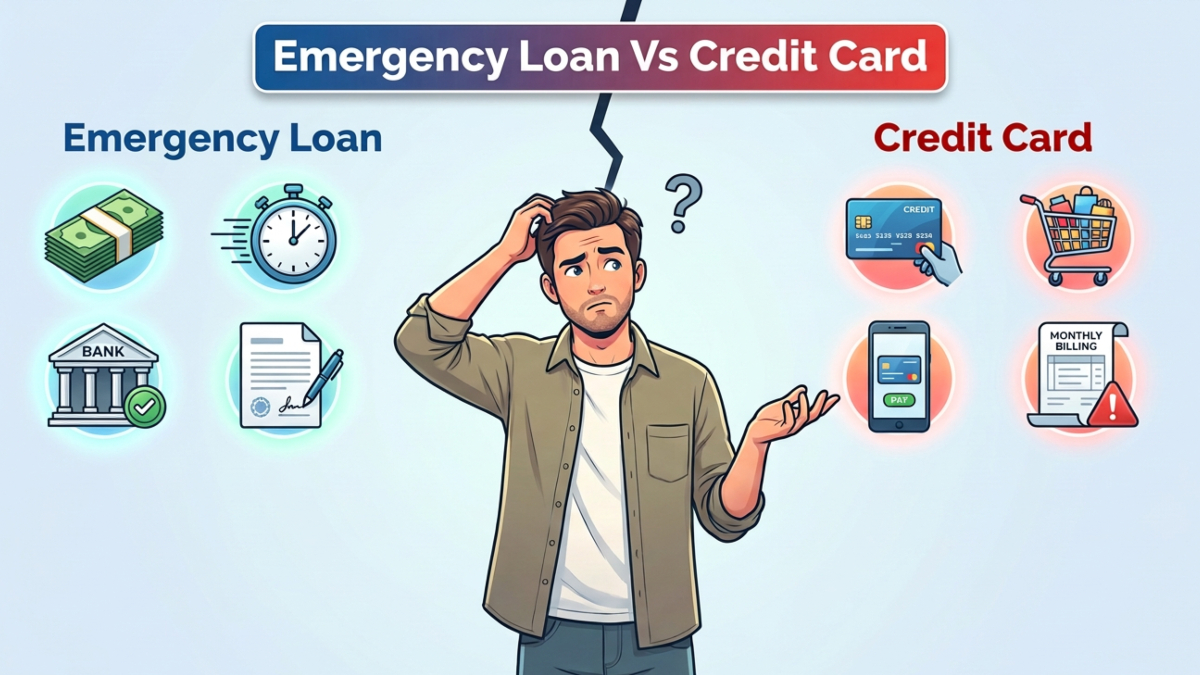

Unexpected expenses can arise at any time – a medical emergency, urgent home repairs, vehicle breakdowns, or sudden travel needs. In such situations, many people turn to either a credit card or an emergency loan for immediate financial support. While both options provide quick access to funds, experts say that they differ significantly in cost, repayment structure, and long-term financial impact. Understanding these differences can help borrowers make informed decisions based on their financial needs rather than convenience alone,” said Suresh Kumar, Chief Executive Officer, EmergencyPaisa.
Understanding the Two Options
A credit card offers a pre-approved credit limit that can be used repeatedly for purchases or cash withdrawals. If the outstanding balance is paid in full before the due date, users generally avoid interest charges on purchases. However, carrying forward unpaid balances often attracts high interest rates, making it an expensive borrowing option over time.
An emergency loan, on the other hand, is a fixed amount borrowed for a specific tenure and repaid through Equated Monthly Instalments (EMIs). Borrowers know their repayment schedule in advance, making budgeting and financial planning easier.
Comparing the cost of borrowing
According to Kumar, the biggest difference between the two lies in the overall cost.
For example, imagine someone needs Rs 1,00,000 for six months.
Scenario 1: Emergency Loan
• Loan Amount: Rs 1,00,000
• Interest Rate: 14 per cent per annum
• Tenure: 6 months
• Approximate EMI: Rs 17,300
• Total Repayment: Around Rs 1,03,800
• Total Interest Paid: Approximately Rs 3,800
Scenario 2: Credit Card
• Amount Used: RS 1,00,000
• Interest Rate: Around 3.5 per cent per month (approximately 42 per cent annually)
• Minimum payment made each month
If only the minimum amount is paid every month, the borrower may continue paying interest for a prolonged period, significantly increasing the total repayment amount. “In many cases, the total interest paid can exceed the interest on an emergency loan several times over. This illustrates why understanding repayment behaviour is as important as comparing interest rates,” he added.
Meanwhile, in a big relief for credit card users, the RBI’s new rule provides a 3-day grace period on bill payment.
When does a credit card make more sense?
A credit card is generally a suitable option when:
• The amount required is relatively small.
• The borrower is confident of repaying the full outstanding amount before the due date.
• The expense involves online or retail purchases where interest-free periods and reward benefits can be utilised.
• Cashback, reward points, or promotional offers add value without encouraging unnecessary spending.
However, using a credit card for cash withdrawals should generally be avoided unless absolutely necessary, as interest usually starts accruing immediately along with additional transaction charges.
When is an emergency loan a better choice?
According to experts, an emergency loan may be a more practical solution when:
• A larger amount is required.
• The borrower needs a fixed repayment schedule.
• The repayment is expected over several months.
• Predictable EMIs are preferred for better financial planning.
• Avoiding revolving debt is a priority.
Because EMIs are fixed, borrowers have greater visibility over their monthly financial commitments and the total borrowing cost.
The role of repayment behaviour
Financial discipline plays a crucial role in determining which option is more economical. “For instance, a borrower who consistently clears the entire credit card bill every month effectively uses short-term credit at little or no interest. In contrast, someone who repeatedly pays only the minimum due may accumulate interest rapidly, increasing the total debt burden over time,” CEO of EmergencyPaisa explains.
Similarly, missing EMIs on an emergency loan can lead to penalties and may impact credit history. Regardless of the borrowing method, timely repayments remain essential.
Factors to Consider Before Choosing
Before deciding between an emergency loan and a credit card, borrowers should evaluate:
• The amount required.
• Expected repayment period.
• Applicable interest rates and charges.
• Monthly repayment capacity.
• Processing fees or additional costs.
• Existing debt obligations.
• Impact on future financial commitments.
ALSO READ:



