

By using this site, you agree to the Privacy Policy and Terms of Use.
Accept
India Times NowIndia Times NowIndia Times Now
Notification Show More
Font ResizerAa
  • Bharat Shreshtha Ratna Sanman
  • India News
  • Categories
    • Technology
    • Entertainment
    • The Escapist
    • Insider
    • Finance ₹
    • India News
    • Science
    • Health
Reading: Aerosols aloft lift, thicken winter fog over North India: IIT-M study
Share
India Times NowIndia Times Now
Font ResizerAa
  • Bharat Shreshtha Ratna Sanman
  • India News
  • Categories
Search
  • Bharat Shreshtha Ratna Sanman
  • India News
  • Categories
    • Technology
    • Entertainment
    • The Escapist
    • Insider
    • Finance ₹
    • India News
    • Science
    • Health
Have an existing account? Sign In
Follow US

Home » Aerosols aloft lift, thicken winter fog over North India: IIT-M study

India News

Aerosols aloft lift, thicken winter fog over North India: IIT-M study

Times Desk
Last updated: January 10, 2026 12:00 am
Times Desk
Published: January 10, 2026
Share
SHARE


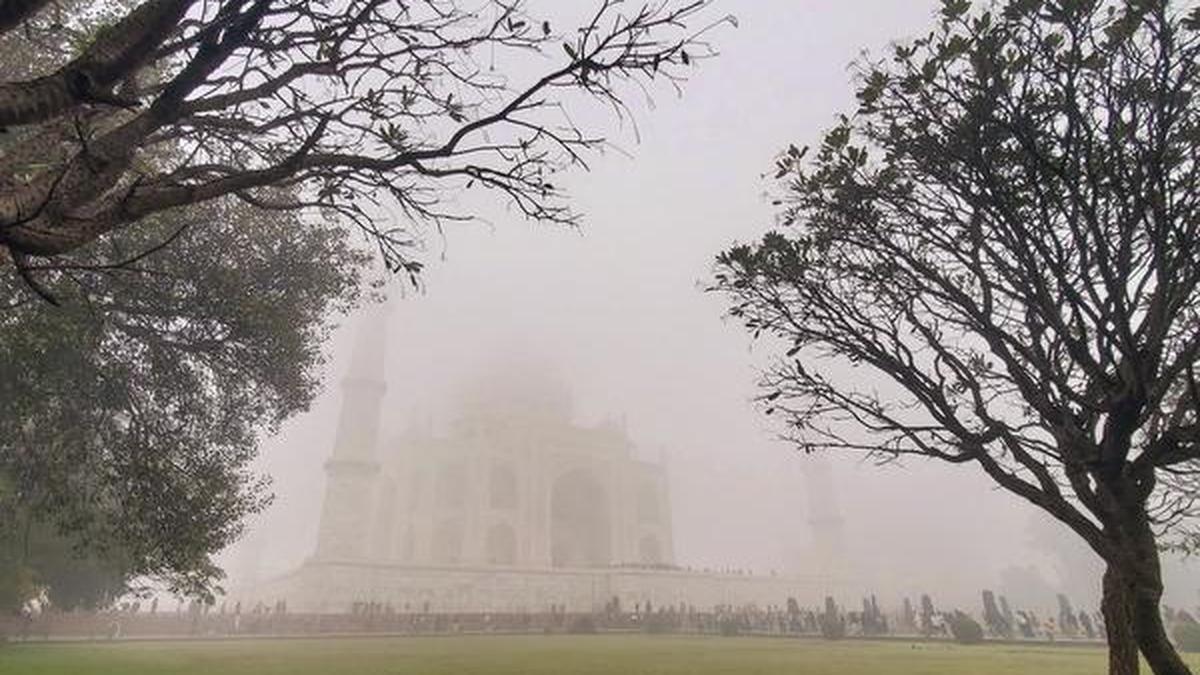
The Taj Mahal in Agra covered by fog as people visit the iconic structure during the holiday season on December 28, 2025.

The Taj Mahal in Agra covered by fog as people visit the iconic structure during the holiday season on December 28, 2025.
| Photo Credit: PTI

Winter fog is a familiar hazard across the Indo-Gangetic Plain, reducing visibility for hours at once. The fog often forms inside polluted air near the ground and polluted events tend to last longer. Forecasters have been trying to understand the fog’s vertical structure, i.e. how thick the fog layer is, because thickness helps determine how long it will persist.

New research from IIT-Madras has reported based on 15 years of CALIPSO satellite data that aerosol loading above fog over the Plain thickens fog layers. The top rises while the base stays near the ground, and droplets near the top become larger. The findings were published in Science Advances on January 9.

The researchers created a number called AODFOG to estimate how much dust and smoke sat in the air above a layer. Then they looked at a part of the Plain where thick fog occurs often and compared days with low AODFOG (less pollution overhead) to those with high AODFOG. On more polluted days, the layer was about 17% thicker because its top rose higher.

Next, the researchers used MODIS satellite data to estimate the size of water droplets near the top. On days with high AODFOG, the droplets were slightly bigger on average.

Finally, the team used a weather model to replay a major fog event in January 2014. The model suggested a self-strengthening cycle: when there were more pollutants in the air, there were more ‘seeds’ for water vapour to stick to, so more fog droplets formed. As vapour condensed, it released some heat. As many droplets formed, the heat could stir the fog and help it mix upwards.

At the same time, a fog layer with many droplets could lose heat more efficiently by emitting infrared radiation, keeping the air near the top cold and humid, conducive for more water vapour to condense there.

“North India’s winter haze is a vicious cycle: aerosols fuel fog, fog traps pollution, impacting air quality, aviation, and daily life. Tackling air pollution can clear skies, boost health, and energise the economy,” IIT-Madras earth system scientist and study corresponding author Chandan Sarangi told The Hindu.

The team also said soot can absorb sunlight and warm air near or above the fog, a “semi-direct” effect they didn’t isolate because aerosol properties above the fog are poorly known and observations are too sparse to constrain the model. This is a limitation.

Published – January 10, 2026 05:30 am IST


Source link

Two students diagnosed with mild jaundice, one with malaria in Saluru residential schools
The RSS is a ‘ten-headed Ravana that represents regressive tendencies’: Congress leader
Madras University, Karur Vysya Bank jointly launch Indigenous and Endangered Languages Lab
Hidden cost of polluted groundwater
NCERT textbook row: Kerala Education Minister welcomes SC intervention, seeks probe
Share This Article
Facebook Email Print
Leave a Comment

Leave a Reply Cancel reply

Your email address will not be published. Required fields are marked *

Follow US

Find US on Social Medias
FacebookLike
XFollow
YoutubeSubscribe
TelegramFollow

Weekly Newsletter

Subscribe to our newsletter to get our newest articles instantly!
[mc4wp_form]
Popular News

Run for cancer awareness on Feb. 1

Times Desk
Times Desk
January 21, 2026
Proposal for new design of border fencing under consideration of Centre: BSF IG
ADBE ULTA PODD KLAR OFRM
Governor calls for collective efforts to make Karimnagar TB and drug free district
Army Chief reviews counter-terror ops in Jammu and Kashmir, deliberates on infusion of advanced tech
- Advertisement -
Ad imageAd image
Global Coronavirus Cases

Confirmed

0

Death

0

More Information:Covid-19 Statistics
© INDIA TIMES NOW 2026 . All Rights Reserved.
Welcome Back!

Sign in to your account

Username or Email Address
Password

Lost your password?

