


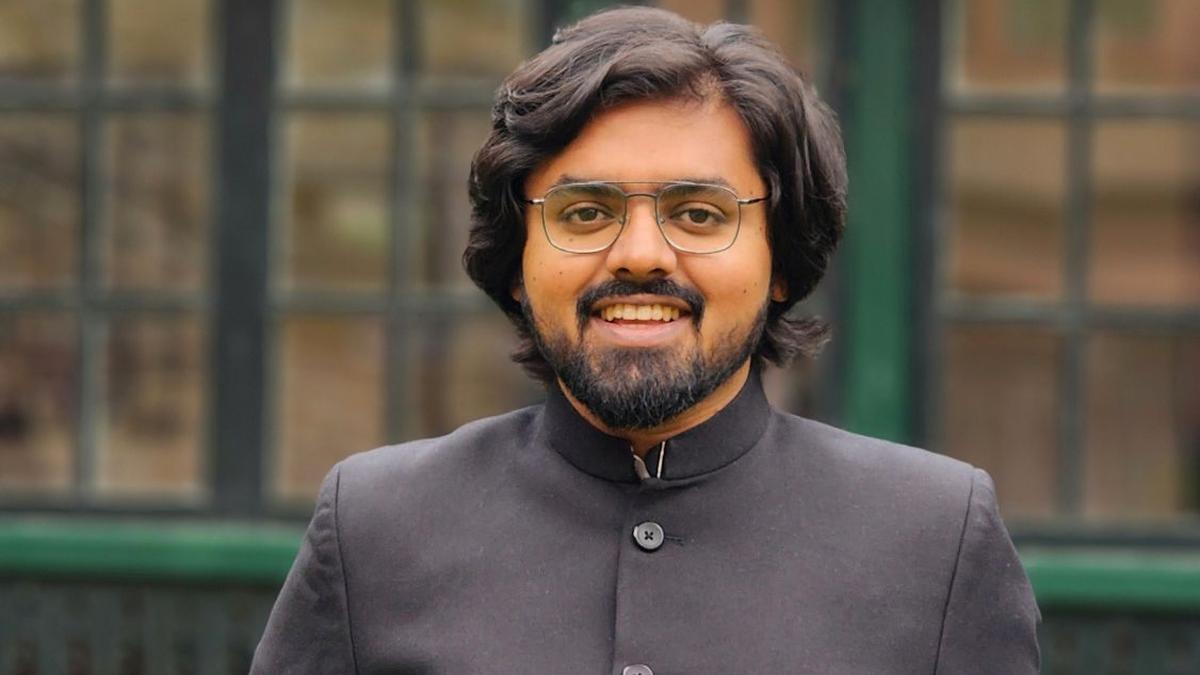
Dilip K. Kainikkara, Sub Collector, Tirur
Young IAS officer and Tirur Sub Collector Dilip K. Kainikkara has outlined a reform wish list for the newly elected United Democratic Front (UDF) government in Kerala. Among his key recommendations are the bifurcation of Malappuram district and an increase in the pension age to 58.
In a Facebook post, Mr. Kainikkara argued that dividing large districts such as Malappuram would significantly improve administrative efficiency and public access to government services. In his view, a district comprising roughly seven Assembly constituencies, equivalent to a Lok Sabha constituency, represents an ideal administrative size.
Though creating new districts through bifurcation would entail significant financial costs, the resulting improvements in governance and public convenience would make it a worthwhile investment, he said.
A graduate of the Indian Institute of Technology (IIT) Madras, Mr. Kainikkara also advocated raising the retirement age of government employees to 58 from the current 56. “We are a society with strong health indicators and high life expectancy. Starting pension payments at 56 is irrational. While 60 would be ideal, even raising it to 58 would represent a major rationalisation of government human resources,” he pointed out.
Mr. Kainikkara prefaced his suggestions by noting that Kerala is entering a three-year period without any major elections, making it an opportune time for the government to undertake long-term structural reforms. At the same time, he cautioned that such measures could initially face resistance from various quarters despite their potential long-term benefits.
The third proposal in Mr. Kainikkara’s reform wish list is the promotion of nightlife activities in Kerala, aimed at boosting tourism and attracting greater investment in the service sector.
His fourth recommendation calls for limiting Malayalam-medium instruction to the lower primary level, while transitioning upper primary, high school and higher secondary education to English medium. “We should not create new class divisions on top of the existing ones,” he observed, arguing that unequal access to English education could deepen social disparities.
The final proposal on his list is a scientific overhaul of the school marking and grading system. He called for an end to the indiscriminate awarding of A-plus grades and urged the introduction of a grading framework that more accurately reflects students’ actual academic performance. He also stressed the need to reform the unconditional all-pass system to ensure that students attain basic learning outcomes at every stage of schooling.
Mr. Kainikkara, a 2022-batch IAS officer from Kottayam, also invited the public to share their own reform ideas and respond to his proposals.
The post generated extensive engagement, with users both applauding and criticising his suggestions while adding several of their own. These included stricter penalties for littering and traffic violations, the introduction of AI and robotics in school curricula, regulation of private hospital fees, caps on pension payouts, and recovery of plastic waste management costs at source.
Mr. Kainikkara responded positively to the wide range of reactions.
Published – May 09, 2026 10:06 pm IST




