

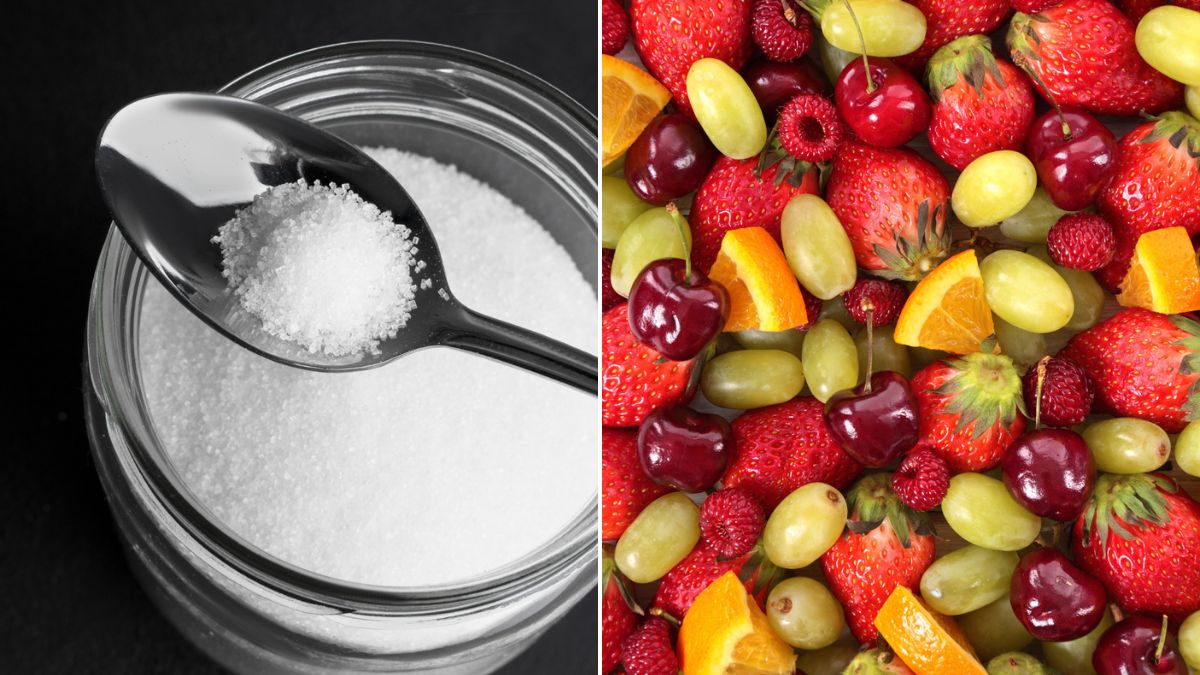

If you’ve ever wondered why people are told to cut back on sugar but are still encouraged to eat fruit every day, you’re not alone. After all, fruits contain natural sugar, which often leaves people asking whether it’s really any different from the sugar found in desserts, soft drinks or processed snacks.
According to Dr Jeremy London, a board-certified heart surgeon with more than 25 years of experience, the answer is both yes and no. In a recent Instagram video, he explained that while the sugar itself is chemically the same, the way the body processes it depends entirely on what comes with it.
Is fruit sugar the same as added sugar?
Dr London said that, from a chemical perspective, the sugar found in fruit and the sugar added to processed foods are identical.
If the sugar molecules were isolated and consumed on their own, the body would process them in exactly the same way. The real difference, he explained, lies in what surrounds those sugar molecules.
In his words, “Well, you know, chemically the sugar is identical, but an apple has sugar (and) a glazed donut has sugar. But the way we metabolise those two things is completely different… In the end, sugar is sugar, but what it comes with makes a tremendous difference.”
Why whole fruits affect your body differently
As Dr London put it, “The difference isn’t the sugar. It’s the packaging.”
Whole fruits naturally contain sugar, but they also provide fibre and water. These slow down digestion and help reduce the sharp rise in blood sugar that would typically occur if the same amount of sugar were consumed on its own.
Fruits are also rich in polyphenols and micronutrients, giving them nutritional benefits that refined sugar simply does not offer.
Explaining further, Dr London said, “An apple has fibre. It has water, polyphenols, and antioxidants. These things slow the digestive process. It affects how your body processes the sugar. So, it impacts your glycemic index as well as your overall metabolism of the sugar itself.”
Why whole fruit is the better choice
Dr London stressed that these benefits apply specifically to whole fruits.
“Now, when I say whole fruits, I do mean whole fruits because fruit juices and dried fruits, you lose these components as well,” he noted.
He explained that fruit juice removes nearly all of the fibre, causing it to behave much more like a sugary drink. Dried fruit, meanwhile, retains its fibre but loses most of its water, concentrating the sugar and making it much easier to consume larger amounts in a short time.
Whole fruit is also more filling for the number of calories it provides than sugary drinks or processed snacks. According to Dr London, that makes it one of the best sources of natural sugar while also supplying the body with valuable nutrients that refined sugar alone cannot provide.
Disclaimer: Tips and suggestions mentioned in the article are for general information purposes only and should not be construed as professional medical advice.
ALSO READ: ‘An 800-calorie diet broke my body’: Woman reveals why she regained 50 kg after losing 35 kg



