


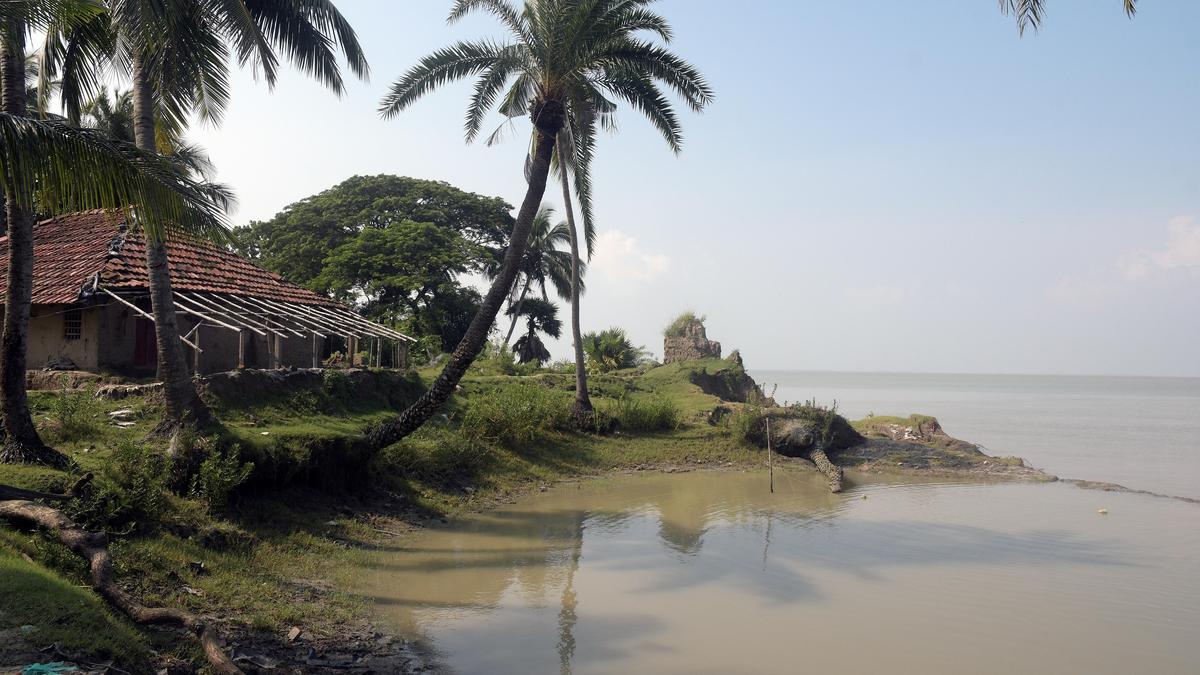
A view of the Ghoramara Island, more than 100 km from Kolkata, in the Sundarban area of the Bay of Bengal.
| Photo Credit: The Hindu
Observing that adhoc measures adopted to prevent coastal erosion of the Sundarbans, particularly the fast eroding Ghoramara island, will not yield fruitful results in the long run, the National Green Tribunal (NGT) has called for a comprehensive approach and set up a committee to come up with a report in three months.
The principal Bench of the NGT comprising Justice Prakash Shrivastava, Chairperson and expert member Afroz Ahmad, appointed a Joint Committee comprising the Director General Forest, Regional Office, Bhubaneshwar Ministry of Environment Forest and Climate Change, and Principal Chief Conservator of Forest, West Bengal.

“The Joint Committee will collect all the relevant facts and will prepare a comprehensive plan for the protection of the mangrove forest in the areas under consideration in this OA (Operative Application) and also the steps that can be taken for the protection of the coastal erosion in that area and further enhancing the mangrove coverage. Let this exercise be completed by the Joint Committee within a period of three months and the report be submitted immediately thereafter,” the order by the NGT dated February 17, 2026 said.
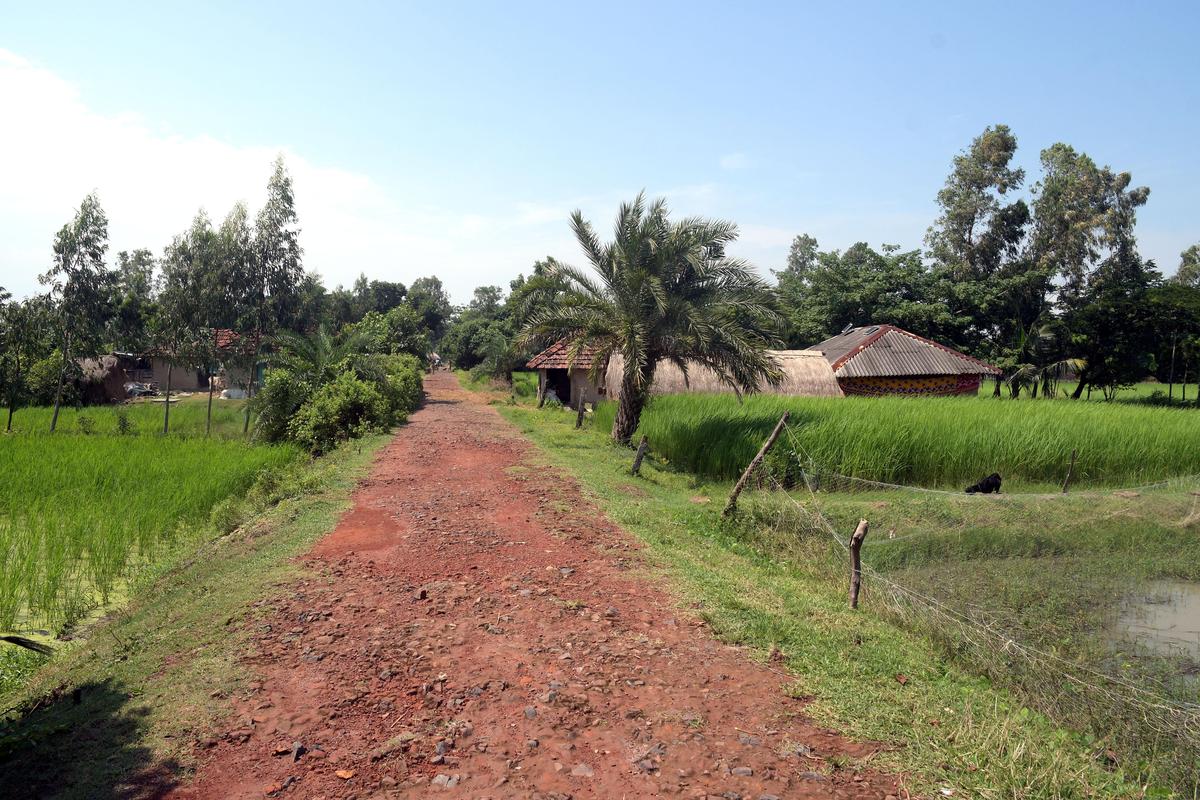
A view of the Ghoramara Island, more than 100 km from Kolkata, in the Sundarban area of the Bay of Bengal. File
| Photo Credit:
The Hindu
The Bench also directed that the committee in its report will also indicate the tentative expenditure, the probable sources of funding and the agencies responsible for the implementation of the scheme along with the timeline.
The NGT has taken suo motu cognisance of coastal erosion of the Sundarbans particularly Ghoramara Island based on a media report highlighting that nearly 40% of Ghoramara Island may shrink by 2042 due to advancing sea erosion.
Ghoramara Island, located at the southernmost tip of West Bengal next to Sagar Island has borne the maximum brunt of the coastal erosion and has shrunk from 8.59 sq. km in 1969 to 3.83 sq. km in 2019. The population of the island has also shrunk and the number of residents on the sinking island are about 4,000.
Scientific studies indicate that the Sundarbans collectively lost more than 250 sq. km of land between 1969 and 2019 due to coastal erosion.
Watch | The women saving the Sunderbans
The West Bengal Irrigation Department has informed the NGT that it has taken up certain measures for prevention of coastal erosion stretch of length 12.24 km involving ₹549.41 Lakh the NGT pointed out that no comprehensive long-term ecological protection strategy has been presented, particularly for safeguarding mangrove forests.
The Bench also noted that the gangetic alluvial delta is experiencing acute erosion due to geogenic factors, climate change, sea level rise, cyclonic activity, and anthropogenic interventions such as upstream dams and reduced sediment flow. The matter will come up for hearing again on May 28, 2026.
Published – February 19, 2026 03:43 pm IST



