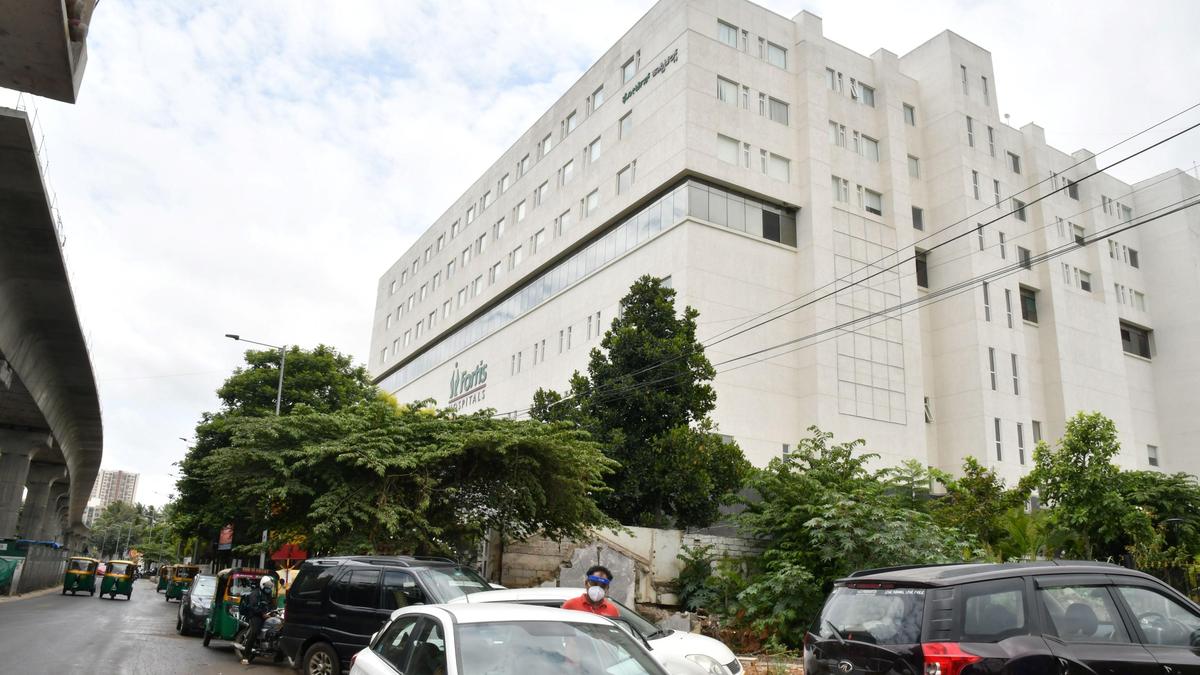
The surgery was performed at Fortis hospital on Bannerghatta Road in Bengaluru.
| Photo Credit: File photo
A Bengaluru-based hospital has performed a combined robot-assisted minimally invasive direct coronary artery bypass surgery (MIDCAB) and robotic radical prostatectomy in a single operative session. This multi-disciplinary intervention was carried out on a 56-year-old US-based NRI who was simultaneously diagnosed with coronary artery disease and prostate cancer – two serious conditions that traditionally require separate major surgeries.
The patient was found to have a critical blockage in one of the major coronary arteries, which significantly reduced blood flow to the heart, though his overall heart pumping function remained normal. At the same time, he was diagnosed with prostate cancer, which was causing obstructive urinary symptoms, including difficulty initiating urination, reduced urine flow, frequent urination, and a sensation of incomplete bladder emptying.
If left untreated, the cardiac condition carried the risk of heart attack or heart failure, while the cancer posed a risk of progression. While both conditions are individually treatable, managing them separately would have exposed the patient to a greater cumulative risk
Pre-operative evaluation
Following a detailed pre-operative evaluation and multi-disciplinary planning, a team of specialists at Fortis Hospital Bannerghatta Road performed the combined robot-assisted minimally invasive coronary artery bypass surgery (MIDCAB) and robotic radical prostatectomy to address both conditions in one sitting with safety and precision.
Giving details of the cardiac surgery, Sudarshan G.T., Director – MICS and Robotic Cardiac Surgery at the hospital, said a robot-assisted minimally invasive coronary artery bypass (MIDCAB) was done using the patient’s chest artery (Left Internal Mammary Artery – LIMA) to restore blood flow to the heart through small keyhole incisions without opening the chest. “This approach allowed us to safely restore blood flow to the heart with less trauma, smaller incisions and faster recovery. The procedure lasted one-and-a-half hours,” he said.
Although combining two major surgeries under a single anaesthesia is rare, in this case, it significantly helped avoid multiple major surgeries and hospital admissions, repeated exposure to anaesthesia, prolonged recovery and high risk, the doctor said.
Explaining about prostate cancer surgery, Mohan Keshavamurthy, Principal Director – Renal Sciences at the hospital, said, “We carried out a 3.5-hour long robot-assisted radical prostatectomy, which involved removal of the prostate and the nearby glands where cancer can spread, with temporary stents placed to protect the urine passage.
“This approach offers excellent cancer control with high precision, minimal blood loss and faster recovery. Performing it in a single sitting along with cardiac surgery is highly complex, but it spares the patient the physical and emotional burden of two separate major operations. In this case, it allowed us to treat prostate cancer immediately after heart surgery, preventing disease progression, while keeping cardiac risk under control.” he said, adding that the patient was discharged within five days.
Published – January 22, 2026 09:37 am IST