


The smooth road, which snakes through the foothills of the Sabarimala forests, suddenly breaks off into a jagged, rocky stretch near Athumbumkulam, a tiny hamlet at Konni, Pathanamthitta.
A few hundred metres ahead, the path dips into a stream of crystal-clear water feeding the Kallar river. A narrow bridge spans across it, opening onto a gateway with an inscription, Ambedkar Memorial Model Village, the site of Chengara Samarabhoomi, one of the hard-fought land struggles of the marginalised communities in Kerala in recent times. Just past the gateway, the road opens into a clearing with a unique temple honouring three deities side by side: Ayyankali, B.R. Ambedkar, and Lord Buddha.
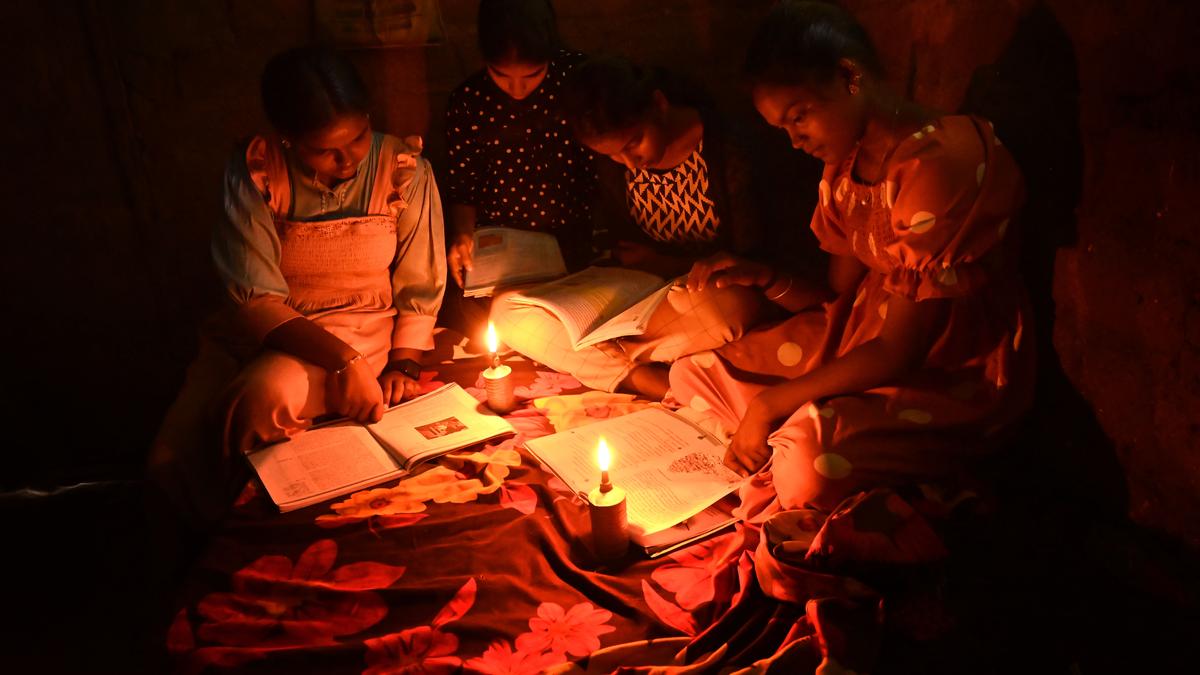
From the hillside, a life-size statue of Ambedkar overlooks the settlement. A brightly painted building stands out from the modest settings of the area. At first glance, it could be mistaken for a model school. However, the cacophony of a school is replaced by heavy silence. Inside the building, which is a community centre, sits Arya Rajesh, a Class VIII student at Konni Government School, engrossed in reading. She spends most of her time here whenever she is home. “It’s very hard to spend time inside my house, especially during vacation. The stench of diesel lamps lingers through the day. Fearing attacks from wild animals, our parents don’t let us play outside,” she says.
She is one of the nearly 200 children in Chengara who are forced to make do with rudimentary facilities as their families are engaged in a prolonged protest seeking land to survive. The settlement has no power connection, roads, piped drinking water, secure homes, and sewage system.
History of struggle
Eighteen years ago, on the night of August 4, 2007, around 600 landless families, led by Dalit rights activist Laha Gopalan, occupied nearly 145 hectares of the Harrison Malayalam Limited rubber plantation at Chengara, each demanding five acres of land. They named the occupied land Samarabhoomi (protest land), pitched tents, and allocated 50 cents to each family. They fenced the plots, began cultivation, and built homes. The agitation was spearheaded by the Sadhu Jana Vimochana Samyukta Vedi (SJVSV).
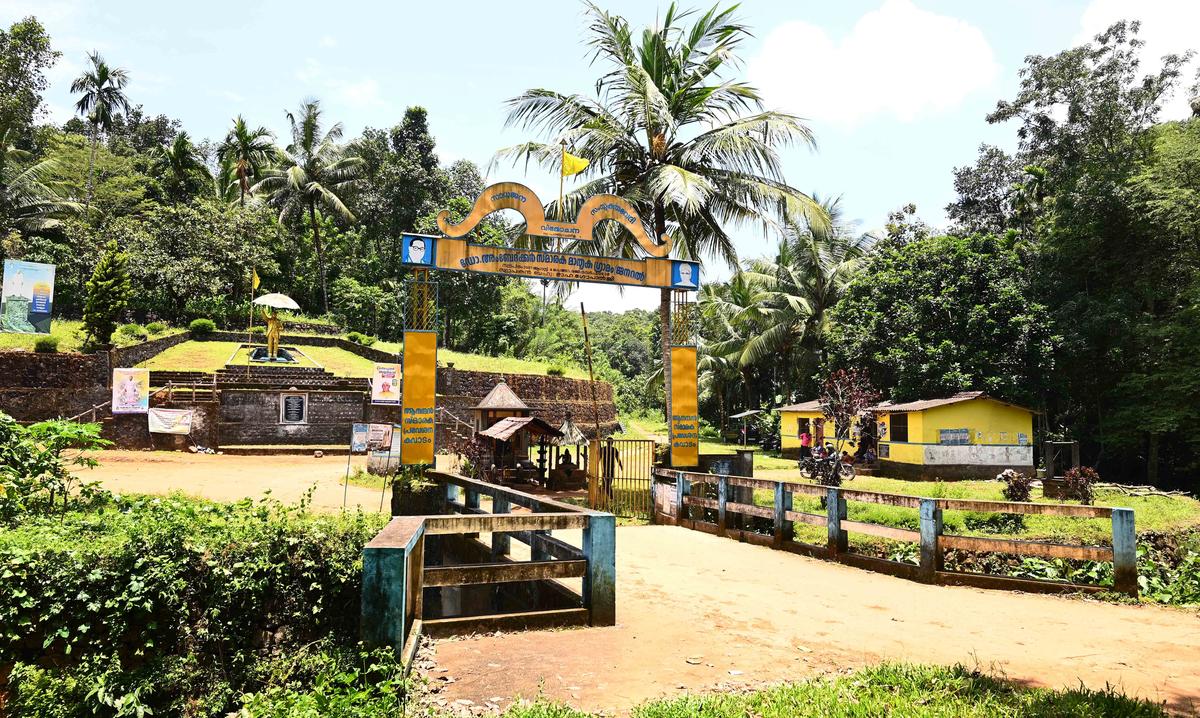
The entry point to the settlement of Chengara protesters.
| Photo Credit:
VISHNU PRATHAP
Though some of the occupants received parcels of land in other parts of the State as part of a package announced by the State government in 2009, most of the occupants didn’t find the offer appealing. Two years later, in 2011, the SJVSV re-launched its struggle, which has entered its 14th year.
The modest two-room house of Arya sits beneath a huge tree on the campus. The precincts of the house resemble a battlefield, with remnants of crops trampled by marauding wild elephants strewn all across the area. “Life here has made us strong,” says Arya’s mother Anitha Rajesh. “But our children deserve more than smoky lamps and sleepless nights spent in fear of wild animals. We are even unable to provide them with a safe place to study.”
Chengara stands like an abandoned island in Kerala, which often prides itself on its achievements in child development indices. Many families are forced to send their wards to hostels or homes of relatives for schooling. Pursuing higher education is a distant dream for most of the children.
“It has been 18 years since we settled here, and none of the families have power connection. Diesel lamps are widely used for lighting, while a few houses have installed solar-powered lights. Smoke from the diesel lamps causes respiratory problems for children,” says K.S. Gopi, president of the SJVSV that runs the settlement.
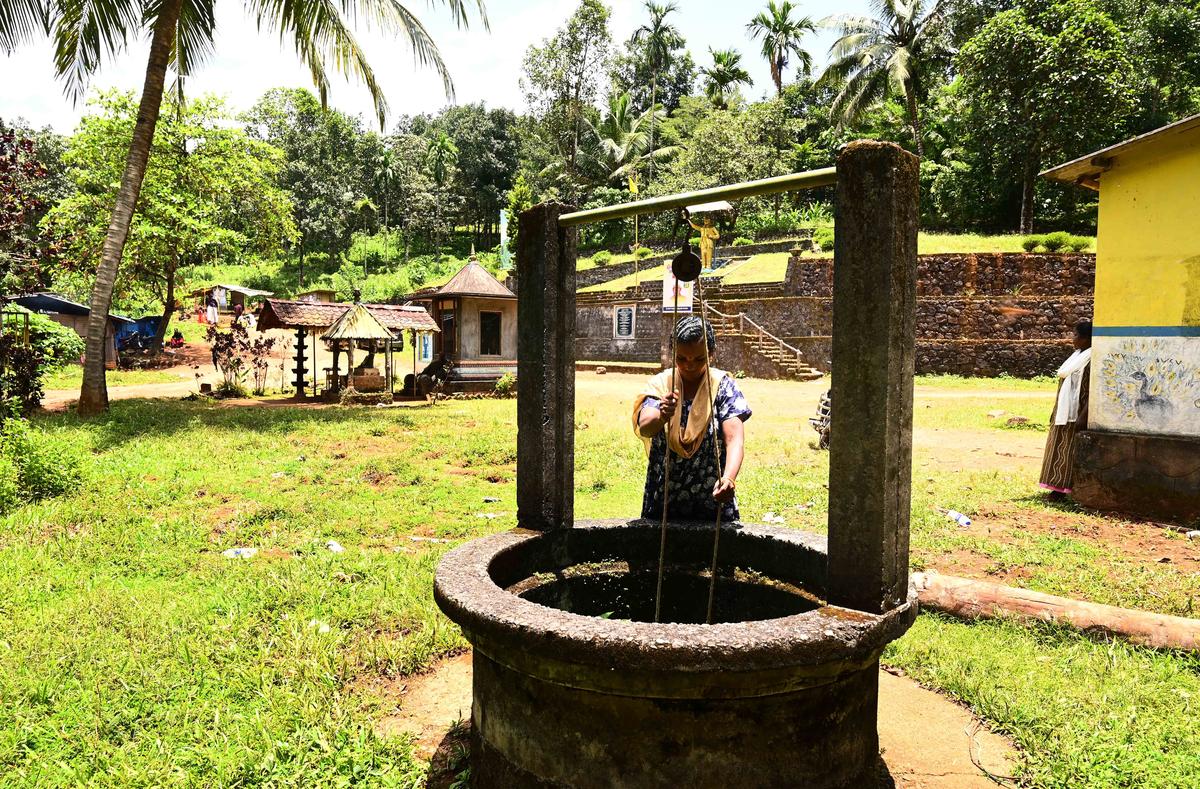
Shobhana draws water from a well close to the community hall at the Chengara settlement.
| Photo Credit:
VISHNU PRATHAP
Most of the families have limited access to piped drinking water. Navigating through rickety roads is a treacherous affair. With no power connection, charging mobile phones has become an expensive affair. Access to the internet, too, is denied in the absence of a power connection. “We pay around ₹10 to charge our phones at shops or houses outside the settlement,” says D. Rajendran, a resident.
Legal intervention
The plight of the children of Chengara recently caught the attention of the Kerala State Commission for Child Rights. A complaint filed by an educational activist says, “Kerala should reflect on the mental state of children from the settlement, who come from appalling living conditions. They are deprived of good food, clean clothes, and proper housing. The impoverished children are certain to undergo social ostracism.”
Acting on the complaint, N. Sunanda, a commission member, met the residents of the settlement to take stock of the situation. “The children are living in deplorable conditions. They don’t have proper access to educational institutions in the absence of a motorable road. They have to tread at least 3 km on the rutted road to board vehicles to schools. Furthermore, they live under constant fear of attack from wild animals,” says Sunanda, who recently completed her term as a member of the commission. “The distressing conditions in which the children live there are a violation of the fundamental right to life guaranteed in the Constitution,” she adds.
Though efforts were earlier made to draw power lines to the settlement, nothing materialised with the authorities citing the ongoing disputes related to the occupation of the plantation. “Let the stakeholders contest the issues at appropriate fora. Nothing should prevent the authorities from providing power, pathways, and piped water to children,” she asserts.
Elizabeth Jose, a social worker of the District Child Protection Unit, Pathanamthitta, also concurs with Sunanda’s observations. “There are no proper toilets for most of the families. The continuous exposure to diesel and kerosene smoke could adversely affect the health of children. The area slips into darkness at night as there are no street lights. There are serious concerns about the health of the children. A vast majority of the residents lack government-issued ID cards, which obstructs access to the support offered by various agencies,” notes Elizabeth.
The living conditions of the children violate Article 6 of the UN Convention on the Rights of Children, which speaks about their right to life, survival and development. Since India is a signatory to the pact, the government is duty-bound to protect the rights of its children, points out Sunanda.
“We are unable to provide nutritious food to our children. The wild animals destroy whatever is farmed,” laments Shobhana, mother of Sathya Devi, a Class IX student.
C.J. Antony, a former member of the commission, recollects that the commission had suo motu interfered in the issue six years ago. Twelve children were issued Aadhar cards, birth certificates, and other documents following the intervention of the commission, he points out.
Collective failure
Social activist Sunny Kapikkad views the Chengara situation as a case of collective failure of the State to provide land and other benefits to Dalits. “Though Kerala often boasts about the radical social changes brought in by the Kerala Land Reforms Act, they have not benefited the millions of landless Dalits. No government has addressed the issue of the landless Dalits in the State. It was mostly the landless Kurava tribespeople who occupied the HML plantation, hoping to get the ownership rights on holdings,” says Sunny, who had associated with the agitation during the early years.
“How can the families, which lack title deeds of holdings, ration cards and valid ID cards and even access to basic facilities, bring up their children in a safe and healthy environment? The State needs to address these urgently,” cautions Sunny.
The State should come up with a package for rehabilitating the families covering the educational, employment and health needs of each occupant, especially the children. The unspent funds available with the Scheduled Castes and Scheduled Tribes welfare departments should be utilised for the package, he suggests.
As night falls, the pungent smell of kerosene and diesel lamps engulfs the area. A cloud of fear descends, like a predator on the prowl. The flame of the kerosene lamp lit inside Arya’s house flickers in the breeze, like her struggle to stay afloat in life. Books are her sole companions. She picks Kattilekkulla Vazhi (The Road to the Forest) as her favourite book. “The title connects so much with my life,” she adds with a wry smile.



