

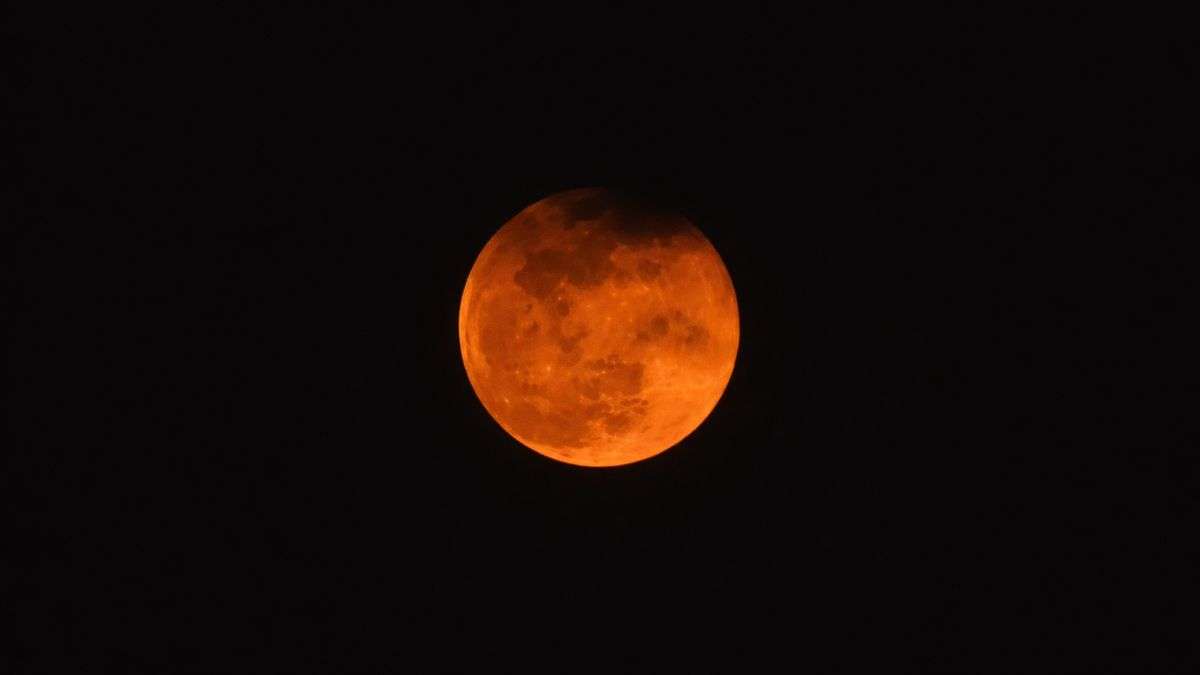

- The first Supermoon of 2026, known as the Wolf Moon, was visible over Guwahati on the evening of January 3. Appearing noticeably larger and up to 30 per cent brighter than a regular full moon, the event drew attention as clear winter skies offered a striking view.
- Can a brighter moon disrupt your sleep?
- Can a brighter moon make you anxious?
The first Supermoon of 2026, known as the Wolf Moon, was visible over Guwahati on the evening of January 3. Appearing noticeably larger and up to 30 per cent brighter than a regular full moon, the event drew attention as clear winter skies offered a striking view.
The first Supermoon of 2026 showed itself on the evening of January 3, and people in Guwahati noticed almost immediately. As the light faded, the Moon rose slowly. Bigger than usual. Brighter too. Enough to make people stop, look up, and take a few photos.
This was the Wolf Moon, the first full moon of the year. Astronomers call it a Supermoon because the Moon was closer to Earth than usual. That closeness matters. When it happens, the Moon can appear up to 30 per cent brighter than a normal full moon. Clear winter skies helped. The timing did the rest.
Can a brighter moon disrupt your sleep?
Many people swear they sleep worse during a full moon. Science has tried to test that feeling. A well-known 2013 study published in Current Biology found that people took longer to fall asleep during a full moon. Deep sleep was shorter. Melatonin release was delayed. This happened even when participants could not see the Moon.
But later research complicated things. Larger reviews, including those in Sleep Medicine Reviews, found no strong or consistent pattern across populations. Some people were affected. Many were not. Researchers now believe light exposure and routine matter far more than the Moon itself.
In simple terms, a bright Supermoon may affect sleep if your room fills with light. Thin curtains. Open windows. Otherwise, stress, screens, and late nights are usually the real culprits.
Can a brighter moon make you anxious?
There is no direct clinical research linking Supermoons or increased lunar brightness to anxiety spikes or mental health changes. Most existing studies examine full moon phases in general, not brightness levels.
Large reviews published in journals such as Psychological Bulletin and BJPsych have found no consistent increase in anxiety episodes, psychiatric admissions, or emotional disturbances during full moons. Specific data on brighter Supermoons, including the Wolf Moon, is currently limited.
Mental health experts suggest that any indirect effects are likely tied to sleep disruption. A brighter night can interfere with rest, and poor sleep can affect mood the next day. The brightness itself, however, is not recognised as a direct psychological trigger.
The Wolf Moon looked striking over Guwahati. Bright in the sky, but quieter in its effects than old beliefs suggest.
ALSO READ: Wolf Moon 2026: How the first full moon of the year got its name



