


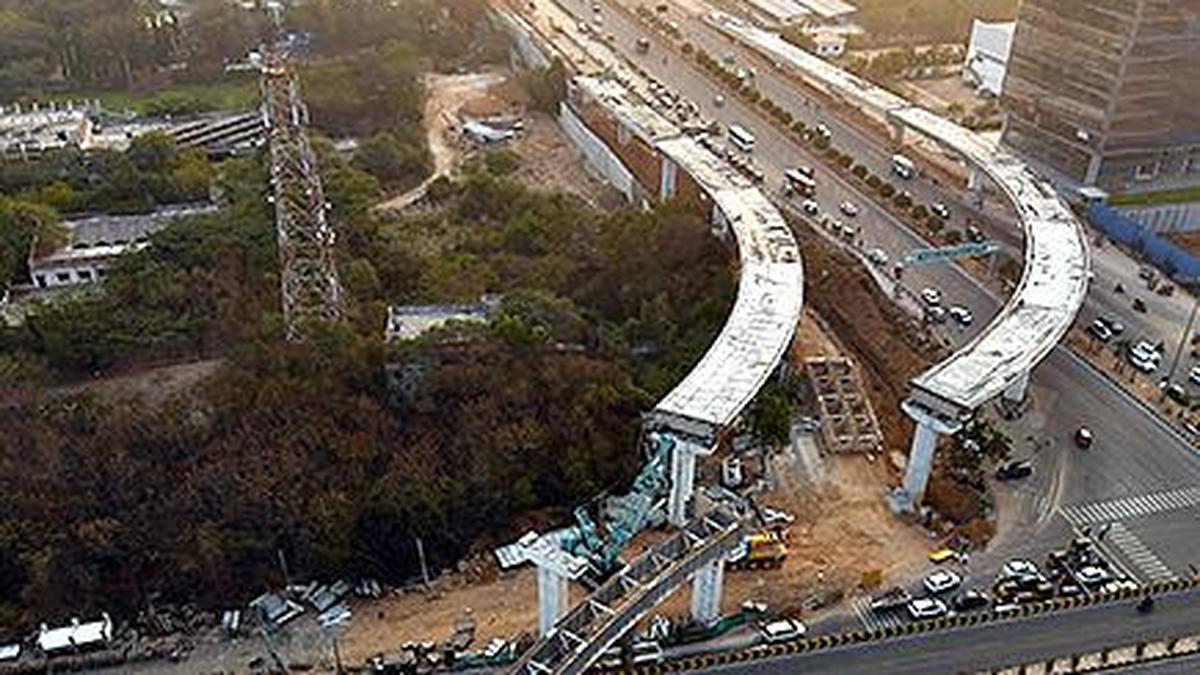
The aerial view of Shilpa Layout flyover at Gachibowli in Hyderabad, which is an important junction and gateway to the city on Outer Ring Road from RGIA, Shamshabad.
| Photo Credit: NAGARA GOPAL
Across India’s rapidly expanding cities, flyovers have become one of the most visible symbols of urban development. Hyderabad, in particular, has witnessed an aggressive push to build elevated roads in the past decade in an attempt to reduce congestion and enable faster travel across busy junctions. Much of this expansion has taken place under the Hyderabad City Innovative and Transformative Infrastructure (H-CITI), formerly Strategic Road Development Plan (SRDP), which envisaged dozens of grade separators and signal-free corridors. While several flyovers have improved travel times at specific junctions, Hyderabad-based urban planners increasingly argue that such infrastructure offers only partial and often temporary relief from traffic congestion, while creating new challenges for neighbourhoods and commuters.
Flyovers are built to ease congestion at busy intersections by separating traffic flows vertically. Vehicles travelling longer distances can bypass traffic signals and junction delays on the elevated road, while local traffic continues on the surface below. In theory, flyovers cut signal delays and speed up traffic along key corridors. On the ground traffic jams are becoming increasingly common on Hyderabad’s flyovers.
Published – April 05, 2026 06:00 am IST



