


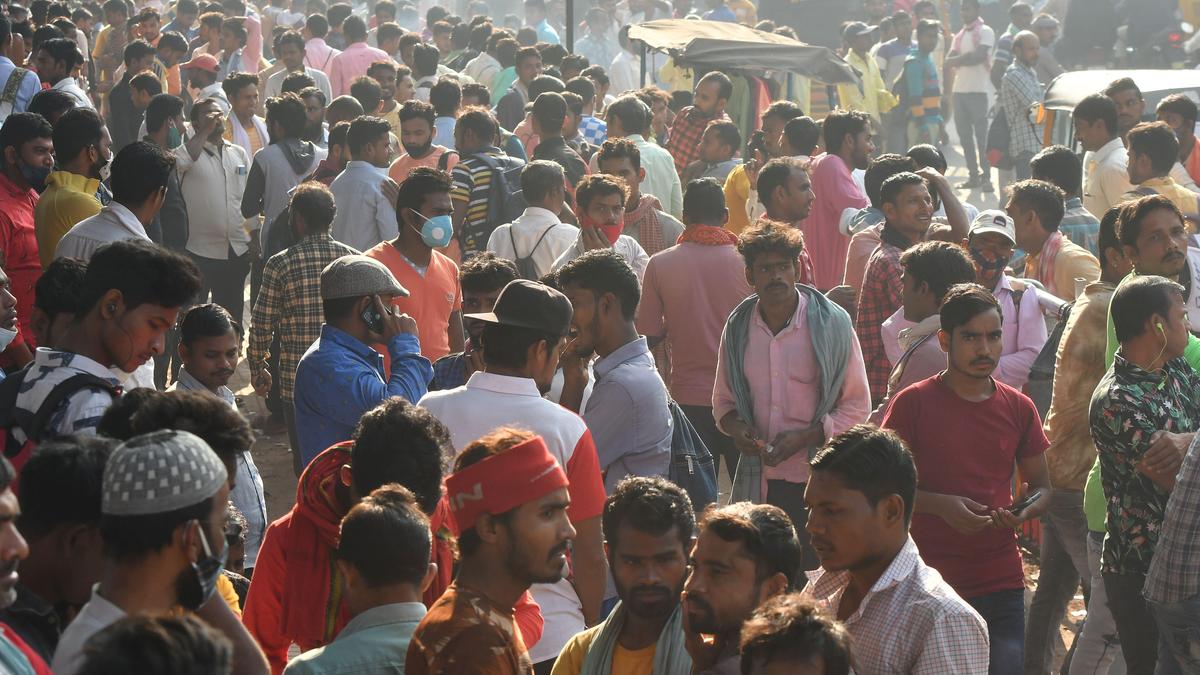
An SC community scores 96 out of 100 on the backwardness index, while a general caste community scores 31
| Photo Credit: Nagara Gopal
For decades, Indian policymakers have relied on income as the measure of disadvantage. A landmark government report from Telangana, based on one of the largest population surveys ever conducted in the country, offers a stark correction: when caste itself is measured, the gap is not incremental — it is exponential.
The Telangana Socio-Economic, Educational, Employment, Political and Caste (SEEEPC) Survey 2024, a cross-sectional, census-scale enumeration covering 97% of the State’s population (35 million people), introduces a rigorous Composite Backwardness Index (CBI). The findings, published in a government report funded by the Government of Telangana with no external conflicts of interest, show that Scheduled Castes (SCs) and Scheduled Tribes (STs) are not merely “disadvantaged.” They are structurally locked in.
Published – April 24, 2026 08:30 am IST



