


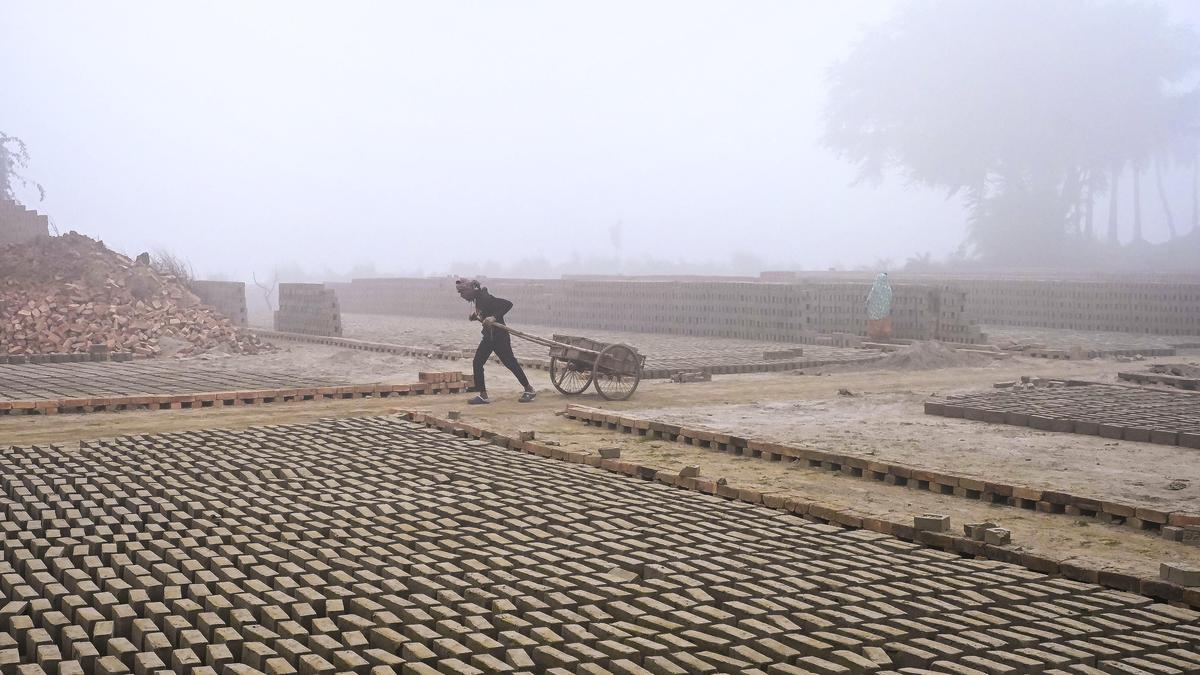
A 2020 report estimated that West Bengal has around 11,000 brick kilns employing nearly 0.8 million workers. Representational file image.
| Photo Credit: PTI
On February 9, when the country was observing 50 years of the Bonded Labour System (Abolition) Act Chamru Majhi, his wife, and their children were rescued from the Moni Brick Kiln in Aranghata, Nadia. The rescue was a joint effort of several departments, including Secretary, District Legal Services Authority (DLSA) — Nadia Bidushi Tsering Lepcha and officials at the Taherpur Police Station in Nadia district.

The brick kiln is located in a remote area surrounded by fields and water bodies, approximately 9.6 km away, and is known to employ mostly migrant workers from Bihar and Jharkhand. After the rescue intervention of the administration, an FIR was registered.
Hailing from Hussainabad Sheikhpura in Bihar, the Majhi family had been trapped in second-generation bonded labour for the past 17 years. The family was held under an advance bondage system after accepting ₹35,000 from a labour contractor, forcing all family members—including three minor children—to work in the kiln.

The rescue is a reflection of the status of bonded labour in West Bengal, where the State remains both a source and destination for bonded labour. Several brick kilns and other small industrial units act as the destination for the bonded labour particularly from Bihar, Jharkhand and Odisha. In March 2025, twenty-eight children were rescued from two brick kilns in South 24 Parganas in West Bengal.
A 2020 report estimated that West Bengal has around 11,000 brick kilns employing nearly 0.8 million workers. The study documented low daily wages, long working hours, restrictions on workers leaving kiln premises during the season, and limited access to healthcare and maternity benefits.
Also read: India’s shame — the trap of bonded labour
From restaurants to sweet shops to tea gardens and Makhana processing units between 2023 and 2026 January, 76 bonded labourers have been rescued from West Bengal.
The State is also a source of youths who end up being bonded labourers, particularly in the jewellery manufacturing units in Chennai, Tamil Nadu. Between 2019 and 2024, 143 boys from West Bengal were rescued in four separate operations: 60 in September 2019, 22 in February 2023, 54 in July 2023 and seven in November 2024.
All the survivors were issued bonded labour release certificates by the Tamil Nadu government formally recognising them as victims of bonded labour and entitling them to rehabilitation and legal protection. Some of the youths who have been rescued from Chennai have been provided training by the non-governmental organisation and are scripting their success story.

Rights activists and experts who are dealing with the issue of bonded labour say that the biggest challenge is the denial of any bonded labour practices by the West Bengal Government. In response to an RTI Ministry of Labour and Employment in May 2025 suggested the number of bonded labourers identified and released by the West Bengal government.
Despite being abolished under the Bonded Labour System (Abolition) Act 1976, bonded labour continues to persist in hidden, informal sectors, particularly affecting the poorest and most vulnerable communities.
Published – February 10, 2026 04:28 am IST



