The winter chill has settled over Melghat, a remote tribal-dominated forested region in Maharashtra’s Amravati district, around 680 km from Mumbai, where 25-year-old Budhiya Bhusum is still grappling with the painful memory of losing her son, whom she delivered at home in May this year.
Teary-eyed Budhiya stares at a cot where her two other children are sleeping and whispers what might have been: “Bachu ab khane lagta, mai bolta (Baby might have started eating and calling me mother).” Her words echo the silent struggles of many women in the region – comprising Dharni and Chikhaldara taluks – who have witnessed the death of their children due to malnutrition and poor health infrastructure.
Budhiya belongs to the Korku tribe, an indigenous group with Munda ethnic roots, and resides at Domi village in Chikhaldara taluk, which falls under the jurisdiction of the Hataru primary health centre (PHC). Her village is 7 km from the PHC, which takes about half an hour to reach due to a three-km stretch of dilapidated road.
When The Hindu visited the PHC, there was no electricity. Erratic power supply is a daily challenge that the facility faces. Peripheral issues like poor roads and weak cellular connectivity exacerbate the delay in treatment, say villagers.
According to a medical officer at the PHC, one of the reasons for the death of Budhiya’s infant son was preterm low birth weight (LBW), with the baby weighing just 1.7 kg.
As per Health Department data of Amravati district, between April and October this year, 97 children (below the age of six) died in the Melghat region, including 30 stillbirths and 27 due to LBW. The other causes of death were aspiration asphyxia, birth asphyxia, milk asphyxia, neonatal jaundice, pneumonia, anaemia, convulsions, and snakebite. From April 2023 to March 2024, 39 children died due to LBW and 72 were stillborn. Between April 2024 and March 2025, there were 28 LBW deaths and 77 stillbirths.
Poor maternal health
“Infants with LBW have a high death risk due to immature body systems, often linked to poor maternal health. In Melghat, at least 30% of women are malnourished, contributing to LBW deaths and impacting infant survival. LBW also leads to comorbidities, infections, and cognitive delays in children,” says Dr. Ashish Satav, who has worked extensively in the region.
Budhiya weighed 38 kg and was anaemic. Iron deficiency impacts fetal growth and increases the risk of LBW and preterm deliveries.
In Melghat, of 4,437 pregnant women, 4,170 were diagnosed as anaemic between April and October this year, as per official data.
Raksha Kasture, 29, a Korku woman from Laktu village, 190 km from Amravati city, faces a similar plight. “Tera hi baccha mara tha na? (Wasn’t it your child who died)?” an ASHA (Accredited Social Health Activist) worker says. “Haan, tesra tha (Yes, my third child),” replies Raksha who earlier had two miscarriages.
Her three-month-old child died in January this year due to malnutrition and congenital anomalies. She is also malnourished and currently eight months pregnant. “I wanted to have this baby, thinking my dead child had come back to me,” she says, sitting in front of a pile of used clothes in her hut.
The maternal mortality rate has risen over the past five years in Melghat, from 70 in 2021-2022 to 83.17 in 2025. Officials acknowledge maternal malnutrition as a significant problem, but lack quantified data.
In Dharni’s Sadrabadi village, Monika Bharve, 30, is lean and frail. Being underweight has contributed to her children, aged three and nine, suffering from severe acute malnutrition (SAM).
“Both children have been admitted to the nutrition rehabilitation centre. They are being provided with nutritional food and medicine, but their weight is not increasing. Their growth is slow compared with other children,” says Prajakta Sable, medical officer at the Sadrabadi PHC.
Factors like malnutrition, early marriage, and limited access to health care contribute to high-risk pregnancies and miscarriages in Melghat.
In 2015, the State government launched the Amrut Aahar Yojana under the Integrated Child Development Scheme to provide nutritious meals to pregnant women and lactating mothers in tribal areas. However, NGOs working in the area suggest that providing meals is not enough and call for investment in long-term measures.
According to data from the Women and Child Development Department, Melghat reported 119 SAM cases and 1,646 cases of moderate acute malnutrition (MAM) from April to October this year. In comparison, 2022 saw 110 SAM cases and 1,506 MAM cases. According to Poshan Tracker data for February 2025, Maharashtra has 1.82 lakh malnourished children, with 30,800 cases of SAM and 1,51,643 cases of MAM.
Inadequate infrastructure exacerbates the challenges parents face in Melghat, which is home to 324 villages and a population of 3.24 lakh, but has only 11 PHCs, two rural hospitals, and one subdistrict hospital to cater to their needs.
Due to these constraints, critically ill patients are often referred to district hospitals and superspeciality facilities in Amravati city and neighbouring Burhanpur in Madhya Pradesh.
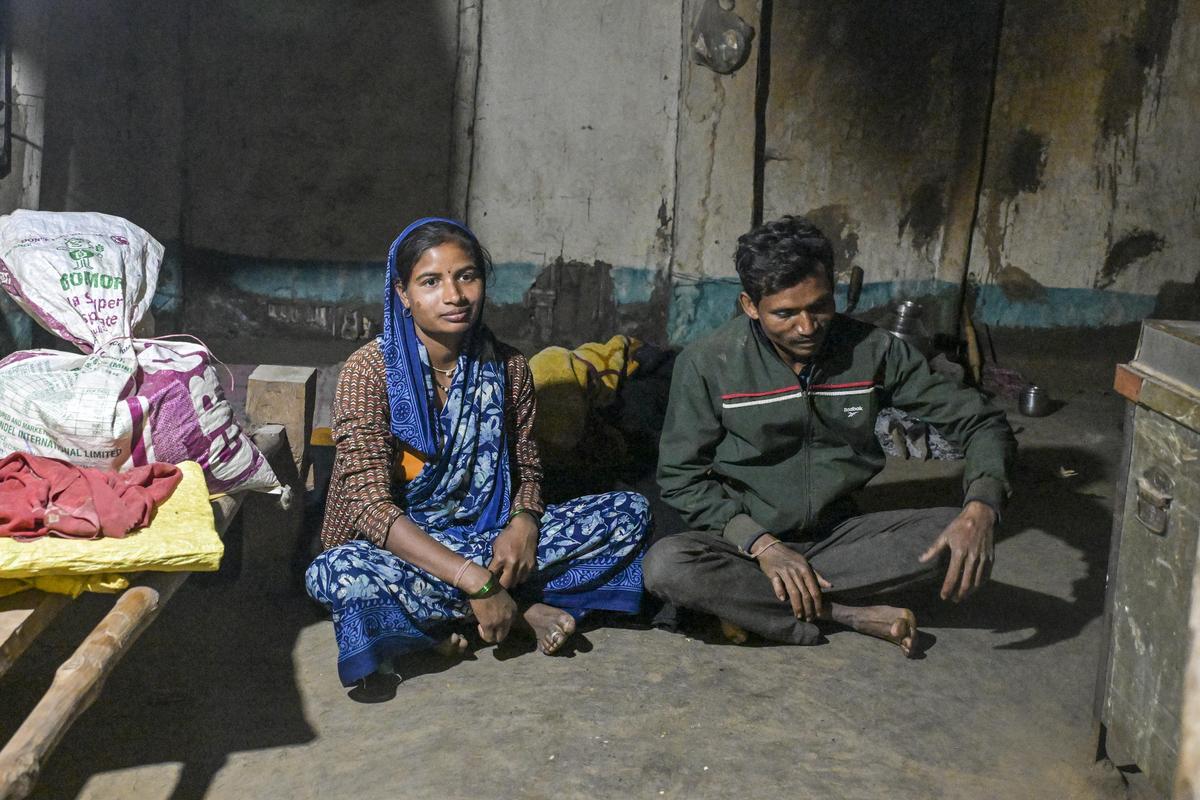
Budhiya Bhusum and her husband Nilesh Bhusum at their house.
| Photo Credit:
EMMANUAL YOGINI
Limited healthcare infrastructure
Budhiya says her child moved his legs during birth, but didn’t cry. “The baby was taken to the Hataru PHC, then referred to the rural hospital in Churni. From there, the baby was referred to the subdistrict hospital in Achalpur, a two-hour drive away. Time just slipped away,” says a medical counsellor on condition of anonymity.
“If we had arrived [at the hospital] in time, this would not have happened,” says Nilesh Bhusum, 28, Budhiya’s husband.
Gaja Dhikkar, 28, says he lost his wife, Vanita, 24, and newborn following delay in treatment due to the “never-ending referral process”.
His five-day-old child died en route to the subdistrict hospital in Achalpur from the rural hospital in Churni. “They [authorities] kept referring us from one hospital to another, saying it was pneumonia. I lost my child in the process.”
Gaja says his child passed away five days after Vanita died on October 7. A sickle cell anaemia patient, she had a high-risk pregnancy, he says.
“Referrals happen due to lack of services or specialists at the PHC and sometimes at the rural hospital. We need at least one paediatrician and a gynaecologist at the PHC to reduce referrals. There could be zero deaths if there is focus on building infrastructure and improving the living conditions of doctors,” says a medical officer who did not wish to be named.
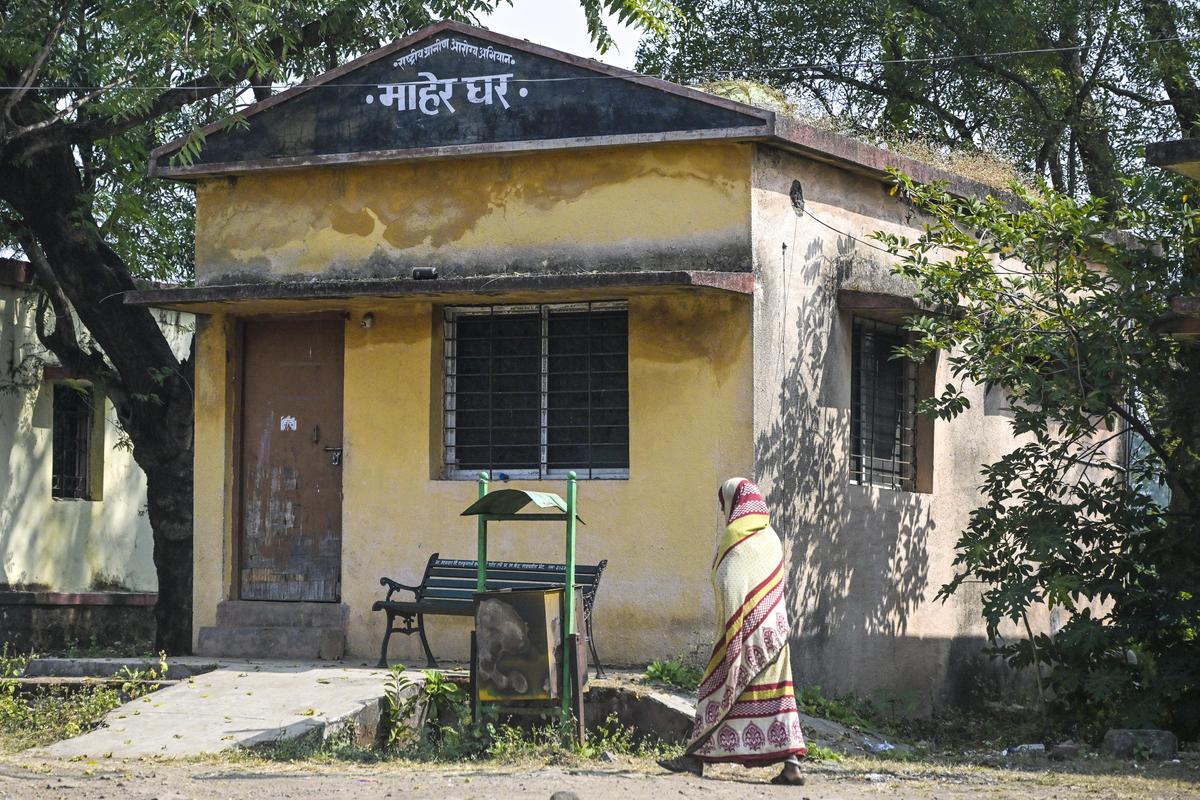
a defunct ‘Maher ghar’ for expectant mothers at the Sadrabadi primary health centre in Dharni taluk of Maharashtra’s Amravati district.
| Photo Credit:
EMMANUAL YOGINI
Turning to traditional methods
Villagers often fall prey to superstition and turn to bhumkas (traditional healers) when they realise that getting the required treatment for their children might mean travelling all the way to a hospital in Amravati city, says a doctor in Dharni.
There are three types of bhumkas in the Korku tribe: pujari (priest), ved (ayurvedic practitioner), and parihar (spirit healers). “People want their children to get treated by them. Sometimes delays [in medical treatment] happen because of that also,” says Dr. Ashutosh Solanki, medical officer at the Hataru PHC.
“Bhumkas are the ones who mislead people,” says Ashok, a member of the Korku tribe.
While the local administration has suggested that some bhumkas possess ayurvedic knowledge that could be used for research and development, doctors with the help of ASHA workers have tried to convince villagers not to approach bhumkas for treatment. The administration is now holding awareness workshops for bhumkas. An initiative was introduced to encourage villagers to approach health centres, but it did not gain traction as people rarely showed up.
Amravati Collector Ashish Yerekar attributes poor maternal health to child marriage and girls dropping out of school. Zilla parishad schools offer education only up to Class 7. “Ashramshalas (boarding schools), started in the 1990s, have seen no improvement in infrastructure and lack quality education. They are overcrowded. Students drop out between Classes 7 and 12,” he says.
“We need a paradigm shift in thinking and rigorous monitoring of school dropouts so that child marriages can be identified,” the Collector adds.
From January 1, 2026, a village child protection committee will be set up to track child marriages and monitor school dropouts. Sarpanches will be held accountable and disqualified if they fail to report school dropouts and child marriages, he says.
HC intervention
In November this year, Justices Revati Mohite Dere and Sandesh Patil of the Bombay High Court pulled up various departments of the State government, including Health and Women and Child Development, over the deaths of infants due to malnutrition in the Melghat region. The court termed the deaths “horrific” and the government’s approach “extremely casual”.
An affidavit filed in the court highlighted 38 vacant medical posts in Melghat and overcrowding in the 50-bed subdistrict hospital. “We are trying to fill the vacant positions, but there are challenges as appointed doctors do not turn up. We need sonologists and radiologists at subcentres and are in the process of making appointments,” says District Health Officer Dr. Suresh Asole.
Two private technicians have been appointed to visit the subdistrict hospital on two designated days in a week for sonography, he adds.
‘Reluctance to seek health care’
Medical counsellors point out that reluctance to seek health care has contributed to deaths in the region. In Vanita’s case, doctors were reluctant to discharge her after delivery, but she insisted on going home.
“Vanita was advised to stay back, but she did not listen. She died a day after being discharged,” says Ashok Dhikkar, medical counsellor at the Hataru PHC. However, according to her husband Gaja, she wanted to “perform puja and return to the PHC after a day”.
In every PHC, two medical counsellors and ASHA workers, who usually belong to the Korku tribe, play a significant role in convincing women to seek treatment.
“A few women are willing to come and keep track of follow-up appointments. But men are rigid and don’t allow them to leave the house,” says Mamta, a counsellor at the Sadrabadi PHC.
snehal.mutha@thehindu.co.in
Edited by Vadapalli Nithin Kumar