

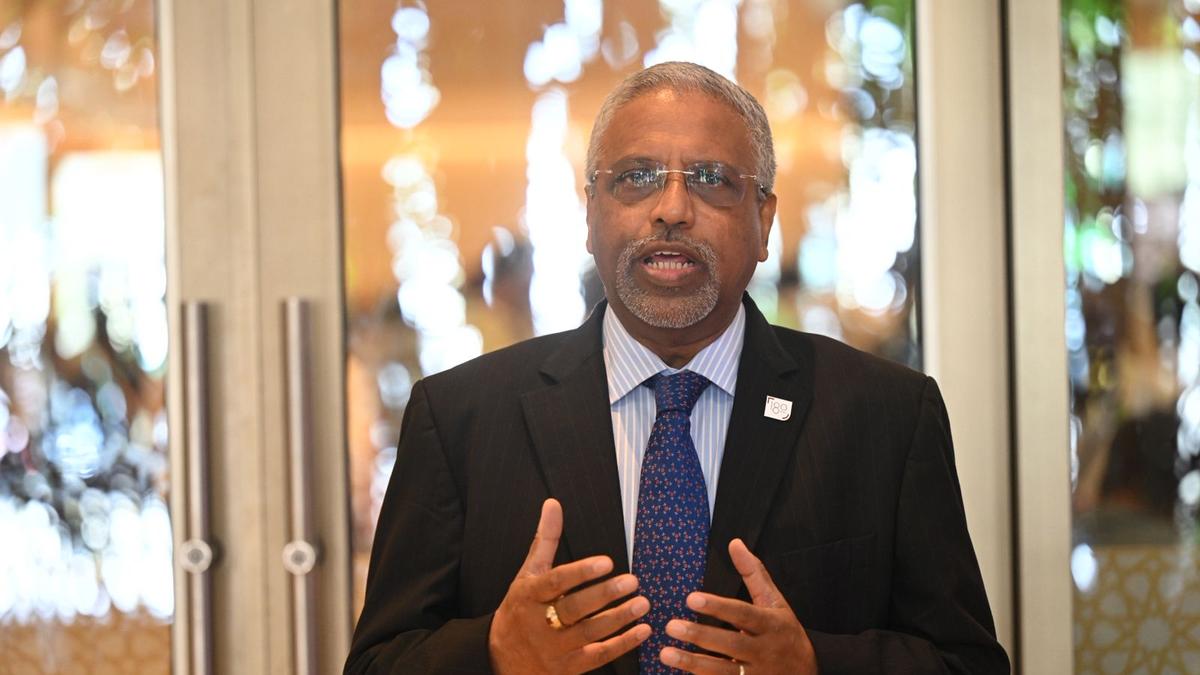

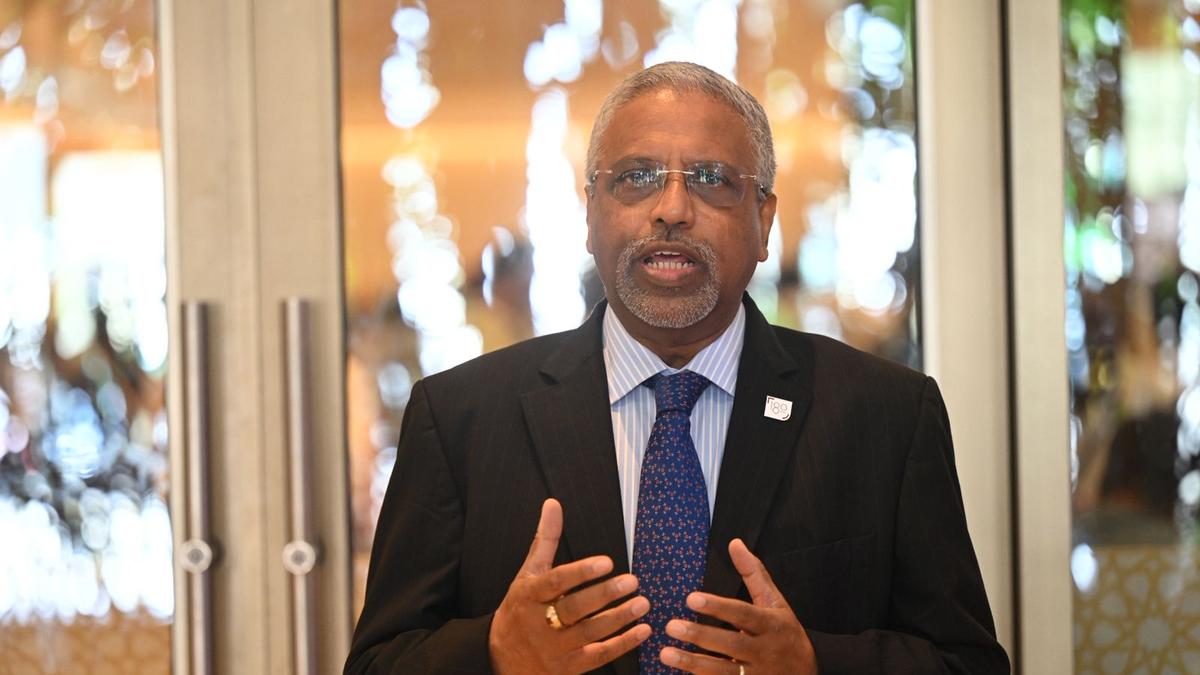
M. Satish Kumar, Chairman, Kerala Urban Policy Commission.
| Photo Credit: Thulasi Kakkat
Kerala is set to witness a shift in the urbanisation drive towards northern districts from the southern districts in the next 30 years, said M. Satish Kumar, Chairman, Kerala Urban Policy Commission.
Talking to The Hindu on the sidelines of the two-day Kerala Urban Conclave that concluded on Saturday (September 13, 2025), Mr. Kumar said Kozhikode-Kannur-Kasaragod is the big belt emerging, since these districts have more capacity to absorb urbanisation due to physiographical reasons, unlike the environmental and ecological limits to urbanisation in southern Kerala. The shift, he said, will facilitate an equilibrium in the urbanisation drive, which remains lopsided now.
Mr. Kumar recollected that the non-availability of data posed the biggest constraint in the functioning of the Commission. This is because data is not democratic; it is not democratised in India, neither in Kerala, he put bluntly.
“Data has to be decentralised. Every local body should have the relevant data. If that data is not available, we cannot frame realistic policies and plan for the future,” Mr. Kumar said. Since data was not forthcoming, the Commission had to make projections of the urban data using the Census 2011 as the baseline data.
He said how the Commission failed to source metadata from the Kerala State Remote Sensing and Environment Centre. “They were asking us ₹34 lakhs for a work we were doing for the Kerala government. They wouldn’t give us the maps even though they had them. Not a single civil servant we approached was able to help us get that data,” he said.
Kerala will be 87% urban by 2030. The State has around 350 census towns, which is the highest in India after Tamil Nadu. Census towns are not declared as urban despite having all characteristics of being urban, like a minimum population of 5,000 and where 75% of the population is engaged in non-agriculture activities.
Even the Centre has no idea how to invest for the transition from census towns to declared urban bodies. Our Commission is the first to call for investments to facilitate that transition, which is a revolutionary concept. However, many of these census towns are reluctant to be declared urban towns for fear of losing out on various avenues of funding. That’s why we have recommended a fund for the transition, Mr. Kumar said.
The main focus of the Kerala Urban Policy Commission report has been to produce an urban vision for Kerala for the next 25 years; a vision which encapsulates the challenges imposed by climate change, because we need to make climate-resilient urban policy.
Kerala is one of the fastest ageing societies, and the Commission had to work with the constraints imposed by the ensuing demographic transition. Another constraint that we had to work with was that financing Kerala’s development is a huge challenge because resources are limited. Besides, there are structural constraints imposed by who we are, where we are located, Mr. Kumar said.
We have to ensure economic sustainability to retain the youth. Identifying urban clusters has been one of the outcomes of our policy document. There are four to five economic corridors in Kerala; the local economic base of which should be developed. The policy has identified the hubs and recommended their local economic development since that is critical to creating employment opportunities, Mr. Kumar said.
Published – September 13, 2025 04:01 pm IST



