

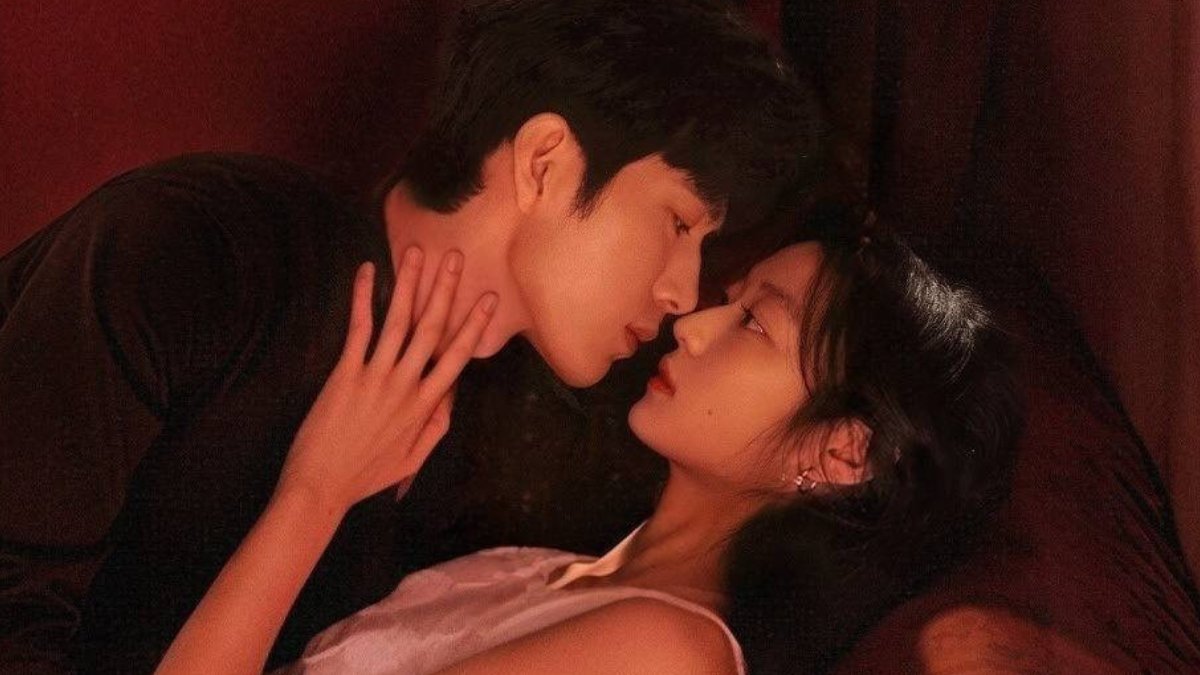

- The relationship starts casually, but emotions catch up
- The drama needed to let Luke and Flora be a couple
- The novel explains Flora better
- The adaptation softens Luke but keeps Flora’s old reactions
- Jing Bo-ran and Sun Qian are the saving grace
- Beautiful, but not always layered enough
- Does The Early Spring stick the landing?
Chinese drama, The Early Spring, has almost everything needed to become a memorable slow-burn romance. It has attractive leads, beautiful cinematography, a relationship that develops over several years and enough emotional history between its central characters to sustain a 24-episode story. Yet, after watching the series, the biggest feeling is that something is missing.
The Chinese drama is aesthetically beautiful. Its locations, colour palette, costumes and restrained visual style give it a polished feel. Jing Bo-ran and Sun Qian also bring enough chemistry to make Luke and Flora’s relationship watchable. But the series often looks deeper than it actually is.
The problem becomes particularly noticeable when it comes to the central relationship. The drama wants viewers to believe that Luke and Flora have built a deep emotional connection over the years, but it does not always give us enough time with them to feel that connection ourselves.
The relationship starts casually, but emotions catch up
Luke and Flora’s relationship does not follow the usual romantic-drama template. What starts as a practical arrangement gradually becomes something much more complicated as emotions begin to enter the equation. That premise is one of the show’s strongest ideas.
The two spend years together, and what initially appears to be a relationship without conventional expectations slowly develops emotional weight. The trouble is that The Early Spring does not always show enough of that transition. There is a noticeable lack of ordinary couple moments. The series tells us that these two people have shared years of their lives, but there are times when viewers are left wanting more of the small things that would make that history feel real.
The intimate side of their relationship is also surprisingly restrained. The makers often suggest closeness rather than allowing viewers to spend enough time inside that relationship. As a result, some of the most important emotional developments feel like they happen between scenes. And that creates an unusual problem for a romance. Even the viewer can sometimes find themselves asking the same question Flora does: is this actually love?
The drama needed to let Luke and Flora be a couple
This is perhaps my biggest issue with the series. There is nothing wrong with a romance being slow or understated. In fact, The Early Spring works best when it allows Luke and Flora to simply exist around each other. Their familiarity is more interesting than dramatic declarations of love. But the series does not do enough of it.
For a story built around a six-year relationship, the audience needed more couple time. More conversations. More everyday moments. More reasons to understand why these two people became so important to each other. Instead, the drama sometimes jumps from one major emotional beat to another. The result is that the relationship can feel less lived-in than the timeline suggests. This becomes even more frustrating because the actors are capable of selling those moments.
The novel explains Flora better
The adaptation becomes easier to understand after looking at the source novel. One of the biggest changes is the way Luan Nian has been softened for the drama. In the novel, he can be genuinely difficult to Flora. Their six years together are essentially built around a friends-with-benefits arrangement rather than a conventional romantic relationship. There is a significant emotional imbalance between them. Flora is much more invested than Luan Nian is willing to acknowledge, while he maintains his own rules and emotional distance.
That history gives Flora’s reactions a very different context. Her anger, defensiveness and occasional harshness are not simply personality traits. They are the result of years of frustration and uncertainty. She has spent a long time trying to understand what she actually means to him.
Once you know that version of the story, Flora’s behaviour makes considerably more sense.
The adaptation softens Luke but keeps Flora’s old reactions
This is where I think The Early Spring creates its biggest problem for itself. The drama’s Luan Nian is considerably softer. Luke shows affection and concern for Flora. There is jealousy, attachment and an emotional dependence that becomes increasingly visible. Even when he struggles to communicate, the audience can see that he cares about her. But Flora’s character often reacts as though she is still dealing with the much harsher version of Luan Nian from the novel. That creates scenes where her reactions can feel unnecessarily harsh or immature.
At times, it almost feels as if Flora is punishing drama-Luke for things that novel-Luan Nian did. If one half of a dysfunctional relationship is softened for an adaptation, the other half has to be recalibrated as well. Otherwise, the emotional balance changes. The audience begins to question who is actually responsible for the conflict.
That is exactly what happens here. The novel gives Flora’s anger a history. The drama sometimes expects viewers to understand that anger without showing enough of what created it.
Jing Bo-ran and Sun Qian are the saving grace
The performances keep the relationship engaging even when the writing does not completely work. Jing Bo-ran brings restraint to Luke. He does not play the character as someone incapable of feeling. Instead, he portrays a man who often understands his emotions too late or struggles to put them into words.
Sun Qian’s Flora is more expressive, and she brings vulnerability to a character who can otherwise be frustrating. Their chemistry is understated, which suits the tone of the drama. They do not need to constantly be affectionate for their familiarity to come across.
But good chemistry cannot completely compensate for missing writing. The show needed more scenes that allowed their relationship to breathe. The audience needed to see the friendship, comfort and intimacy that existed alongside the conflict.
Beautiful, but not always layered enough
Visually, The Early Spring is difficult to fault. The drama has a distinct aesthetic identity and uses its settings well. There is a softness to the cinematography that fits the story’s quieter approach to romance. It looks expensive and carefully made without becoming overly flashy. But aesthetics cannot replace emotional layers.
There are stretches where the drama seems more interested in creating a beautiful mood than examining the complicated relationship underneath it. That is not necessarily a problem for every viewer, but for a story that asks audiences to invest in a nine-year emotional journey, it becomes noticeable.
The show has plenty of feelings. What it sometimes lacks is the detail behind those feelings.
Does The Early Spring stick the landing?
Ultimately, The Early Spring is not a bad romance. It is simply a romance that could have been much better. The premise is interesting, the leads are well cast and the visual presentation is consistently strong. The story also deserves credit for attempting to depict a relationship that does not fit neatly into the usual romantic-drama formula. But the adaptation loses some of the complexity that made the original relationship compelling.
The six years Luke and Flora spend together should have given the audience a much stronger understanding of their bond. Instead, too much of that emotional history is implied. The lack of couple time and intimate moments makes it harder to understand when their practical arrangement truly becomes love. And that uncertainty is perhaps the most telling criticism of the series.
Flora herself struggles to understand what their relationship really is. By the end, the viewer can sometimes find themselves in the same position. The Early Spring is beautiful, watchable and well acted, but it needed more emotional texture to become the romance it clearly wanted to be.
Verdict: 3/5
Also Read:



