


October 1 and 3 carry historical significance for Tamil Nadu. October 1, 1953 witnessed the inauguration of the Andhra State, consisting of the 11 predominantly Telugu-speaking districts which were till then part of the erstwhile Madras State, now called Tamil Nadu. Later in November 1956, the Hyderabad State, presently known as Telangana, was merged with Andhra, which was renamed as Andhra Pradesh.
On the other hand, October 3, 1995 saw the passing of veteran Tamil scholar and former Chairman of the now-defunct Legislative Council M.P. Sivagnanam, one of the key leaders who vigorously campaigned for the retention of Madras (now Chennai) and Tirutanni within Tamil Nadu.
Chorus for separate State
The run-up to the Andhra formation in 1953 was a tale of many unsavoury events, including the death of freedom fighter Potti Sriramulu in Mylapore, Madras, on December 15, 1952 after a 58-day-long fast for the creation of the first State based on linguistic lines.
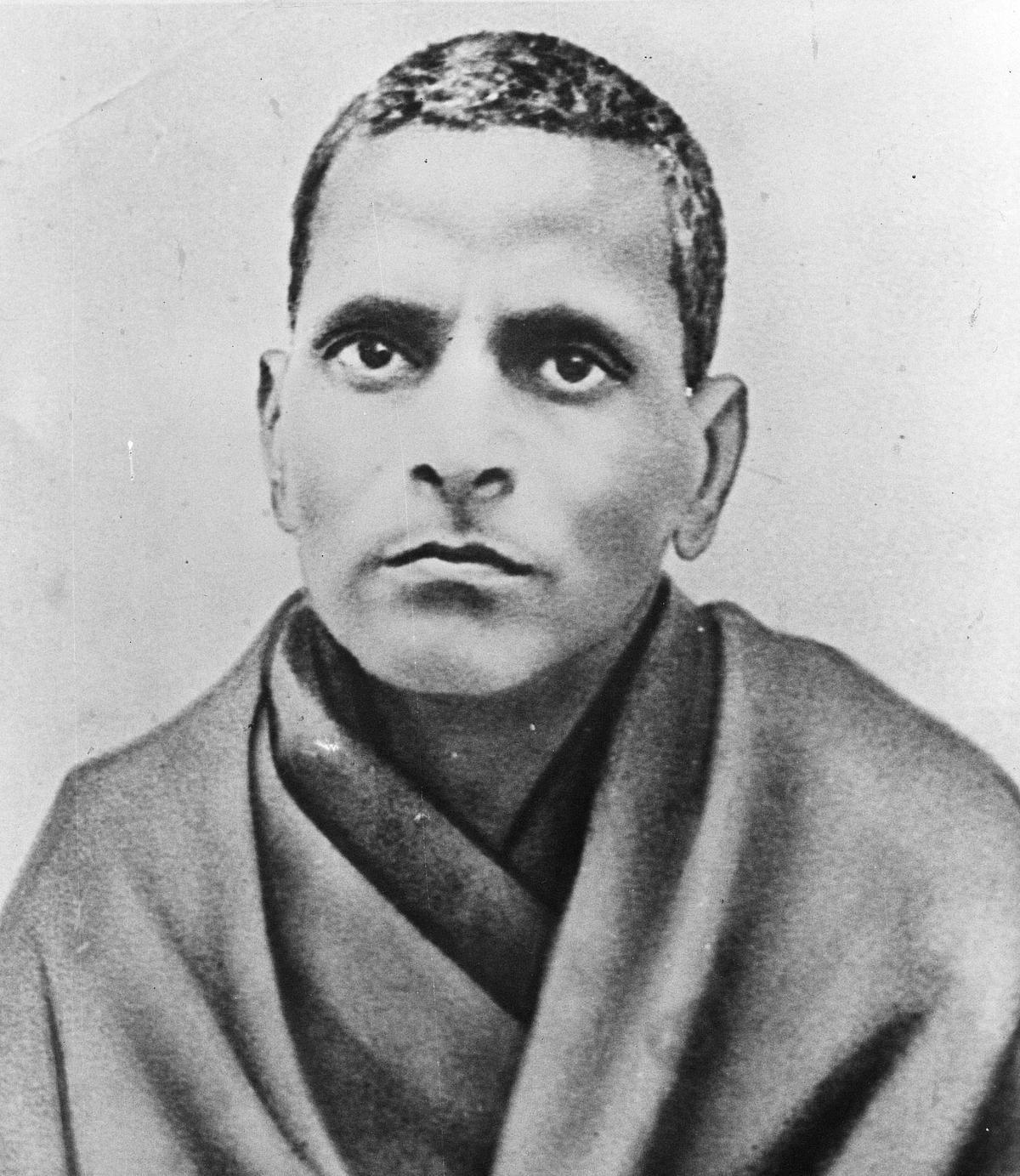
A portrait of Potti Sriramulu
| Photo Credit:
The Hindu Archives
The seeds for such a State were sown at a meet in Bapatla (in Andhra Pradesh) in 1913 and this demand came as a sequel to the constitution of Bihar and Odisha two years earlier, according to a paper by academician S. Sudhakar Reddy in the November-December 2023 issue of the International Journal of Humanities Social Science and Management. The paper also stated that “though the Telugu districts accounted for forty percent of the population and forty-eight percent of the territory of the Madras Presidency, the Telugus had no voice in the politics of the region.”
In fact, a similar point was made even in 1949 by Sami Venkatachalam Chetti, a veteran Congress leader and philanthropist, who served as a member of the Central Legislative Assembly (precursor to Parliament) during the British rule and a member of the Madras Legislative Council and Corporation Council.
At a meeting at the Mahajana Sabha Hall, Chetti argued that “too much Tamilian preponderance in the administration and the services 30 years ago was one of the reasons for Andhra dissatisfaction and claim” for a separate State, according to The Hindu’s report on September 18, 1949.
But, while looking back at the history, one wonders whether the death of Potti Sriramulu and the subsequent unfortunate events including the loss of human lives could have been averted, as in November 1949, the Union government agreed, in principle, to form the separate State.
In fact, this position was a reversal of its stand, which was categorically against the creation of States on linguistic lines, especially in the wake of findings of the Linguistic Provinces Commission, headed by S.K. Dar, former judge of the Allahabad High Court, and the JVP [Jawaharlal Nehru, Vallabhai Patel and Pattabhi Sitaramayya] committee.
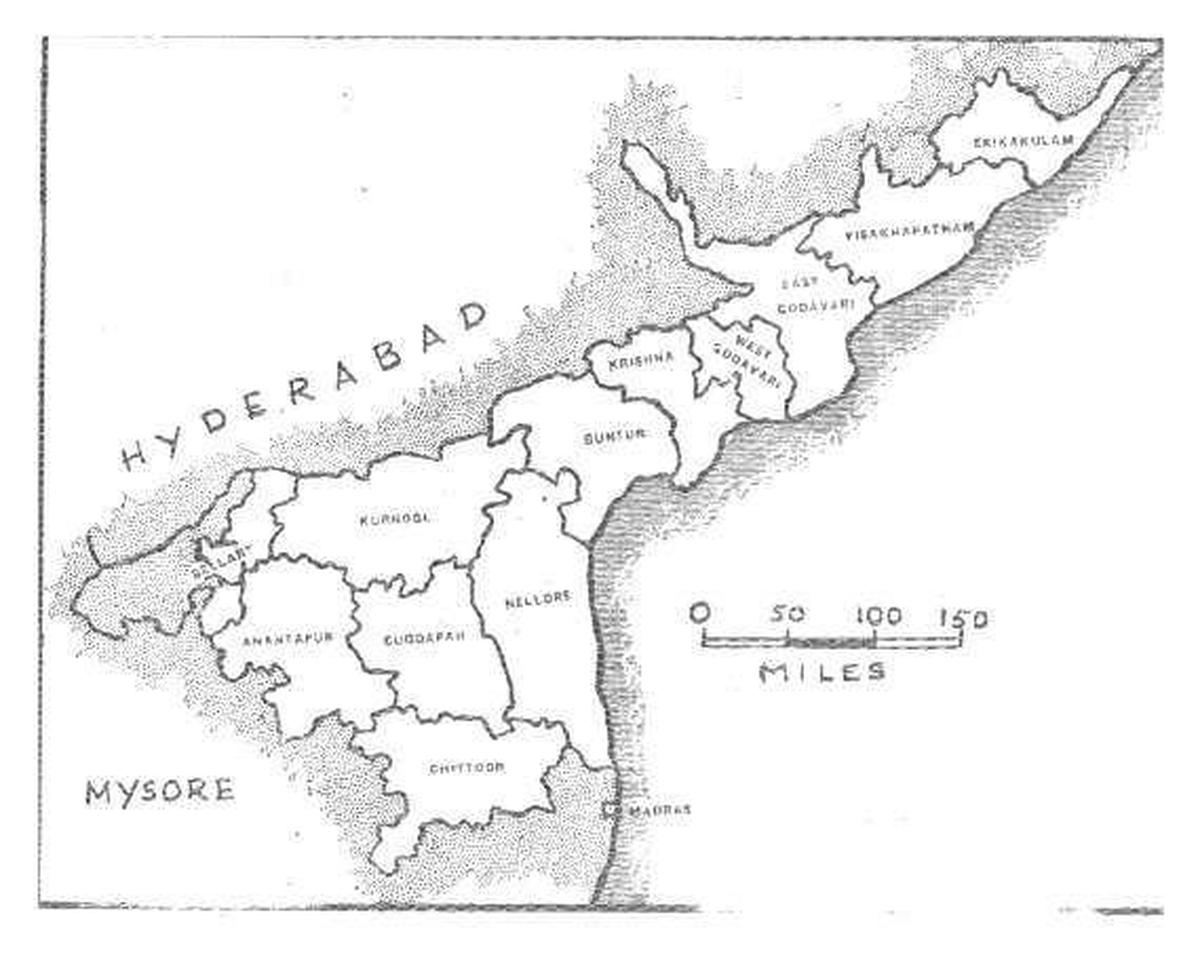
The map of Andhra State consisting of 11 Telugu-speaking districts and three taluks of Bellary district
| Photo Credit:
The Hindu Archives
On tight deadline
As a sequel to the Centre’s decision, a body — Partition Committee — was put in place during the first week of December 1949 to go into the matter. The Committee, which consisted of many eminent persons in public life, had actually run against time in view of the deadline of January 26, 1950, as suggested by the Union government for completing the process of establishment of the new State. As is well known, it was on the date that the Constitution of India came into effect.
A possibility
The panel had deliberations and came up with a report, well before the due date. But, no agreement among the Committee’s members on a few issues, especially on the city of Chennai, could be reached. Had the panel succeeded in its mission, the history of south India would have been different.
The Committee’s work remains less known, even though it could have paved the way for smooth separation in 1950 itself, if political leaders, at the Centre and in the territories of Tamil-speaking and Telugu-speaking, had struck a deal among themselves.
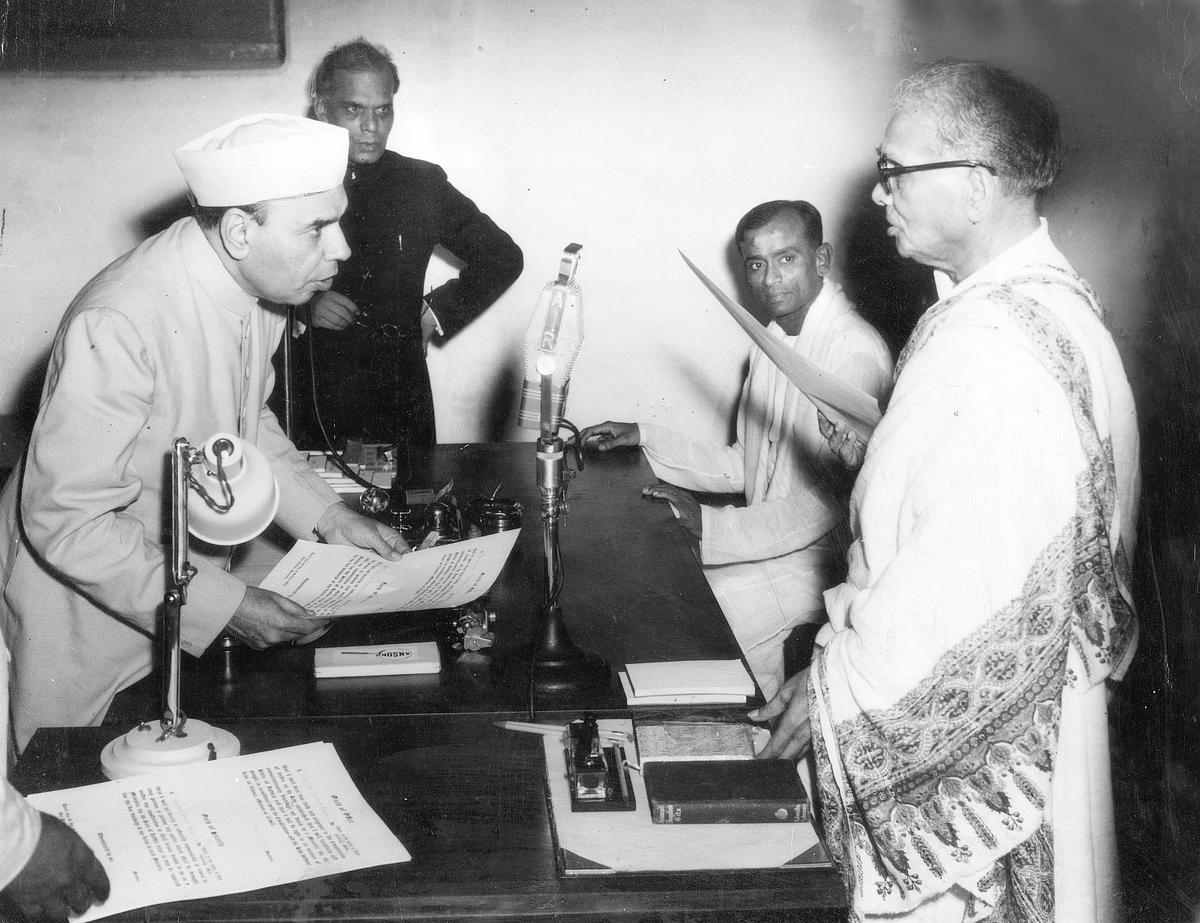
T. Prakasam, the first Chief Minister of Andhra State is being sworn in at Raj Bhavan, Kurnool on October 2, 1953
| Photo Credit:
The Hindu Archives
Panel members
Though the news about the Union government’s move was out in the last week of November 1949, the Madras government took about 10 days even to settle the issue of composition of the panel. Only on December 7, 1950, the details regarding the composition were made public.
Headed by the then Chief Minister P.S. Kumaraswami Raja, the Committee had K. Madhava Menon. T. T. Krishnamachari, B. Gopala Reddi, N. Sanjiva Reddy, T. Prakasam and Kala Venkata Kao as members. Barring Menon, who was a member of the Legislative Council, and TTK, a member of the Constituent Assembly, all others were members of the Legislative Assembly.
In fact, Raza Khan, a representative of Chittoor (now in Andhra Pradesh) even asked Gopala Reddi, who was the Leader of House and Finance Minister, whether the Chief Minister or his Cabinet was “very careful in selecting representatives from the Andhra area for the reason that they have been very obliging, adjusting and….,” reported The Hindu on January 7, 1950. The Assembly Speaker J. Sivashanmugam Pillai intervened and ruled that he could not allow such questions.
Among the members were Prakasam and Reddi who went on to become the first and second Chief Ministers of the Andhra State in 1953 and 1955 respectively. Sanjiva Reddy became the first Chief Minister of the enlarged Andhra Pradesh in 1956.
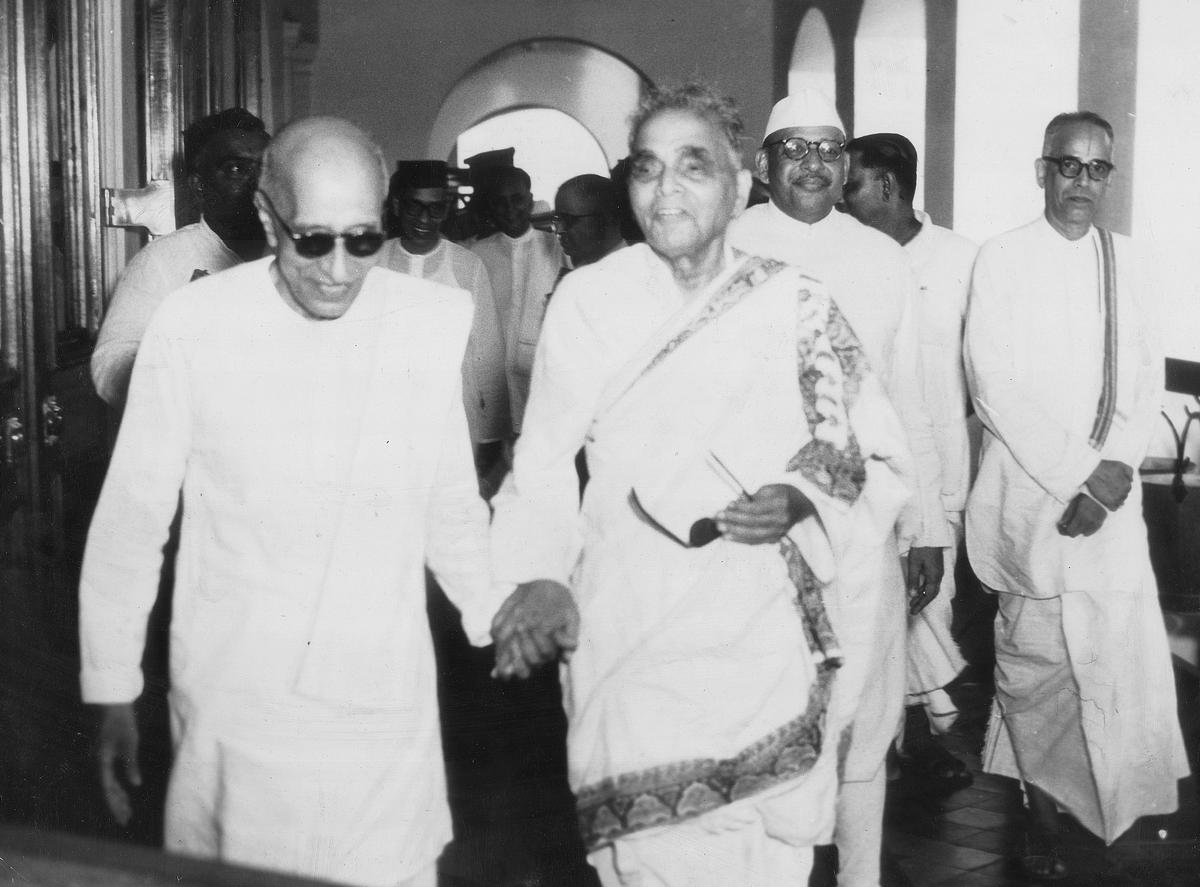
Madras Chief Minister C. Rajagopalachari with his counterpart of Andhra Pradesh, T. Prakasam at the Secretariat in Madras on October 19, 1953
| Photo Credit:
The Hindu Archives
The mandate given to the panel was “to discuss and decide all points raised in the Government of India’s communication” sent to the Madras government regarding the proposed State. Only the boundary question had been removed from the ambit of the panel.
Originally, the panel chief Kumaraswami Raja was of the view it was “humanly impossible” to complete the work before the due date – January 26.
Reiterating the view at a press conference on December 14, he touched upon the financial implications of having a separate State. The area that would form the Andhra province would be faced with an “initial deficit” of about ₹ 1.8 crore., the figure of which, he said, did not take into account the receipts from the Tobacco Tax or Income-Tax.
While conceding that he had “no right to say whether there should be a new province or not in case there is a deficit,” the Chief Minister said it was for the Union government and those who were in support of the new State to decide.
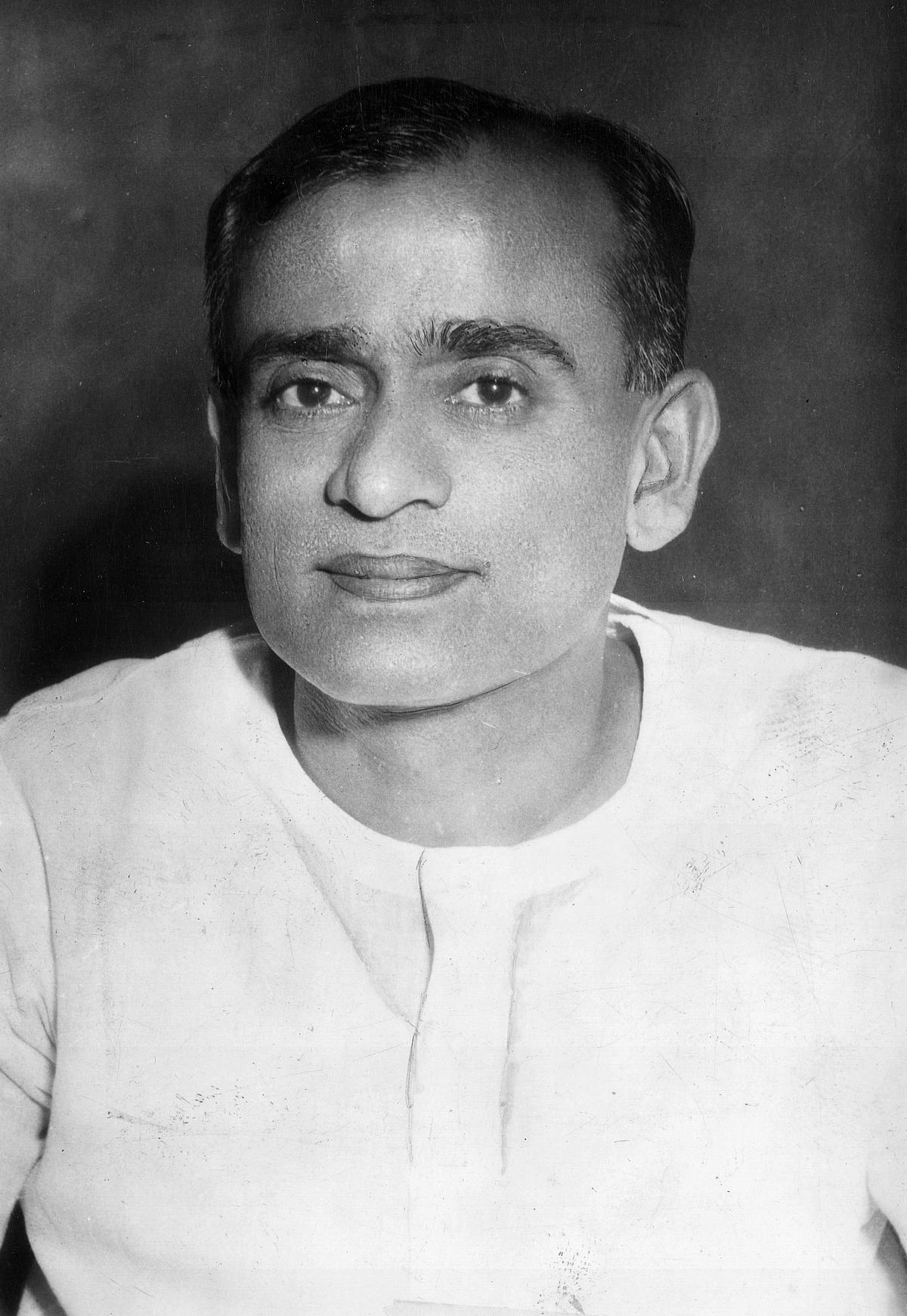
N. Sanjiva Reddy, who became the first Chief Minister of the enlarged Andhra Pradesh in 1956, went on to become the President of India
| Photo Credit:
The Hindu Archives
Claim for Chennai
Though expectations were running high by the end of December 1949 that the Andhra State would be a reality by the first Republic Day, the issue that eluded a consensus among the members pertained to the city of Chennai.
The representatives of the Andhra region seemed to have reconciled to the fact that their claim for the city was not getting support even from the Centre but yet, they wanted to have their presence in Chennai for a limited or brief period.
On December 31, the Committee met at the Cabinet Room of the Secretariat in Chennai; assessed the requirements of government officers and the staff for the proposed State, and decided to replicate virtually the bureaucratic system of Tamil Nadu.
Work completion
On the New Year Day, the panel met and formally concluded its work but Prakasam, in his note, raised three pertinent issues, the foremost being the treatment of Chennai as the temporary capital of the new State. He had sought the provision of ₹1 crore for development of a new capital and ₹12 crore as the share of Andhra in hydro-electric projects.
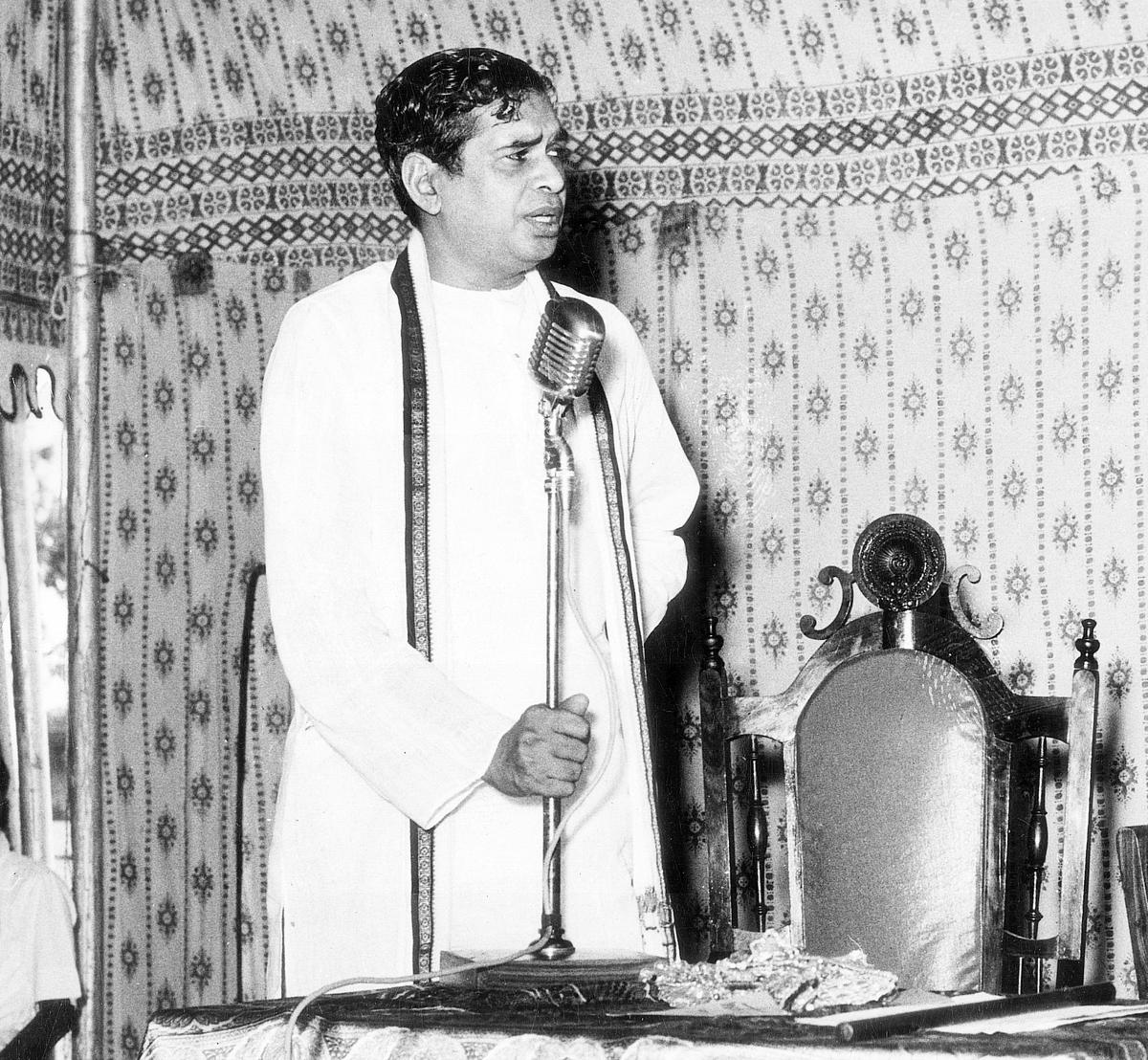
B. Gopala Reddi
| Photo Credit:
The Hindu Archives
Capital-sharing
The idea of sharing Chennai with Andhra as the capital for some years was rejected summarily, both in 1950 and 1953, when the Andhra State actually came into being. But, a similar idea of a common or joint capital — fructified in respect of Andhra Pradesh and Telangana about 60 years later — in 2014, when Hyderabad became such a capital for the two States following the bifurcation of Telangana, according to this newspaper on January 2, 1950.
Report confidential
On January 11, 1950, answering a question of veteran leader Tenneti Viswanadham about the contents of the Committee’s report, Gopala Reddi told the Assembly that the government regarded the report and the note as “strictly confidential,” as a result of which it would not be able to place them on the floor of the House.
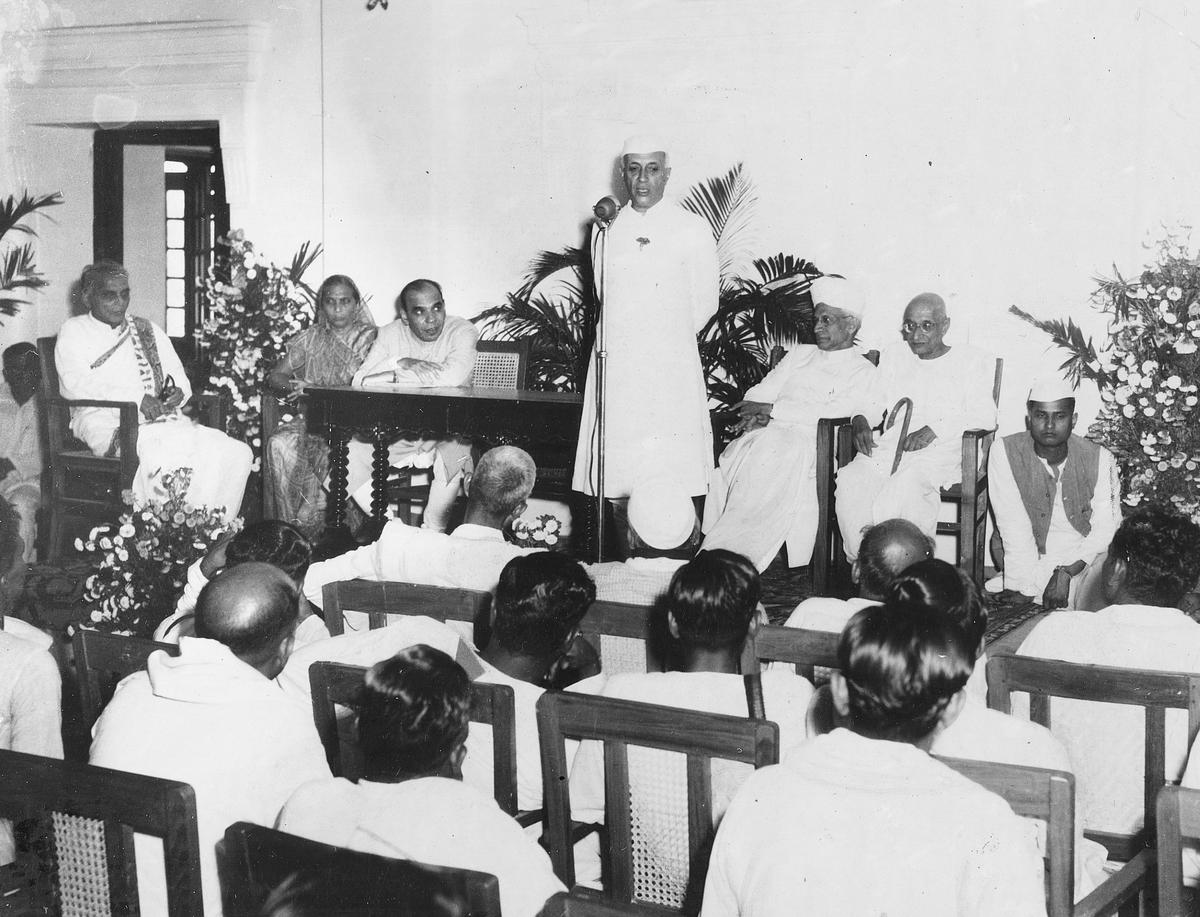
Prime Minister Nehru addressing the members of the Andhra State Assembly at Kurnool on October 1, 1953. (from left) T. Prakasam, Andhra Chief Minister, Mrs. and Mr. C.M. Trivedi, Governor of Andhra, Vice-President Radhakrishnan and C. Rajagopalachari
| Photo Credit:
The Hindu Archives
In view of lack of consensus on the capital issue, the panel’s commendable work went unnoticed. About one-and-a-half years later, when Sitaram Sastri and others were on a fast in support of the State, Prime Minister Nehru wanted all the leaders concerned to come to an understanding on all the issues including the capital.
Eventually, the Andhra State fructified in October 1953, about 10 months after the death of Sriramulu.



