



Surat bullet train station: Rolling stock depots at Surat and Ahmedabad are actively under construction as part of the Mumbai-Ahmedabad high-speed rail corridor project.
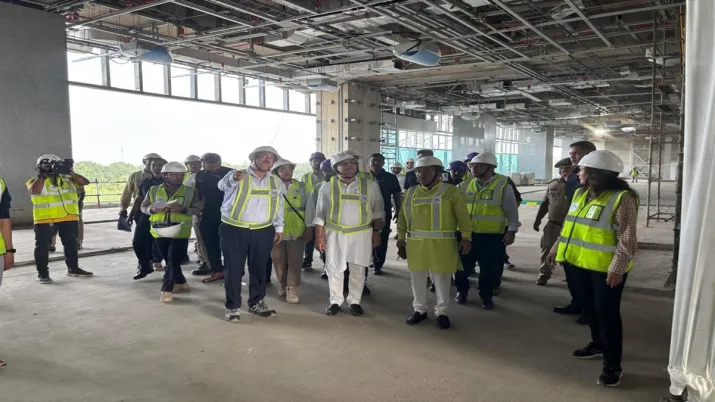
Minister of Railways Ashwini Vaishnaw, accompanied by Surat Member of Parliament (MP) Mukesh Dalal, recently visited the under-construction Surat Bullet Train station to review the ongoing track installation works. During the visit, they witnessed the installation of the first turnout, marking a significant milestone as India installs track turnouts accommodating train speeds of up to 320 kmph for the first time.
Surat Bullet Train station: A new era in passenger convenience and connectivity
The forthcoming Surat Bullet Train station is poised to redefine passenger experience and connectivity in the region. Thoughtfully designed for comfort, the station boasts spacious interiors, natural light from skylights, and airy platforms to provide a serene travel environment. Facilities will include waiting lounges, nurseries, restrooms, retail shops, lifts, escalators, and clear signage to aid easy navigation for all passengers, including the elderly, differently-abled, and families with children.
Seamless multi-modal integration enhances transit efficiency
The station is planned as a multimodal hub to ensure smooth integration with other transport services, including metro, buses, taxis, autos, and local transit. The Surat Municipal Corporation and Surat Urban Development Authority, in collaboration with the Mumbai-Ahmedabad High-Speed Rail Project, have developed a multimodal integration plan to facilitate seamless transfers and reduce transition times for commuters.
The station’s strategic location near Antroli village along Surat-Barodoli Road connects it closely to-
- BRTS Bus Stop (330 meters)
- Proposed Metro Station (280 meters)
- Surat Railway Station (11 km)
- Surat City Bus Stand (10 km)
- Chalthan Railway Station (5 km)
- National Highway 48 (5 km)
Eco-friendly design and sustainable features
In line with sustainability, the station incorporates Indian Green Building Council (IGBC) features such as rainwater harvesting, low water-consumption sanitary fittings, eco-friendly paints, wide open areas, and skylights that maximise natural ventilation and daylight, thereby reducing artificial lighting needs. Landscaping with greenery creates a refreshing ambiance complementing the station’s modern aesthetics.
Architectural inspiration and construction progress
Inspired by Surat’s famed diamond industry, the station’s façade and interiors reflect the elegance of a diamond’s facets. Structural work has been completed, and ongoing efforts focus on interior decoration, roofing, and finishing of passenger facilities. RC track beds and temporary track installations are finished, supporting the high-speed corridor’s overall infrastructure.
Key specifications
- Total height: 26.3 meters
- Built-up area: 58,352 square meters
Station levels-
- Ground floor: Parking, pick-and-drop zones (cars, buses, autos), security checks, lifts, escalators
- Concourse level: Waiting lounges, restrooms, kiosks, ticket counters
- Platform level: Boarding and train operations
Project milestones as of September 25
- Construction of the 508-kilometer Mumbai-Ahmedabad High-Speed Rail Corridor is active, with 323 km viaducts and 399 km piers completed.
- 17 river bridges, 5 PSC and 9 steel bridges have been finished.
- Over 400,000 noise barriers installed on a 210 km stretch.
- Track bed construction for 210 track kilometers is complete.
- 2,100+ overhead electric (OHE) masts installed, covering approximately 52 km of the main viaduct line.
- Tunnel excavation progressing in Palghar district and Maharashtra’s elevated stations construction underway.
- Rolling stock depots at Surat and Ahmedabad are under construction, with infrastructure work advancing at Gujarat stations and Mumbai’s underground station making steady progress.
The Surat Bullet Train station symbolises cutting-edge infrastructure combining passenger comfort with efficient connectivity to support India’s fastest train corridor by 2026.



