


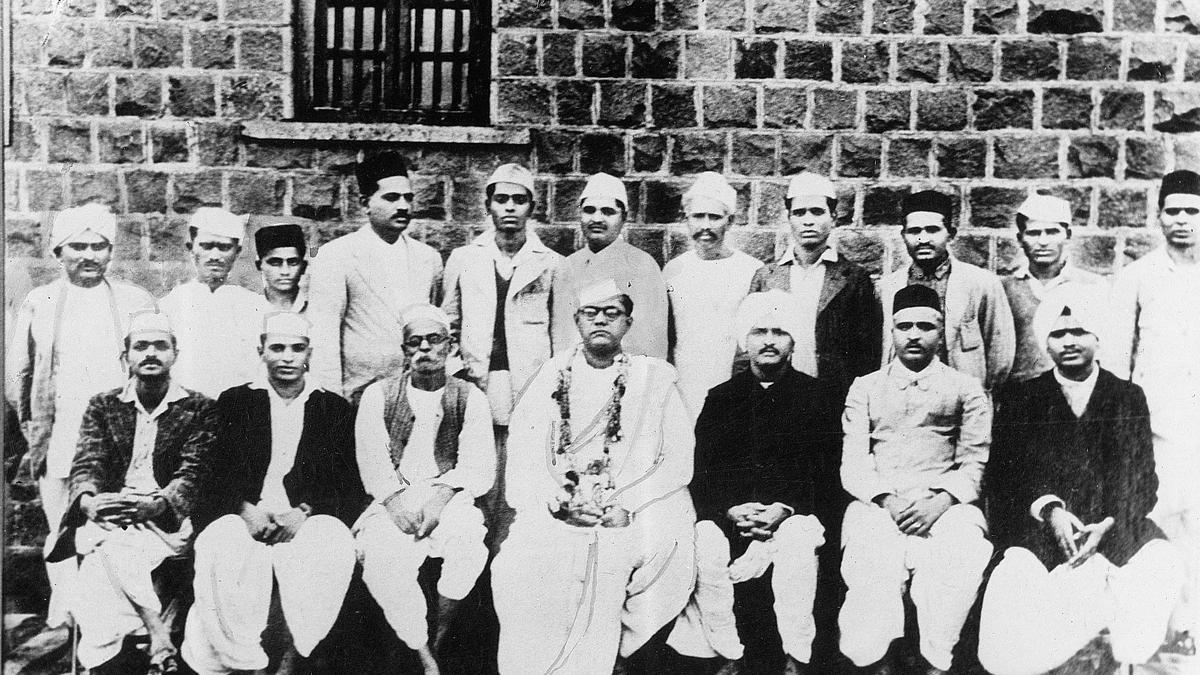
Man of many tales: A photograph of Subhas Chandra Bose (middle with garland) after addressing a public meeting at Beadgi in Dharwar district in 1939.
| Photo Credit: The Hindu Archives
On August 18, 1945, a plane carrying Subhas Chandra Bose crashed over Taihoku in Taiwan. With that perished a systematic attempt to forge a “higher synthesis” between the spiritual wisdom of the East and the material dynamism of the West. Bose was neither a dreamer content with abstract philosophy nor a crude pragmatist indifferent to moral questions. As he put it himself, he refused to accept what he “could not live up to—what is not workable”.
This piece examines his intellectual journey from absolute idealism to a dialectic conception of reality and its influence on his political doctrine and his revolutionary praxis.
Published – April 14, 2026 06:43 am IST



