

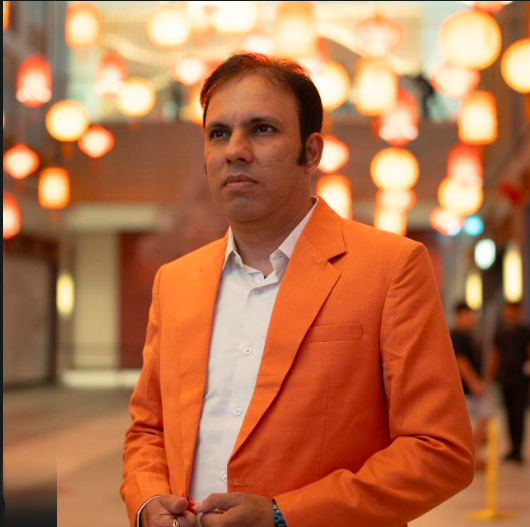

For years, the popular image of Indian entrepreneurship has been closely associated with metropolitan cities, technology hubs, venture capital and rapidly scaling startups. But India’s business landscape is much larger than that familiar narrative. Across smaller cities, entrepreneurs are building companies by understanding local markets, controlling their economics and creating products that solve everyday consumer needs.
Rajesh Motiyani’s journey with Shoe Factory is one such example.
Based in Ratlam, Madhya Pradesh, Motiyani has built his career around the footwear business, bringing more than 13 years of industry experience to the brand. Shoe Factory was founded with a straightforward objective: to provide Indian consumers with footwear that combines comfort, durability and contemporary design without moving beyond accessible price points.
That proposition is important in a market as diverse as India.
Footwear is a necessity, but consumer expectations have changed considerably. Customers increasingly want products that look modern while remaining comfortable and affordable. For a brand operating in this space, the challenge is to maintain consistency while serving different age groups, preferences and markets.
Shoe Factory has responded by building a product portfolio for men, women and children, with casual and everyday footwear forming part of its broader offering. The company’s stated focus is on quality, affordability and designs that evolve with changing customer preferences.
For Motiyani, however, the business story extends beyond the product itself.
Distribution and relationships have been central to the company’s growth approach. In a consumer business, having a good product is only one part of the equation. The product has to reach the right retailers, remain available to customers and create enough value for the people participating in the distribution chain.
This is where a relationship-driven model can make a significant difference.
Rather than relying entirely on expensive brand-building exercises, a strong network of distributors and retailers can create a more direct route to the consumer. The approach also allows a business to understand market feedback at the ground level, where customer preferences are visible in real time.
This emphasis on the retail ecosystem has become an important part of Shoe Factory’s expansion plans. The company aims to develop a nationwide retail and franchise network, with a stated goal of expanding to more than 200 stores across India. It is also looking at new product categories, stronger manufacturing capabilities, e-commerce and deeper distributor partnerships.
The story becomes particularly interesting because of the location from which the business has developed.
Ratlam is not traditionally placed at the centre of India’s startup conversation. Yet that can also be an advantage. Smaller cities can offer different operating economics and closer connections to regional markets. Entrepreneurs working from these locations often have to build businesses around efficiency rather than simply spending their way into visibility.
Motiyani’s journey illustrates this more grounded approach to growth.
The business has also remained connected to the idea of supporting its retail partners. Shoe Factory describes its franchise and retailer network as an important part of its expansion strategy, with the broader objective of creating opportunities for small business owners while growing the brand’s presence.
There is another lesson in this model: affordability does not necessarily mean compromising on ambition.
The company wants to establish itself as a trusted footwear name across India’s cities and towns, while continuing to introduce new products and strengthen its manufacturing and distribution ecosystem.
For Motiyani, therefore, the larger opportunity lies in India’s enormous middle-market consumer base. A large section of Indian consumers does not necessarily seek the most expensive product. They seek something that works, looks good, lasts and makes sense for the money they spend.
Understanding that equation can become a powerful business advantage.
His journey also challenges the assumption that successful consumer brands must originate in large metropolitan centres. The fundamentals of retail remain remarkably universal: understand the customer, offer a relevant product, maintain consistency, build reliable distribution and keep the economics of the business healthy.
Shoe Factory’s growth story reflects those principles.
As the company works towards expanding its retail, franchise and digital presence, Rajesh Motiyani’s journey represents a broader shift taking place across India’s business landscape. Entrepreneurs from smaller cities are increasingly building brands with national ambitions, not by imitating metropolitan business models, but by developing strategies suited to their own markets.
From Ratlam to a larger Indian retail footprint, the journey of Rajesh Motiyani and Shoe Factory demonstrates that the foundation of a scalable consumer business can be surprisingly simple: understand what people need, make it accessible and build the relationships that take it to them.



