



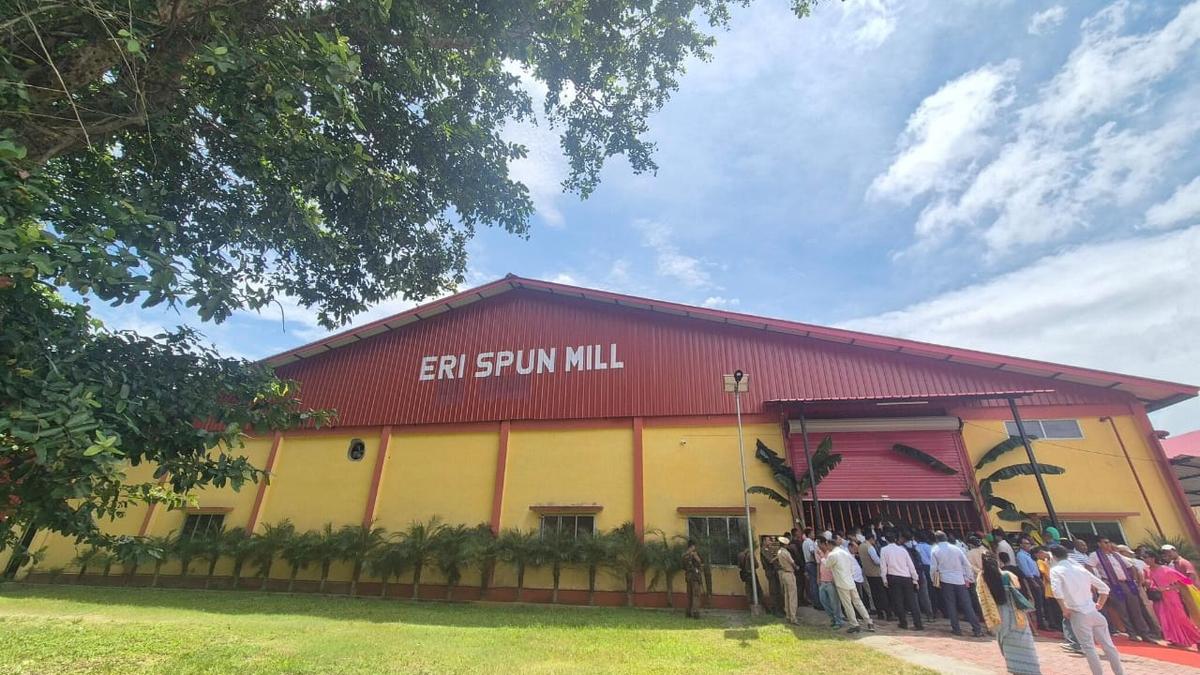
One of the two new silk spun mills in Assam’s Bodoland Territorial Region.
| Photo Credit: Special Arranggement
An unprecedented support for pre-cocoon activities has rejuvenated the traditional silk industry in Assam’s Bodoland Territorial Region (BTR), helping increase the annual income of silkworm farmers by at least 25%, officials said.
Also Read | Nothing silky, smooth for sericulture farmers in Andhra Pradesh
The Bodoland Sericulture Mission was launched in 2023 to bail the cottage industry out of a depression caused by mechanised units and bulk producers in strategic locations beyond the BTR. Pre-cocoon support, a major component of the mission, proved to be a game-changer for villagers engaged in all stages of producing the GI-tagged Bodo Eri silk and weaving it.
Pre-cocoon support in sericulture entails efforts to improve the initial stages of silk production, including the development of improved host plants like mulberry, provision of specialised rearing equipment and disinfectants, establishment of rearing centres for young silkworms, and the supply of healthy, disease-resistant, and disease-free silkworm seeds to ensure successful cocoon crops.
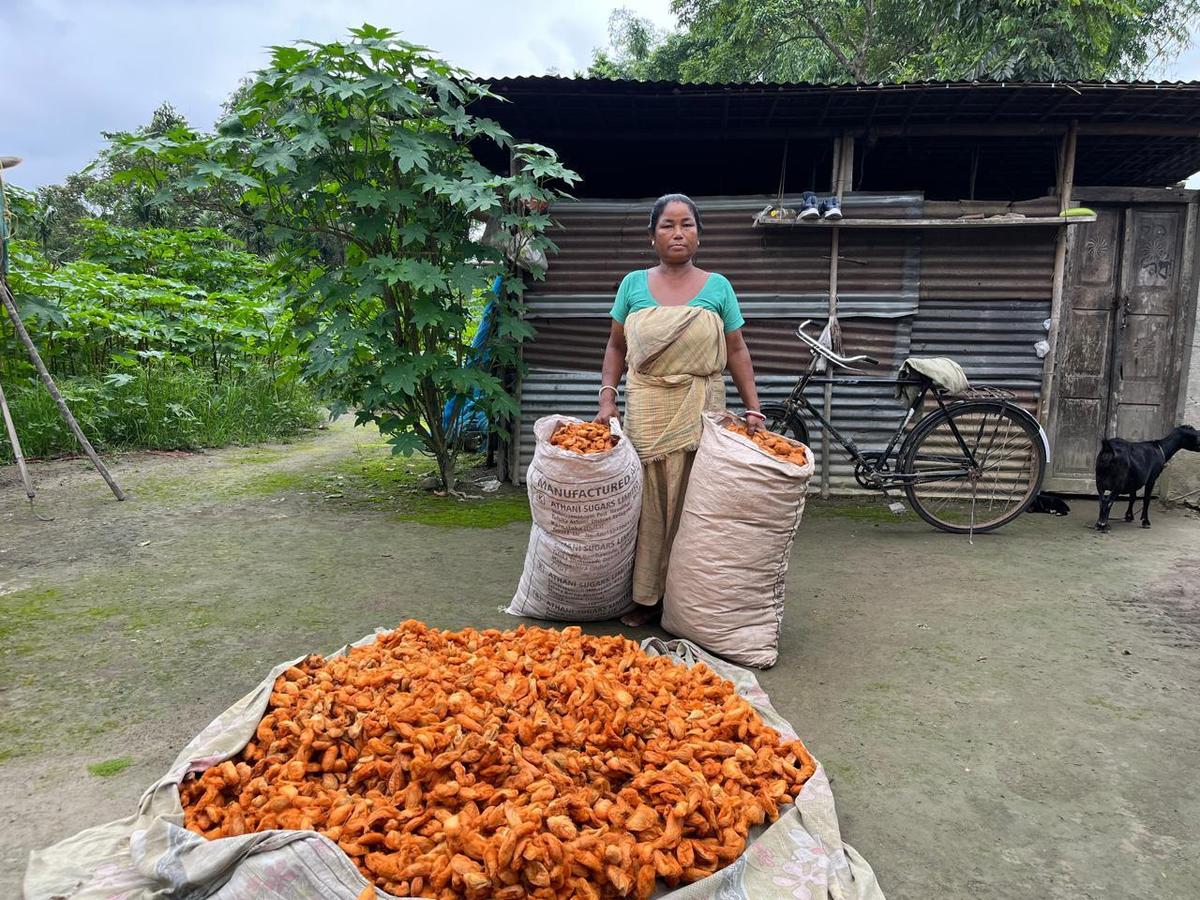
“The initiatives helped increase the silkworm rearers’ annual income from ₹70,000 before the mission to ₹100,000. Our target is to increase it further to ₹150,000,” Nijwm Thomas Mushahary, a non-farm livelihoods specialist associated with the mission, said.
The focus on the pre-cocoon sector supporting 2,670 households across the BTR had a domino effect on 1,275 beneficiaries, mostly women, of the post-cocoon sector, entailing training, supply of Eri spinning machines, certified looks, and weave-sense technology.
Multiple agencies involved
Envisaged as an integrated convergence programme of the Bodoland Territorial Council (BTC), the sericulture mission involves multiple agencies. The BTC governs the 8,970 sq. km BTR straddling five districts bordering Bhutan.
These agencies include the Central Silk Board, the Ministry of Textiles, the North East Handicrafts and Handlooms Development Corporation (NEHHDC), the NTPC-Bongaigaon, and the World Bank-funded Assam Agribusiness and Rural Transformation Project.
Currently, 41,854 acres of land are covered under silkworm food plantations in the BTR, providing livelihood to 44,250 families in 1,658 villages. BTR officials said a dedicated mission was deemed necessary as 53.8% of the villages in Bodoland practise sericulture.
Eri raw silk contributes 97.17% of the total raw silk production (1,510 metric tonnes during the 2024-25 fiscal year) of the BTR, the second-largest producer of this high-value silk in the northeastern region. The rest of Assam is the largest producer.
Today, the BTR contributes about 30% of Eri silk production in Assam, and more than 20% of Eri silk production in India. The output has been boosted by two spun mills – one at Barama, run by the NEHHDC, in the Baksa district and the other at Adabari, funded by the Central Silk Board, in the Kokrajhar district. These employ more than 450 people and have a combined capacity to produce more than 4 metric tonnes of Eri yarn annually.
The involvement of the NEHHDC and the Central Silk Board in the mission has guaranteed purchasers for the BTR’s Eri yarn, increasing margins for silkworm rearers and improving the consistency of weavers and apparel MSMEs.
Published – September 10, 2025 10:29 am IST



