


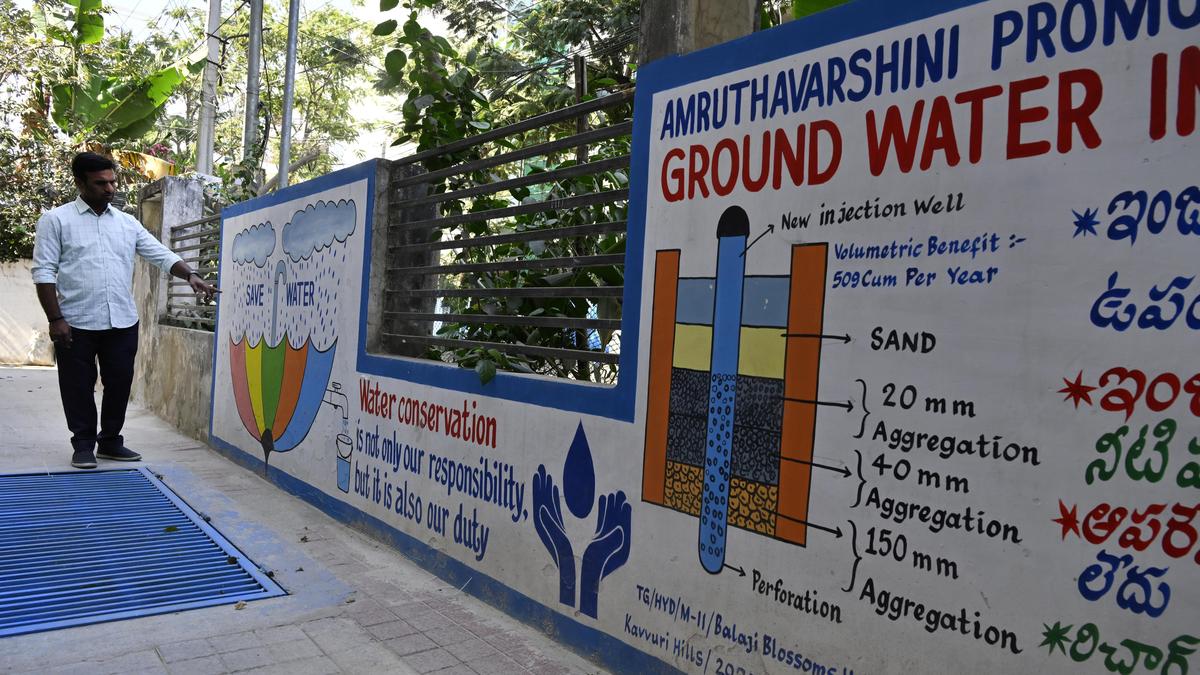
Decentralised water management and circular use of wastewater were discussed at a meeting held in Hyderabad on January 22, 2026. The image is used for representative purposes only.
| Photo Credit: NAGARA GOPAL
The Greater Hyderabad Municipal Corporation aims to include organised communities to ensure effective water management as well as flood control in the city.
In collaboration with the Indian Green Building Council, GHMC convened a stakeholder interaction and brainstorming session on ‘Water discharge and wastewater/storm water management’ on Thursday (January 22, 2026), attended by GHMC Commissioner R.V. Karnan, Additional Commissioner Anurag Jayanti and Managing Director of the Hyderabad Metropolitan Water Supply & Sewerage Board Ashok Reddy. The session focused on promoting decentralised water management and circular use of wastewater and storm water in organised communities.
It was highlighted that organised residential and commercial developments are no longer passive consumers of municipal services. They function as water generators, storage points, and reuse nodes. When managed responsibly, such developments can act like buffers during peak rainfall events and when unmanaged, they significantly amplify stress on public infrastructure.
Representatives from builder associations such as Confederation of Real Estate Developers’ Associations of India (CREDAI), National Real Estate Development Council (NAREDCO), and resident welfare groups such as United Federation of Resident Welfare Associations, NGOs, technical institutions and domain experts attended the meeting and exchanged ideas. Inputs pertaining to policy framework, challenges in STP operations, and incentives to increase adoption of the policy were deliberated upon.
Addressing the gathering, Mr. Karnan said infrastructure expansion alone cannot keep pace with rapid urban growth in the context of increasingly unpredictable and intense rainfall patterns. Decentralised retention and reuse of water is the first line of defence against climate risk, which requires collective action by industry bodies, developers, Resident Welfare Associations (RWA) and facility managers for distributed, source level water management.
The inputs will be translated into implementable frameworks and guidelines, with the objective of reducing load on public drains, protecting lakes and nalas, and strengthening the city’s long-term urban resilience, a statement from GHMC said.

Published – January 23, 2026 01:13 pm IST



