


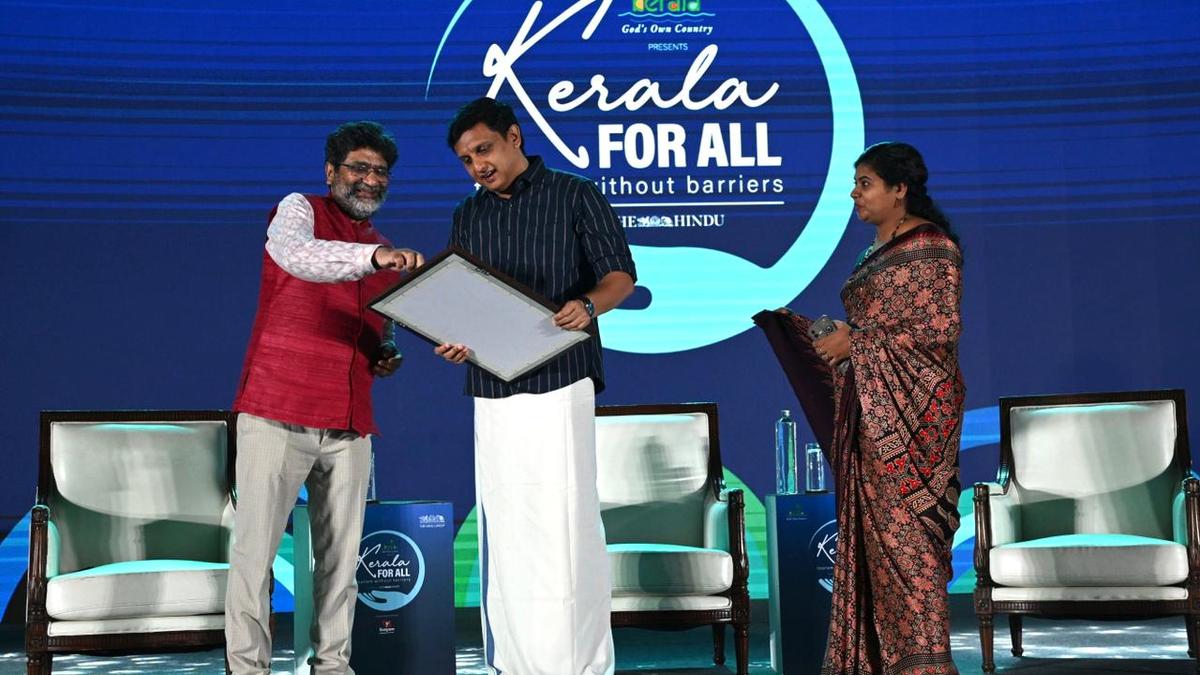
(from left) Suresh Nambath, Editor, The Hindu, P.A. Mohamed Riyas, Kerala’s Minister of Tourism, and Sikha Surendran IAS, director of Department of Tourism during the Kerala for All conclave in Kochi on January 31, 2026
| Photo Credit: H. Vibhu
Inclusive and accessible tourism is not a special service for a few, but a shared responsibility of governments, industry, stakeholders, communities, and citizens, Kerala Minister for Public Works and Tourism P.A. Mohamed Riyas has said.
Opening the Kerala for All conclave, a two-day knowledge conclave on inclusive and accessible tourism organised jointly by The Hindu and Kerala Tourism in Kochi, on Saturday (January 31, 2026), Mr. Riyas said that “keeping this in mind, Kerala has initiated the first step towards this direction by drafting a design policy, a first-of-its-kind initiative in India.”
Taking a cue from the initiative of Kerala, several States in the country are coming up with design policies, which shows its need and acceptance across the nation, he said. Emphasising that inclusive tourism will enhance the quality of life for both visitors and host communities also, the minister said strong policy support, regulatory frameworks, and the smart use of technology such as assistive apps and digital guides are needed to accelerate this transformation.
Stressing the need to remove the physical, social, informational, and attitudinal barriers to enable every traveller to explore the world with dignity and independence, the Minister reminded that the right to travel safely, comfortably, and with dignity belongs to everyone. Accessibility is also not limited to persons with disabilities alone. It benefits senior citizens, families with young children, people with temporary injuries, and indeed every traveller. Barrier-free infrastructure such as ramps, lifts, accessible toilets, and well-designed public spaces create destinations comfortable and safe for all, the Minister said.
The Minister stressed the importance of having clear signage that is easy to understand. Accessible information and digitally accessible platforms further enhance the travel experience. However, infrastructure alone is not enough. The human element is also equally important. Trained and sensitised tourism personnel play a critical role in creating inclusive hospitality environments. Inclusive tourism is built on universal design principles, ensuring that facilities and services are usable by everyone without the need for special adaptation, he said.
Accessible transportation, inclusive accommodation, and culturally sensitive services are essential for a seamless tourism experience. At the same time, inclusive tourism embraces cultural, linguistic, and economic diversity, ensuring that no one feels excluded. Community participation is the backbone of successful inclusive tourism. When local communities are involved, tourism becomes more meaningful, sustainable, and socially inclusive, said Mr. Riyas.
Keeping this in mind, the Tourism department has kickstarted a project in the Beypore constituency to achieve the goal of a complete disabled-friendly constituency. The initiative, carried out in association with an agency, is committed to the cause of ensuring accessibility to all. They will be presented as a case study before the country later, said the Minister, adding that the inclusive and accessible tourism also strengthens destination competitiveness, expands market reach, and contributes to responsible and sustainable development, he said.
The Minister also added that the association with the Kerala Tourism department and The Hindu Group together will open a new chapter in the area, making travel and its connected experiences more democratic and inclusive.
In the welcome address, Suresh Nambath, Editor of The Hindu, said, “The Hindu believes that the wider civil society needs to be involved in a sustained public discourse, and we are committed to fulfilling our role in this respect by shaping conversations and aiding policy formulations through our publishing platforms. Our support for tourism without barriers is just one example of The Hindu’s commitment to accessibility and inclusion in all sectors. The two days of discussions will leave a lasting impact and contribute to purposeful change in this area,” he said.
Kerala Tourism director Sikha Surendran was present on the occasion.
Published – January 31, 2026 12:21 pm IST



