

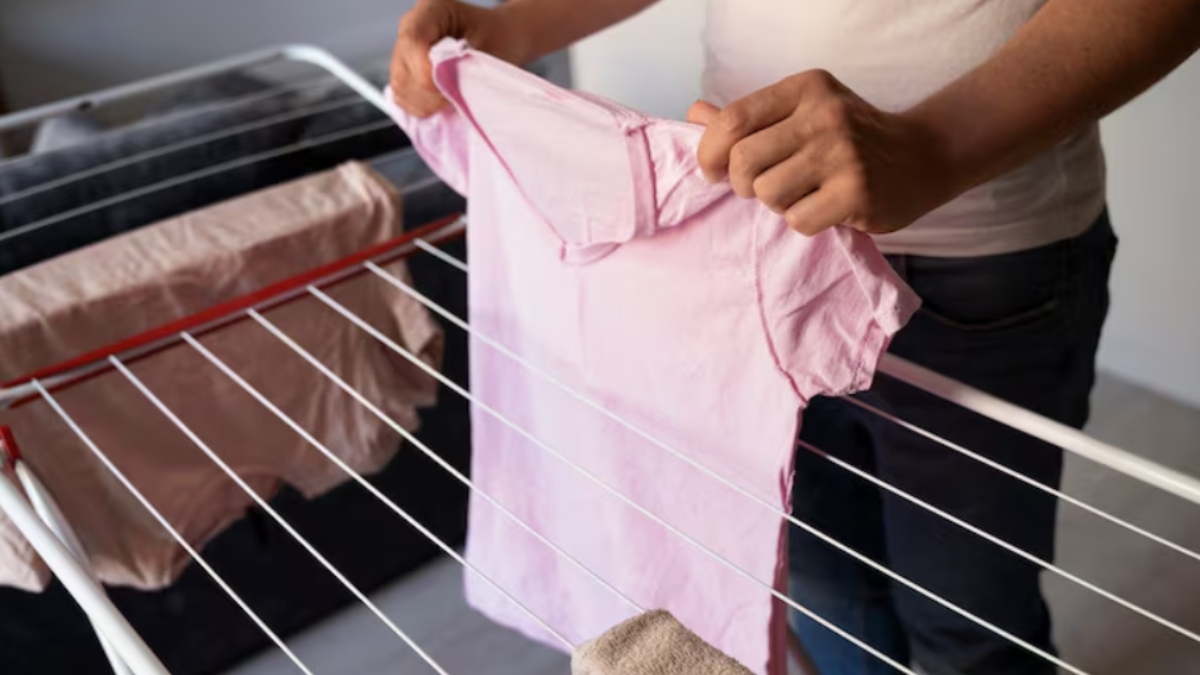

Is drying clothes indoors bad for your health? WHO guidelines warn about mould, dampness and poor indoor air quality. Know the risks and safe alternatives.
When people dry their clothes inside, especially in the winter and when the weather is bad outside, they think it’s no big deal. But according to expert opinions from health professionals and the WHO, drying clothes inside is not without its problems. Indoor Air Quality and respiratory health are at risk when you’ve been exposed to high levels of moisture inside.
In situations where someone does not have access to an outdoor drying space or the weather is not allowing them to do so, they may resort to hanging clothing on racks. The moisture evaporates from the wet textile and causes significant amounts of water vapour to accumulate in that room due to the lack of airflow. A typical load of laundry has been calculated to create two litres of water vapour that becomes dispersed throughout the same room where it was originally located.
This added moisture raises indoor humidity levels, creating an environment that encourages the growth of mould and dampness. Mould spores flourish in humid conditions and can settle on walls, windows, ceilings, or even on fabrics themselves.
What the WHO guidelines reveal
The World Health Organization (WHO) has published the guidelines for Indoor Air Quality: Dampness and Mould. These guidelines are the result of years of research conducted internationally and describe how damp or mouldy conditions in your home are associated with:
Increased prevalence of respiratory symptoms
- Aggravation of asthma and allergies
- Potential disruptions in immune responses
How Mould Affects Health
Mould isn’t just unsightly and smelly; it can be harmful. Common indoor mould species such as Aspergillus, Cladosporium, and Stachybotrys are known to release spores into the air. When inhaled, these spores can:
- Irritate the respiratory tract
- Trigger allergic reactions
- Worsen symptoms in people with asthma, bronchitis, or other lung conditions
Children, elderly people, and those with weakened immune systems are particularly vulnerable.
Practical tips to minimise health risks
Select a room that is adequately ventilated. Using open windows or fan exhaust systems will assist in creating airflow for the moisture produced by the drying clothes.
If feasible, air-dry items outside in the sun or utilise a vented tumble dryer designed specifically to exhaust moist air outside.
Utilising a dehumidifier within the drying area will drastically reduce the humidity content of the room and decrease the likelihood of developing mould due to elevated moisture levels.
Do not dry laundry in a room occupied by someone who sleeps there for an extended period, as this will result in increased exposure to airborne spores and moist air being present within the room.
ALSO READ: 5 easy DIY ways to remove tough stains from clothes



