

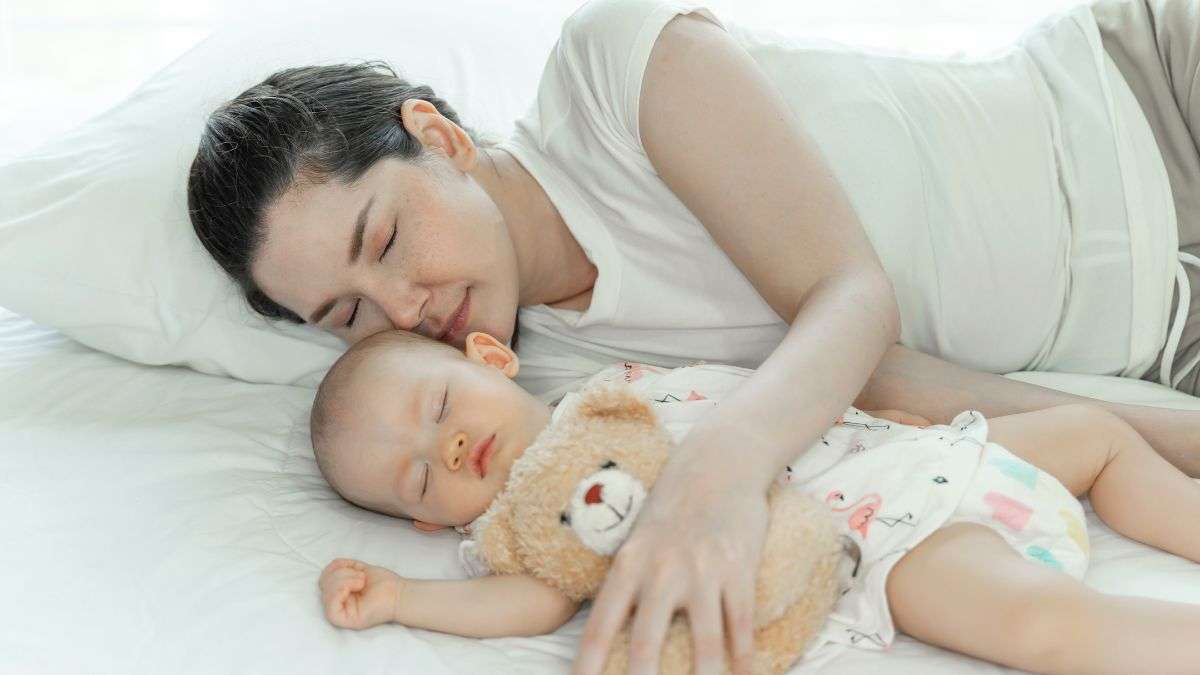

In most Indian households, it is a very rare occurrence for a newborn to sleep alone. From grandparents who have advice to share to mothers who have an instinct to keep their babies close to them at night, the practice of co-sleeping has been a part of their lives for many years. Sharing a bed or a sleeping space has meant comfort, bonding, and convenience, especially when it comes to late-night feedings.
But as modern lifestyles change sleeping environments, doctors say families must rethink how closeness and safety work together. While proximity between parents and babies has emotional and developmental benefits, unsafe sleep setups can quietly increase risks.
Paediatricians now emphasise that safe sleep is not about distancing babies from caregivers. It is about creating the right environment where bonding and protection go hand in hand.
Why babies naturally sleep better close to caregivers
According to Dr Krishna Prasad, Consultant Paediatrician at Motherhood Hospitals, Electronic City, Bengaluru, babies often benefit physiologically from being near their parents.“When infants remain close to caregivers, their breathing and heart rhythms tend to synchronise. This closeness also supports successful breastfeeding and emotional security,” he explains.
However, doctors warn that affection alone does not guarantee safety.
The hidden dangers inside Indian bedding habits
One of the biggest risks in traditional co-sleeping comes from the sleeping surface itself. Soft cotton mattresses, memory foam beds, decorative pillows, and heavy quilts are common in Indian homes. While comfortable for adults, these can pose serious dangers for infants. “A baby’s neck muscles are not strong enough to reposition the head if breathing becomes obstructed,” says Dr Prasad. “If the face sinks into soft bedding, there is a risk of carbon dioxide re-breathing or accidental suffocation.”
Experts advise using a firm, flat mattress where the baby’s head does not sink. Pillows meant to shape an infant’s head should also be avoided, particularly for babies under six months. Loose bedding, bolsters, and stuffed toys may look harmless, but they can block airflow during sleep. The goal, doctors say, is simple. Keep a completely clear sleep zone around the baby.
Back sleeping remains the safest position
Sleep position plays a critical role in preventing sleep-related accidents. Babies should always be placed on their backs, whether for naps or nighttime sleep. Stomach or side sleeping increases the chances of Sudden Infant Death Syndrome (SIDS) significantly. According to physicians, if a baby sleeping on its back is suddenly turned on its stomach, then the chances of SIDS could be significantly increased.
A smoke-free environment, a cooler room, and light clothing are also important.
Why is room-sharing safer than bed-sharing
Although bed-sharing has cultural and traditional importance, paediatricians are increasingly recommending room-sharing instead of bed-sharing. Dr Prasad discusses how having the baby in the same room but on a different surface enables parents to easily access the baby. A bedside crib or cot placed side by side with the parents’ bed enables easy access for feeding and consoling the baby throughout the night.
After the feeding session, it is ideal to return the baby to its own sleeping place.
Cultural traditions meet medical science
In many Indian families, due to space constraints and cultural traditions, bed-sharing seems unavoidable. According to Dr Rajeev M R, Senior Consultant in General Paediatrics at Aster Whitefield Hospital, co-sleeping itself is not inherently unsafe. The risk depends on how the sleeping arrangement is managed. “Sharing sleep space often comes from emotional bonding and practical realities,” he says. “Safety improves when families focus on the environment rather than just the practice.” Crowded beds, thick bedding layers, or placing babies between adults or older siblings increase the chances of accidental suffocation.
Parents who smoke, consume alcohol, or experience extreme fatigue should avoid bed-sharing altogether, experts caution.
Creating a safer sleep environment at home
Doctors recommend a few practical adjustments that can dramatically improve safety. Babies should sleep on firm surfaces without pillows or heavy blankets. Avoid placing infants between adults or next to older children who may roll over unknowingly. A crib placed beside the bed offers closeness without compromising airflow or movement.
“Newborns cannot reposition themselves if their airway becomes blocked,” says Dr Rajeev. “Safe sleep means protecting that airway while preserving emotional connection.”
A balance between love and safety
The instinct to keep a newborn close is deeply human and deeply Indian. Doctors are not asking families to abandon comfort or tradition. Instead, they encourage parents to adapt long-standing practices to updated medical understanding.
Safe sleep is ultimately about awareness. Because sometimes, the safest snuggle is the one that allows both parent and baby to rest peacefully through the night.
Also read: Your child’s bedtime routine is shaping their brain more than you think, says expert



