Assam’s lakes have long battled the unchecked spread of water hyacinth, the invasive plant that chokes waterways and disrupts fragile ecosystems. For wildlife enthusiasts Aniket Dhar and Rupankar Bhattacharjee, the problem became personal, and eventually, purposeful. Instead of seeing the plant as waste, they saw potential. That shift in perspective led to Kumbhi Kagaz, a brand that makes paper from water hyacinth.
The turning point came during a routine rescue. After saving a snake, Rupankar released it into a lake, only to watch it disappear beneath a thick carpet of hyacinth before he could photograph it. “I wanted that picture because I knew I would never see the same snake again,” he says. “I went back, told Aniket how disappointed I was, and that’s when we decided to find a solution.”
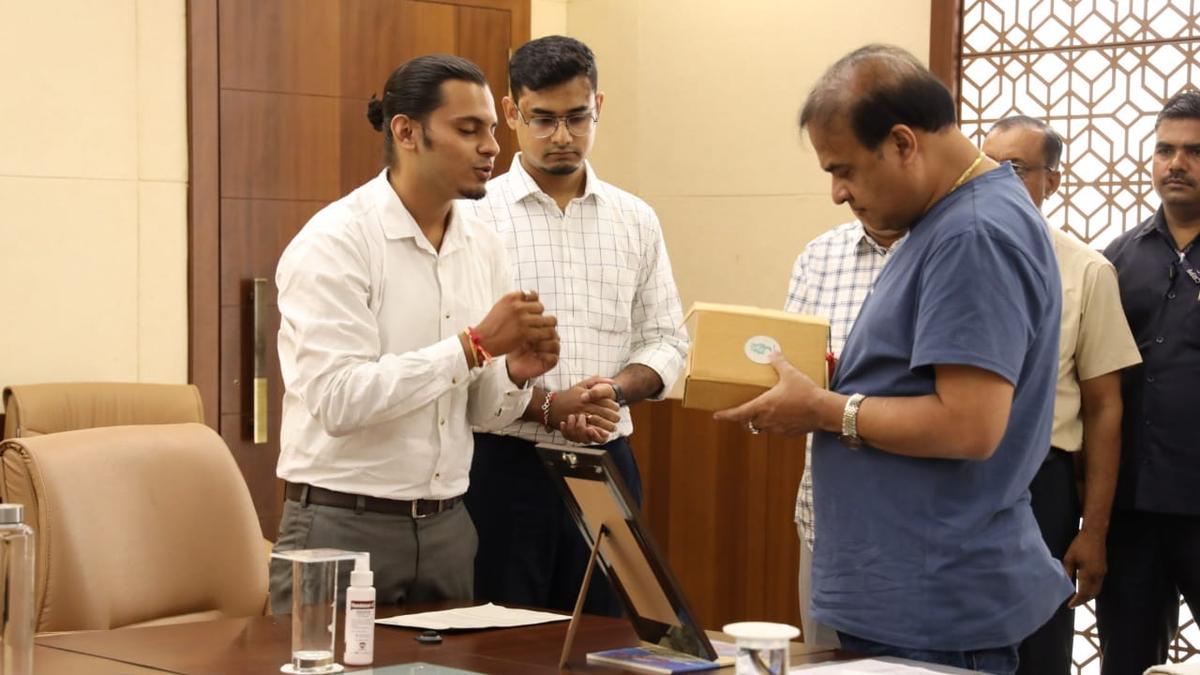
Rupankar and Aniket of Kumbhi Kagaz with the Chief Minister of Assam
| Photo Credit:
Special Arrangement
The duo began with handmade sheets in 2022, experimenting in small batches. As demand grew, they shifted to machine production to scale up. Today, the paper looks and feels like standard bond paper, making it suitable for everyday use. Their stationery line has been well received, and they are now expanding into biodegradable packaging—developing mono cartons and gift boxes.
Aniket comes from a computer science background, while Subhankar studied commerce. Both are also associated with Help Earth, an Assam-based NGO that explores, documents and protects the lesser-known biodiversity and fragile habitats of Northeast India.
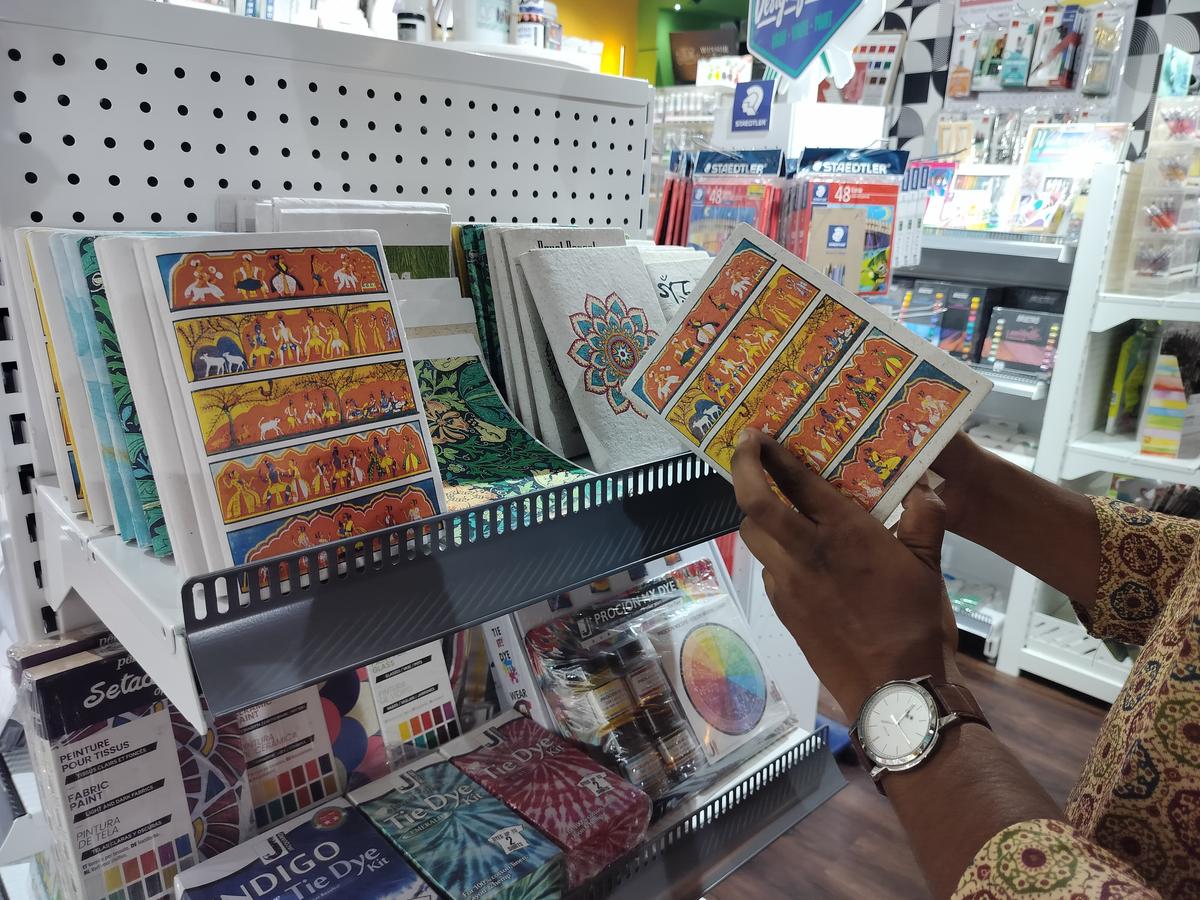
Stationary of Kumbhi Kagaz made with water hyacinth
| Photo Credit:
Special Arrangement
Their mentor, Jayaditya Purkayastha, a herpetologist who has worked extensively at Deepor Beel—a permanent freshwater lake in Assam and the state’s only Ramsar site—urged them to see the infestation as opportunity rather than obstacle. Deepor Beel, like many water bodies in the region, is heavily choked by water hyacinth.
His advice was simple: turn the problem into something meaningful.
“So we decided on ‘From Assam to the world’,” says Aniket. “Assam is known for its tea. We want it to be known for something else too—a distinctive paper made from water hyacinth.”

The duo are clear about their intent. “We’re not on a mission to eradicate water hyacinth,” they say. “Our aim is to control its growth.” Madhurima Das has been helping the duo In the research and scientific development of the paper.
Introduced to India nearly 200 years ago, the plant is now embedded in the ecosystem. By harvesting it to make paper, they not only manage its spread but also support communities that depend on freshwater lakes for their livelihoods.
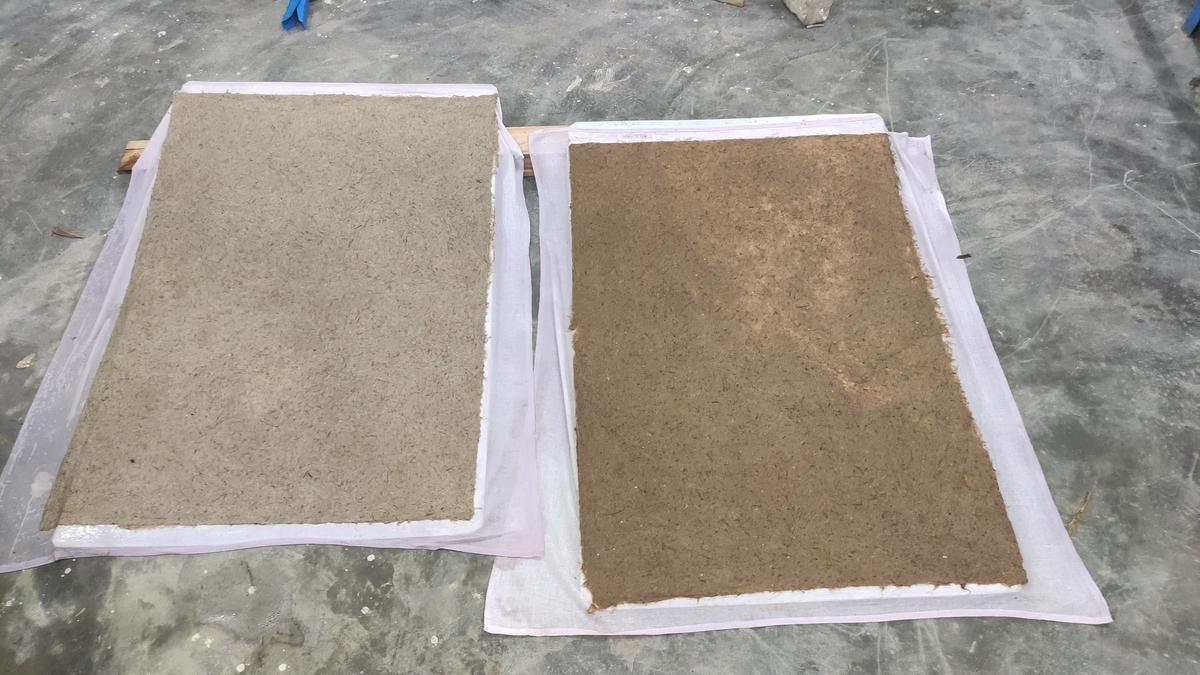
Paper sheets set out to dry
| Photo Credit:
Special Arrangement
In simple terms, one tonne of fresh water hyacinth yields about 100 kilograms of dried fibre, which can then be converted into roughly 80–90 kilograms of chemical-free paper.
Freshwater lakes are crucial to both biodiversity and local livelihoods. They attract migratory birds and support fish, reptiles and amphibians. Many communities around these lakes depend on fishing as a secondary source of income. Water hyacinth, once introduced as an ornamental plant, has since turned invasive. When it spreads unchecked, it blocks sunlight and depletes oxygen. As the plant dies, it sinks and accumulates at the bottom, causing siltation. This reduces water depth and storage capacity, damages spawning beds, lowers water clarity and oxygen levels, and can even trigger toxic algal blooms—disrupting entire aquatic ecosystems.

“Siltation directly affects fish populations,” says Aniket. “When we worked at Deepor Beel, locals spoke about how difficult fishing had become because of water hyacinth. In places like Deepor Beel, some residents have found alternative work in nearby factories. But in wetlands around Kaziranga and Goalpara, those options don’t exist.”
In many such areas, locals spend ₹15,000–20,000 out of pocket to clear sections of their own lakes just to resume fishing. The impact extends beyond fishing. “It has also hurt tourism in places like Urpad Beel—popularly known as Pink Paradise—in Goalpara,” he adds.
Urpad Beel, which spans roughly 1,256 hectares (about 12.5 sq km), is one of the largest freshwater lakes in lower Assam. Famous for its seasonal pink lotus blooms and migratory birds, it has long drawn visitors. But rapid hyacinth growth has blanketed large parts of the lake.
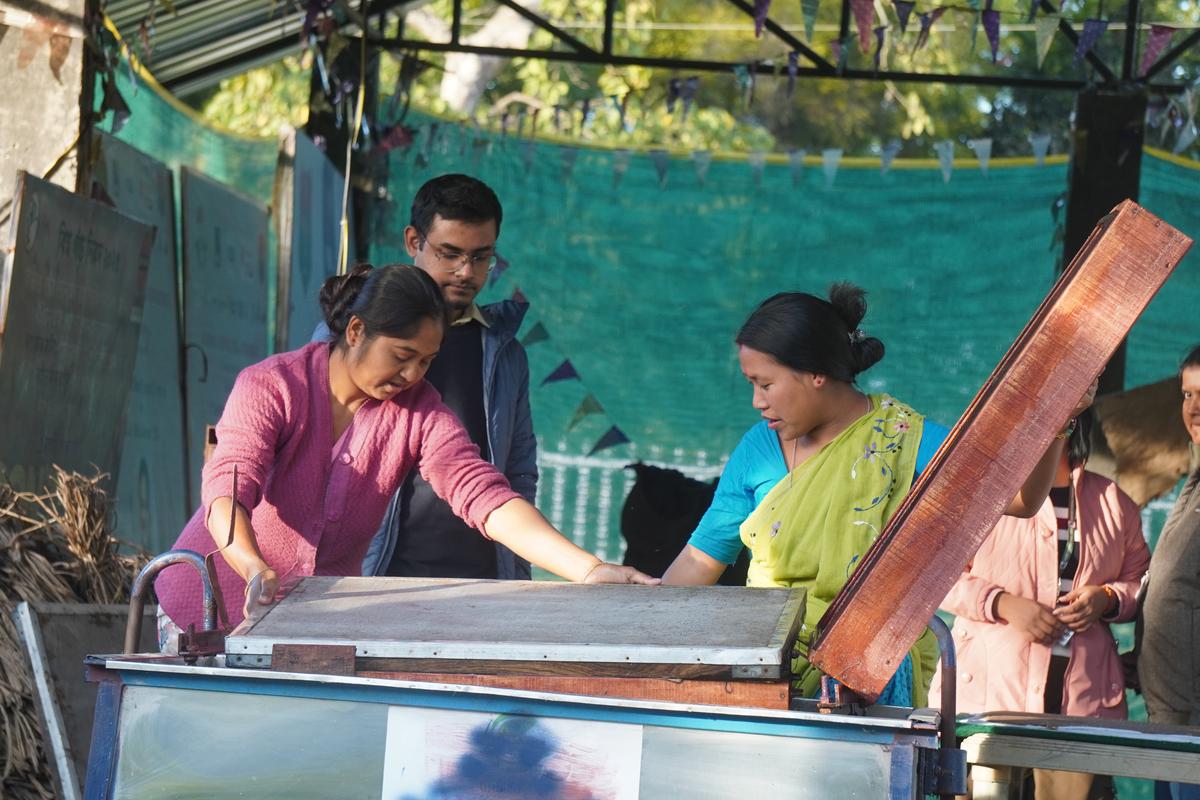
The team also engages local women at work
| Photo Credit:
Special Arrangement
Explaining the clearing process, Aniket says, “At our Kaziranga facility, we carry out seasonal manual clearance. One person can remove roughly 200 kilograms of water hyacinth a day. We avoid machines because snakes and birds often get entangled in them. The locals are skilled at working in water, so they handle the clearing.”
Apart from Urpad Beel, the team also operates in Agoratoli—the eastern range of Kaziranga National Park—known for its wetlands, migratory birds and dense wildlife. It is considered one of the park’s prime birdwatching zones.
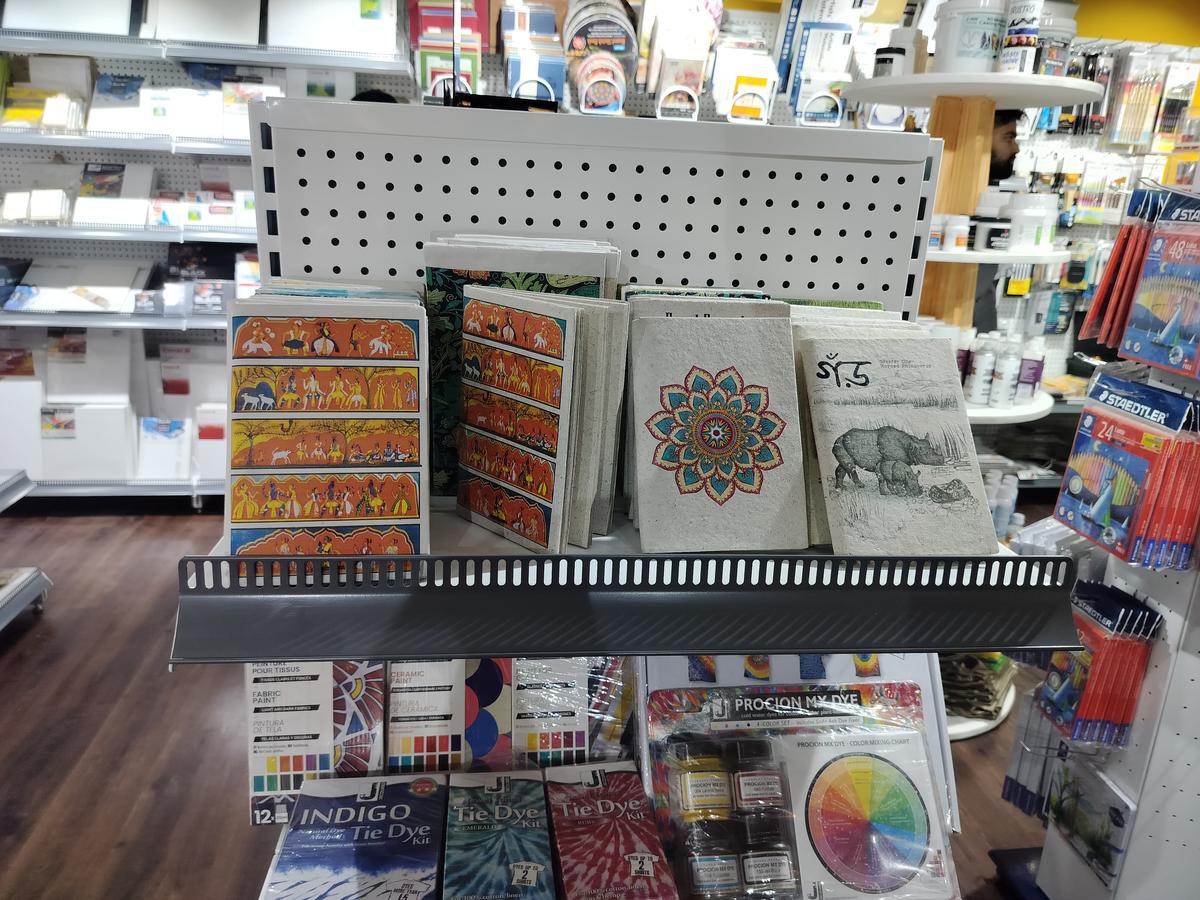
Note books made from water hyacinth
| Photo Credit:
Special Arrangement
Once harvested, the hyacinth is sun-dried for about a week. The team deliberately avoids mechanical drying to keep the carbon footprint low.
Bird species such as the pheasant-tailed jacana have struggled to breed as water hyacinth spreads unchecked. “In areas where we’ve cleared the weed, lotuses and lilies have returned,” says Subhankar. “These birds lay their eggs on those leaves, so their habitat is slowly coming back.”
The initiative has also drawn national attention. After being mentioned on Mann Ki Baat by the Prime Minister Narendra Modi, the brand began receiving calls from cities such as Bhubaneswar, Hyderabad and parts of Maharashtra from people keen to replicate the model.
The products are available at www.kumbhikagaz.com
Published – March 04, 2026 07:38 am IST