
By using this site, you agree to the Privacy Policy and Terms of Use.
Accept
India Times NowIndia Times NowIndia Times Now
Notification Show More
Font ResizerAa
  • India News
    India News
    Politics is the art of looking for trouble, finding it everywhere, diagnosing it incorrectly and applying the wrong remedies.
    Show More
    Top News
    The States Braces for Protests Over New COVID Rules
    August 29, 2021
    A.P. Chambers draws GST Council’s attention to issues that need redressal
    October 21, 2025
    Yunus keen to improve ties with India, says adviser
    December 24, 2025
    Latest News
    West Asia crisis: Rajnath Singh calls for swift decisions, long-term readiness
    March 28, 2026
    Government’s failure responsible for supply crunch, panic among people, says Pramod Tiwari
    March 28, 2026
    OBC and EBC voters are not happy with Nitish Kumar moving to Rajya Sabha, says Anand Mohan
    March 28, 2026
    The Tamil connect to a new domestic fuel from CSIR – NCL Pune
    March 28, 2026
  • Technology
    TechnologyShow More
    Strengthening the Team: Thryve PR Onboards Pranjal Patil as PR Executive & Project Manager
    October 1, 2025
    How to Take the Perfect Instagram Selfie: Dos & Don’ts
    October 1, 2021
    Apple iMac M1 Review: the All-In-One for Almost Everyone
    Hands-On With the iPhone 13, Pro, Max, and Mini
    September 4, 2021
    Apple VS Samsung– Can a Good Smartwatch Save Your Life?
    August 30, 2021
  • Posts
    • Post Layouts
      • Standard 1
      • Standard 2
      • Standard 3
      • Standard 4
      • Standard 5
      • Standard 6
      • Standard 7
      • Standard 8
      • No Featured
    • Gallery Layouts
      • Layout 1
      • Layout 2
      • layout 3
    • Video Layouts
      • Layout 1
      • Layout 2
      • Layout 3
      • Layout 4
    • Audio Layouts
      • Layout 1
      • Layout 2
      • Layout 3
      • Layout 4
    • Post Sidebar
      • Right Sidebar
      • Left Sidebar
      • No Sidebar
    • Review
      • Stars
      • Scores
      • User Rating
    • Content Features
      • Inline Mailchimp
      • Highlight Shares
      • Print Post
      • Inline Related
      • Source/Via Tag
      • Reading Indicator
      • Content Size Resizer
    • Break Page Selection
    • Table of Contents
      • Full Width
      • Left Side
    • Reaction Post
  • Pages
    • Blog Index
    • Contact US
    • Search Page
    • 404 Page
    • Customize Interests
    • My Bookmarks
  • Join Us
Reading: IISc study finds that anthropogenic changes threaten survival of Eastern Himalayan birds
Share
Font ResizerAa
India Times NowIndia Times Now
  • Finance ₹
  • India News
  • The Escapist
  • Entertainment
  • Science
  • Technology
  • Insider
Search
  • Home
    • India Times Now
    • Home 2
    • Home 3
    • Home 4
    • Home 5
  • Categories
    • Technology
    • Entertainment
    • The Escapist
    • Insider
    • Finance ₹
    • India News
    • Science
    • Health
  • Bookmarks
    • Customize Interests
    • My Bookmarks
  • More Foxiz
    • Blog Index
    • Sitemap
Have an existing account? Sign In
Follow US
Home » Blog » IISc study finds that anthropogenic changes threaten survival of Eastern Himalayan birds
India News

IISc study finds that anthropogenic changes threaten survival of Eastern Himalayan birds

Times Desk
Last updated: November 12, 2025 4:38 pm
Times Desk
Published: November 12, 2025
Share
SHARE


Contents
  • Pairing data sets
  • Climate change impact
  • Long-term database
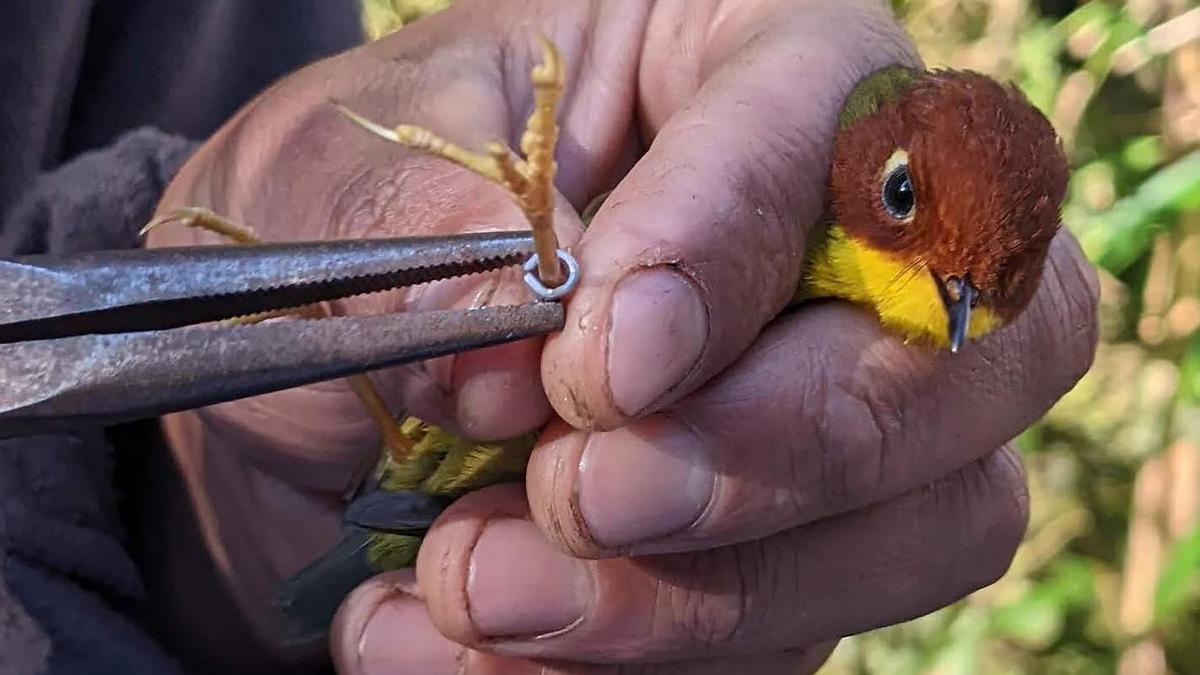
A Chestnut-headed Tesia being ringed by trained field staff.

A Chestnut-headed Tesia being ringed by trained field staff.
| Photo Credit: SPECIAL ARRANGEMENT

A new study from the Indian Institute of Science (IISc) has revealed that insectivorous birds found in the understorey of the Eastern Himalayas are under threat due to habitat degradation.

Researchers at the Centre for Ecological Sciences (CES) studied how changes in forest microclimates after selective logging influence the survival of wild bird populations in the Eaglenest Wildlife Sanctuary, Arunachal Pradesh, over a period of 10 years between 2011 and 2021.

The team tagged birds with lightweight aluminium rings and revisited the same sites annually to track their survival and changes in body mass.

Pairing data sets

The IISc said that the team paired this dataset with temperature-humidity loggers placed in both primary and logged forests, to estimate how understorey insectivorous birds which live below the canopy adapt to microclimatic changes.

“Using these long-term data sets, we can better understand why some species survive after logging while others decline strongly,” said Akshay Bharadwaj, a former Master of Science student at CES and corresponding author of the study.

Overall, the team found that logged forests are consistently hotter and drier during the day and colder at night in comparison to primary forests, exposing birds to stressful fluctuations due to loss of the forest canopy.

Climate change impact

These conditions, the scientists say, could intensify with climate change, especially in the Eastern Himalayas where bird species are thermal specialists.

Their findings reveal that these birds, which utilise very different primary and logged forest microclimatic niches, are most adversely affected in a logged forest and they experience a decline in body mass, and steep declines in long-term survival.

“Species that can still find microclimates in logged forests similar to their original forest homes are surviving after selective logging. It is those which can’t match their old conditions that face steep declines,” said Mr. Bharadwaj.

Based on their findings, the researchers suggest that conservation strategies should prioritise preserving primary forest across elevational gradients.

The study highlights the significance of understanding why certain species of birds are declining after logging, and how microclimatic niches in disturbed habitats influence population dynamics.

Long-term database

“Long-term datasets are crucial for this, and we are continuing to collect these data to try and plan effective conservation measures for these bird species. As the climate warms, the persistence of microhabitats will be crucial for many species to remain resilient to climate impacts,” said Umesh Srinivasan, assistant professor at CES and co-author of the study.

Published – November 12, 2025 10:08 pm IST


Source link

Protesters seek law to prevent ‘honour’ crimes
Chinnaswamy Stadium gets conditional nod to host matches; crowd capacity to be decided after safety review
Jaguar dies at Tirupati zoo
This winter, Christmas festivities lift spirit of moribund Kashmir tourism
UDF sweeps Malappuram, delivers blow to LDF
TAGGED:Bengalurueastern himalayan birdsIIScIISc study finds that anthropogenic changes threaten survival of Eastern Himalayan birdskarnataka
Share This Article
Facebook Email Print
Leave a Comment

Leave a Reply Cancel reply

Your email address will not be published. Required fields are marked *

Follow US

Find US on Social Medias
FacebookLike
XFollow
YoutubeSubscribe
TelegramFollow

Weekly Newsletter

Subscribe to our newsletter to get our newest articles instantly!
[mc4wp_form]
Popular News

Telangana government yet to submit formal Concept Note for Musi riverfront project: Asian Development Bank

Times Desk
Times Desk
January 23, 2026
Minister promotes Andhra Pradesh tourism at World Travel Market 2025 in London
Palaash Muchhal’s sister Palak breaks silence on postponed wedding with Smriti Mandhana; requests privacy
Former Miss India flaunts her bald look with pride amid stage 4 cancer treatment | See pics
Twinkle Khanna OTT comeback: From films with Aamir, SRK to new journey at 51
- Advertisement -
Ad imageAd image
Global Coronavirus Cases

Confirmed

0

Death

0

More Information:Covid-19 Statistics
© INDIA TIMES NOW 2026 . All Rights Reserved.
Welcome Back!

Sign in to your account

Username or Email Address
Password

Lost your password?

