

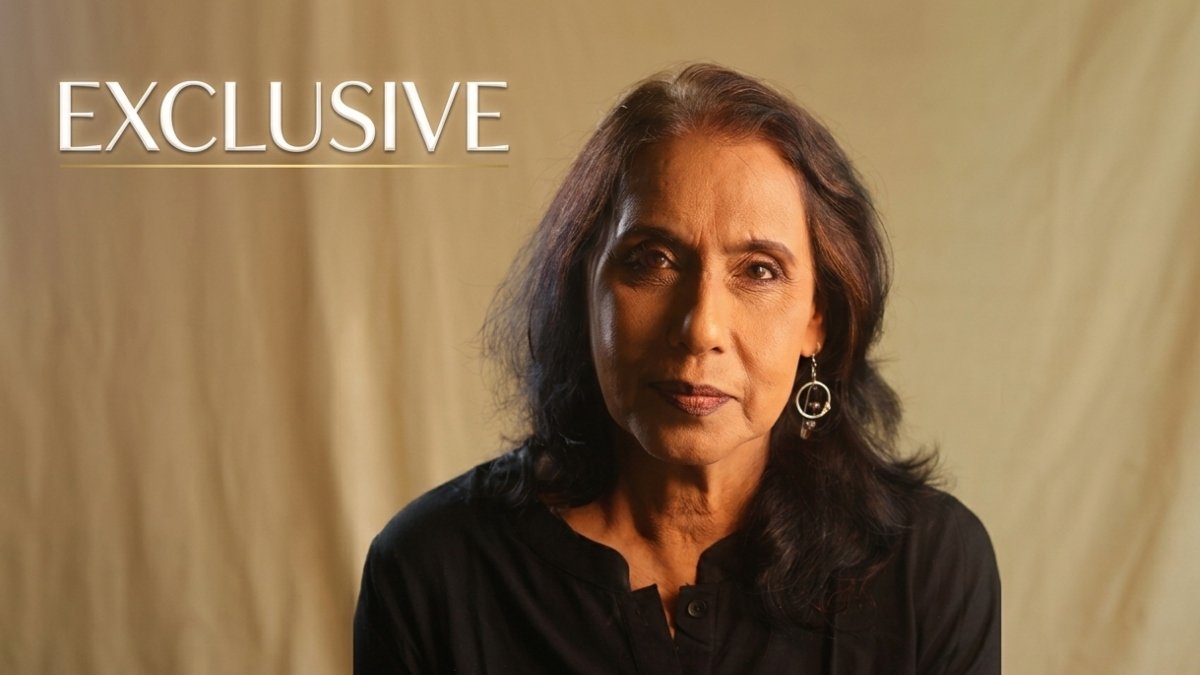

- Swaroopa Ghosh on her character in Last Man in Tower
- It took me a long time to break free from that Bengali mother: Swaroopa Ghosh
- On working with Shoojit Sircar
- On her character changing from the original plan
- Swaroopa Ghosh says she cannot pick a favourite co-star
- Swaroopa recalls Amitabh Bachchan and Divya Dutta’s support
Imagine getting a call on a normal day at work, asking if you would be interested in speaking to an actor who has years of experience in theatre and has worked across television and films. While I was interested, I still asked who the actor in question was. I was told it was Swaroopa Ghosh.
In that very instance, I said yes and got on a call that went on to be much more than I had intended it to be. What followed was a conversation that was seamless, insightful and, more importantly, serene and unhurried. So much so that I forgot I was doing an interview. Instead, it felt like I was having a meaningful conversation with someone who was honest, genuine and not trying to sound media-trained, as is often the case with interviews these days.
For the unversed, Swaroopa Ghosh was last seen in Manoj Bajpayee’s Last Man in Tower. She has worked with Shoojit Sircar three times, in Madras Cafe, Vicky Donor and Piku. She has also featured in films such as Pink, War, Love Hostel, Gulmohar and Jaat. On television, she was part of Hansal Mehta’s Scoop, an experience she has spoken about fondly.
So, let’s get into it:
Swaroopa Ghosh on her character in Last Man in Tower
When asked if she was satisfied with Mrs Rego’s screen time, the actress said adapting a book into a film naturally requires certain changes, as the two are different mediums. However, she felt Rego’s role was significantly more defined in the novel and that the character suddenly disappeared in the film.
She explained that Rego had a clear journey in the book. After leaving her home in Bandra following her father’s troubles with a builder, she was left alone after her partner walked out and had to support her two children while working at an NGO. Initially guided by her conscience, Rego eventually began questioning whether she was denying her children a better life.
The actress felt Rego’s decision to give in was understandable, particularly because she was the sole earning member and had a special child to care for. However, she found the idea of simply wanting to live better more difficult to connect with.
She said she discussed the issue with director Ben, who agreed that Rego’s character suddenly disappeared from the narrative. A scene featuring Rego was shot but later edited out, while several other characters also received less space as the film increasingly focused on Vivia and Master.
It took me a long time to break free from that Bengali mother: Swaroopa Ghosh
The actor also spoke about moving beyond the stereotypical Bengali mother roles she was often offered, saying, “Piku and Vicky Donor are two very different Bengali women. One is unmarried and literate, while the other is married and literate but caught in the home cycle. They belong to the same community, but they are different people. As an actor, you search for those differences. I tried to break free from the Bengali mould. I did Hostel, then things changed. I don’t think I hold the position where I can say, ‘Oh, I’m not going to do it.’ No, I never say that because I need the work, baba.”
On working with Shoojit Sircar
She recalled how working with Shoojit Sircar across three films helped her become more comfortable and confident, and how his trust in her showed through their work on Piku. Swaroopa recalled asking him simple questions while shooting Piku and said, “I remember one day when I understood that he actually trusts me.”
She was talking about a moment involving the film’s costumes and revealed that designer Veera Kapur had brought saris and asked if she would be comfortable wearing one. Swaroopa then took the sari to Sircar and asked what she should go ahead with.
“And he just said, ‘What would you like to do?’ So I said, ‘Sari.’ And you know, that is the beauty of it. He knew that I would choose what is right for the character,” she said while adding that she particularly appreciated the trust Sircar placed in her. “With me, I realised that this is a director who has complete trust in me. So that’s how it happened.”
On her character changing from the original plan
Swaroopa was next asked about a past interview in which she had revealed that her character in Jaat initially had more humanity, which was later removed. She said the character had changed considerably by the time she reached the set. “The initial deck, the storyline, the background were different, but when I went there, it had completely changed. They never gave me a script.”
Asked how she deals with a character changing during the making of a film, Swaroopa said an actor’s job is ultimately to deliver what is required. “You just deliver. It is delivered, as an actor, that’s what your job is to deliver.”
She credited her mentor, Ebrahim Alkazi, for shaping this approach to acting. Recalling his advice, she said, “You’re nothing but a delivery person. So you have to just do what you need to do and deliver it. So that’s what I did.”
Swaroopa added that if she is given a script beforehand and disagrees with the material, she would discuss it with the makers. However, she said that has not happened to her in this way so far. “For me right now, the work comes and if I like the work, if I find, yeah, it’s doable, I do it. If it doesn’t, it doesn’t, right?”
She also spoke candidly about the limited choices available to her as an actor. “Because my choices are also very limited. Actually, nobody’s casting me. I mean, if there are 1,000 roles, then I can think concept-wise. Otherwise, you just show up, do what you’re told and come back.”
Swaroopa Ghosh says she cannot pick a favourite co-star
When asked if she had a favourite co-star among the actors she has worked with, Swaroopa said she would find it difficult to single out one person. She recalled working with several accomplished actors and said each had been brilliant in their own way.
She particularly felt in sync with Manoj Bajpayee because of his theatre background and the ensemble nature of their work together during the filming of Last Man in Tower. According to her, the experience of working in theatre means certain instincts become second nature, making interactions on screen feel more natural and believable.
At the same time, she stressed that this did not mean she found it difficult to work with other actors. She said Amitabh Bachchan and Irrfan Khan were thoroughly professional, and she never felt anyone was trying to sideline her or make her feel smaller.
Swaroopa recalls Amitabh Bachchan and Divya Dutta’s support
Swaroopa also recalled working with Amitabh Bachchan on Piku, saying he was wonderful on screen and would rehearse with her. She remembered instances where they improvised during scenes and said she never felt he was holding back despite her getting more footage in some moments.
She also spoke about Divya Dutta, recalling an unexpected compliment from the actor. Dutta once told her on the sets of Last Man in Tower that she was “so brilliantly natural” and called her amazing, something Swaroopa said took her by surprise because she had not expected to hear it from her.
Returning to Manoj, Swaroopa recalled watching him perform a particular dialogue while she was part of the scene. She said she watched him deliver the line across multiple takes and was struck by how consistently strong he was. “Every take, he was brilliant,” she said.
For Swaroopa, these experiences are precisely why choosing one favourite co-star is difficult.
Also Read:
Exclusive: Sonal Chauhan draws parallel between Emraan Hashmi’s Awarapan 2 and Mirzapur’s success



