


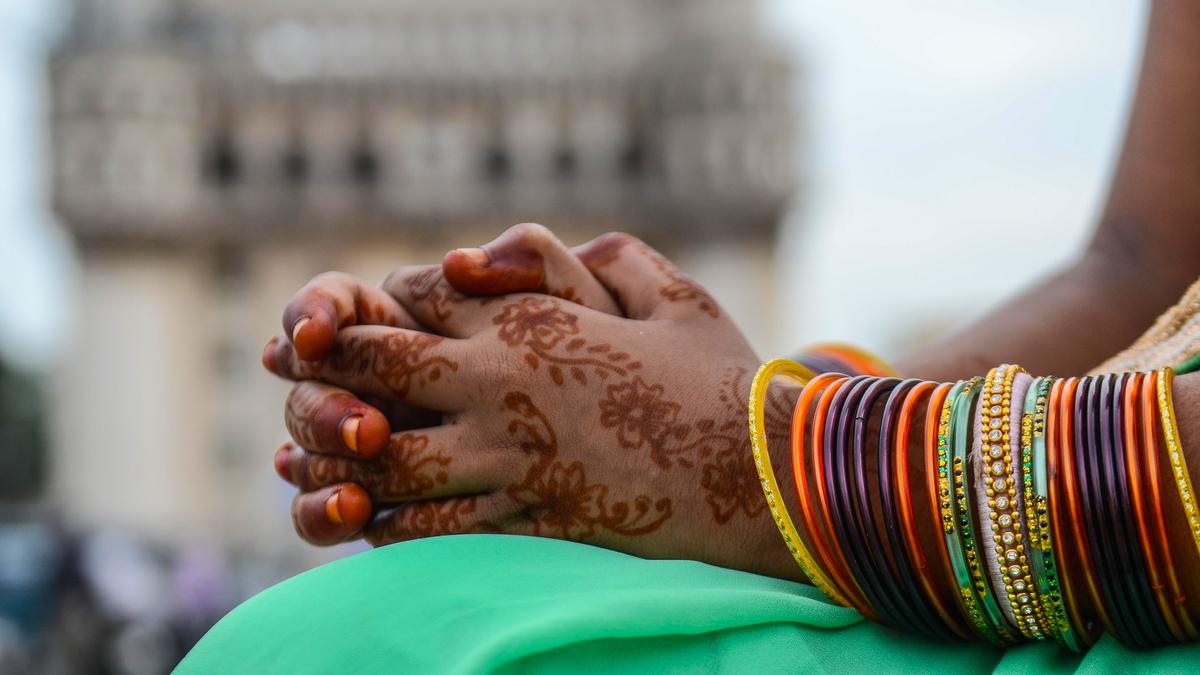
Assam leads with an 84% decline in child marriages of girls, followed by Maharashtra and Bihar (70% each), Rajasthan (66%) and Karnataka (55%).
| Photo Credit: Nagara Gopal
Child marriage among girls in India declined by 69% and that of boys declined by 72%, according to a report by ‘Just Rights for Children’, a network of over 250 NGOs working for child protection.
The report ‘Tipping Point to Zero: Evidence Towards a Child Marriage Free India’ was released during a side event at the UN General Assembly in New York.

Assam leads with an 84% decline in child marriages of girls, followed by Maharashtra and Bihar (70% each), Rajasthan (66%) and Karnataka (55%).
The report listed arrests and FIRs as the strongest deterrents against child marriage, even as it attributes this unprecedented decline to the coordinated action of the Government of India, State governments, and civil society organisations over the past three years.
It also stated that 99% of the respondents had either seen or heard about the Government of India’s Bal Vivah Mukt Bharat Campaign, primarily through NGO campaigns, schools, and panchayats.
“The findings mark a monumental shift in the country. As recently as 2019–21, three children were being married off every minute, yet only three cases were reported in an entire day. Today, awareness of child marriage laws is near universal and is a transformation unthinkable just a few years ago,” the report said.
It further shows that 63% of respondents now feel “very comfortable” reporting child marriage, while another 33% say they are “somewhat comfortable” coming forward.
In terms of education, the report found that in 31% of the surveyed villages, all girls in the age group 6-18 years were attending school, but huge disparities were seen in Bihar at 9% and Maharashtra at 51%. Poverty (88%), lack of infrastructure (47%), safety (42%), and lack of transportation (24%) were cited as the barriers to the education of girls. Reasons cited for child marriage included poverty (91%), to provide safety to minor girls (44%), and traditions and norms.
The report is based on field data from 757 villages from five States, which were chosen zone-wise to represent India’s diverse social and cultural contexts, and adopted the Multistage Stratified Random Sampling. Frontline service providers such as ASHA, anganwadi workers, school teachers, auxiliary nurse midwives, Panchayat Raj Institution (PRI) members etc., were approached to gather the village-level data.
“India is on the verge of ending child marriage, transcending the fulfilment of a Sustainable Development Goal to prove to the world that its end is both possible and inevitable,” Bhuwan Ribhu, Founder of Just Rights for Children, said at the report’s launch.
Published – September 26, 2025 08:20 pm IST



