

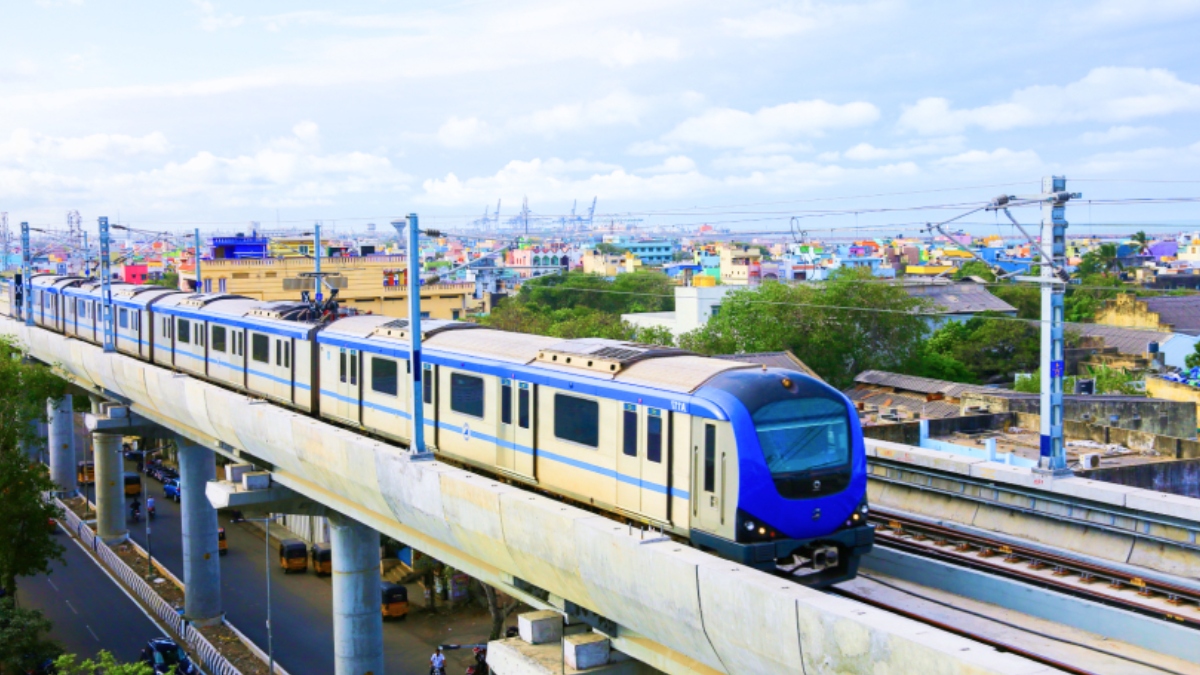

In the trial conducted over a distance of 5.5 km of elevated up line, which also included a 3.5 km double-decker section, the vehicle ran at a speed of 15 kmph.
Chennai Metro Rail has achieved a crucial milestone by successfully conducting a trial run on the Porur-Vadapalani downline section on Sunday. This development marks a step closer to the commissioning of the Phase II network by the Chennai Metro. According to MA Siddique, managing director of Chennai Metro Rail (CMR), it is likely that commercial operations will start on this stretch in the first or second week of February.
Porur-Vadapalani section is among the first Phase II stretches
In the trial conducted over a distance of 5.5 km of elevated up line, which also included a 3.5 km double-decker section, the vehicle ran at a speed of 15 kmph. In the next four to five days, a trial on the downline is also scheduled. Notably, the Porur-Vadapalani section is among the first Phase II stretches to reach the trial stage.
Siddique added that the Porur-Poonamallee Bypass alignment, which was originally planned for commissioning in December 2025, has been extended up to Vadapalani with the intention of improving passenger connectivity and early integration of Phase II with the operational Phase I network.
According to Siddique, an interim speed certificate was issued by the Railway Design and Standards Organisation after an inspection conducted by the Commissioner of Railway Safety on December 31. “We have forwarded the observations to RDSO. Once its comments are received, we will obtain the permanent speed certificate. This will be followed by a statutory safety inspection,” Siddique emphasised.
Link bridge has been built at Vadapalani
To facilitate physical connectivity between the two phases, a link bridge has been built at Vadapalani. With stations between Vadapalani and Porur becoming operational, the stretch is likely to connect up to Power House by June 2026.
Importantly, despite being driverless, the trains on this link will initially be operated manually. These manual operations are necessitated as the automatic signalling system is yet to be fully commissioned.
Following four to five months of testing, driverless operations are expected to begin. After being fully operational, the 16-km stretch running from Poonamallee Bypass to Vadapalani will be covered in about 30 minutes.
ALSO READ | Major infrastructure push: 10 Gurugram roads to connect with Dwarka Expressway



