


We usually think of brain health as something separate. Puzzles, memory games, maybe diet. But there is another piece to it that does not always get enough attention. Muscle strength. More specifically, leg strength.
In a recent conversation, US neurologists Dr Ayesha Sherzai and Dr Dean Sherzai spoke about how closely physical strength and cognitive health are linked. Their discussion, shared on Mel Robbins’ YouTube channel on April 9, brought up a finding that stands out. Stronger legs may significantly lower the risk of Alzheimer’s disease.
How leg strength is linked to Alzheimer’s risk
The doctors pointed to research that suggests a strong connection between leg strength and cognitive health.
Dr Ayesha Sherzai shared a key finding. “The siblings who exercised and had stronger legs, 47 percent of them actually had normal memory testing after that period,” she said.
What makes this more interesting is how the study was designed. It involved twins, which helps control genetic factors. That makes the results more reliable.
“It wasn’t even extensive. It was just a six-month study, and they exercised for about 30 to 45 minutes,” she added.
And the impact did not stop there. “They exercised for about 30 to 45 minutes, and they were doing things like resistance training, leg press, lunges, and squats. And they were able to sustain that benefit even after stopping after six months,” she explained.
So the effect carried on, even after the structured exercise period ended.
Why leg muscles matter for brain health
The reasoning is fairly straightforward. Legs hold the largest muscle groups in the body.
When you activate them, especially through exercises like squats or lunges, they send strong metabolic signals. These signals, in turn, support brain function.
Dr Dean Sherzai highlighted that this is relevant even for people already showing early signs of cognitive decline.
“Leg strength was 47 percent risk reduction in MCI patients. These are pre-dementia,” he said.
So it is not just preventive. It can also matter during early stages of decline.
Simple ways to build leg strength without a gym
The doctors also made it clear that you do not need a complex routine. Or heavy weights.
Dr Dean Sherzai suggested a more practical approach. “You don’t have to do leg presses with weights on your shoulder,” he said.
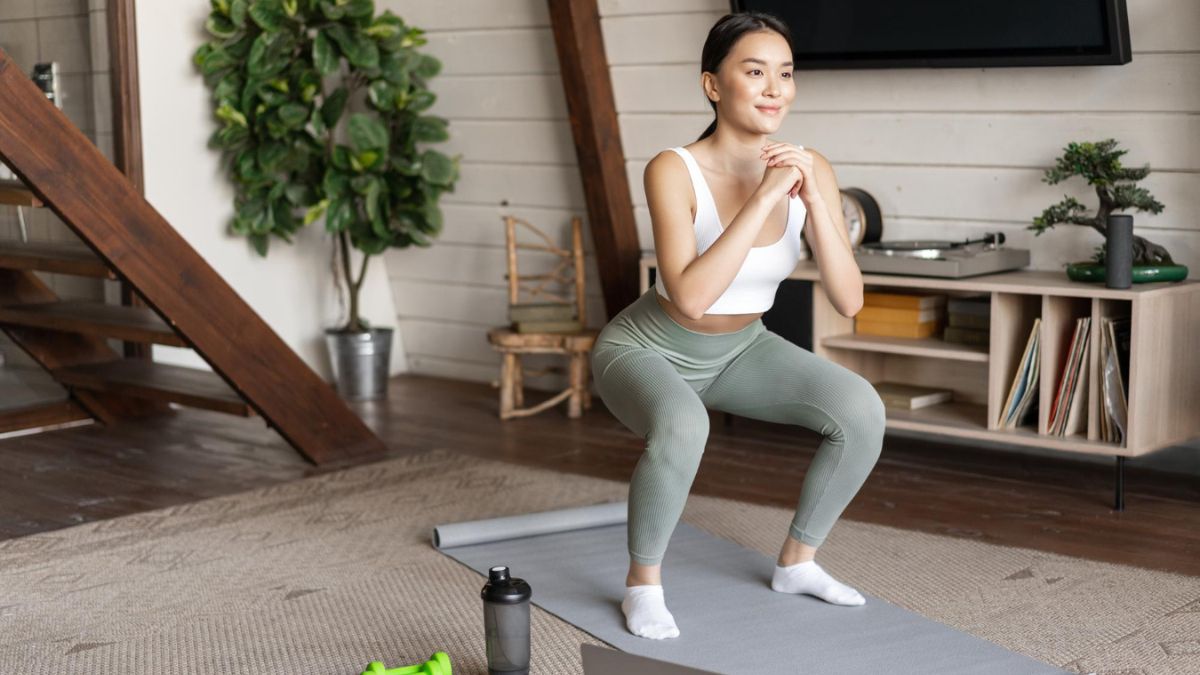
Instead, he recommends mini squats. “I tell people to do mini squats. You’re watching your favourite show. Make that your leg day. Stand up. Your couch is behind you. Don’t go all the way 90 degrees. Go 60 degrees and do a few of those,” he explained.
The idea is to aim for three to four times a week, keeping it manageable.
Dr Ayesha Sherzai added another way to fit it in. “If you’re waiting for your microwave, if you’re warming something up, instead of just standing there, just hold onto something and do some mini squats for 60 seconds, and you’ll see the benefits,” she said.
Small pockets of movement. That is really the takeaway.
Disclaimer: Tips and suggestions mentioned in the article are for general information purposes only and should not be construed as professional medical advice. Always consult your doctor or a dietician before starting any fitness programme or making any changes to your diet.
ALSO READ: Did you know poor sleep can shrink your brain? Doctor highlights 5 facts about brain health



