

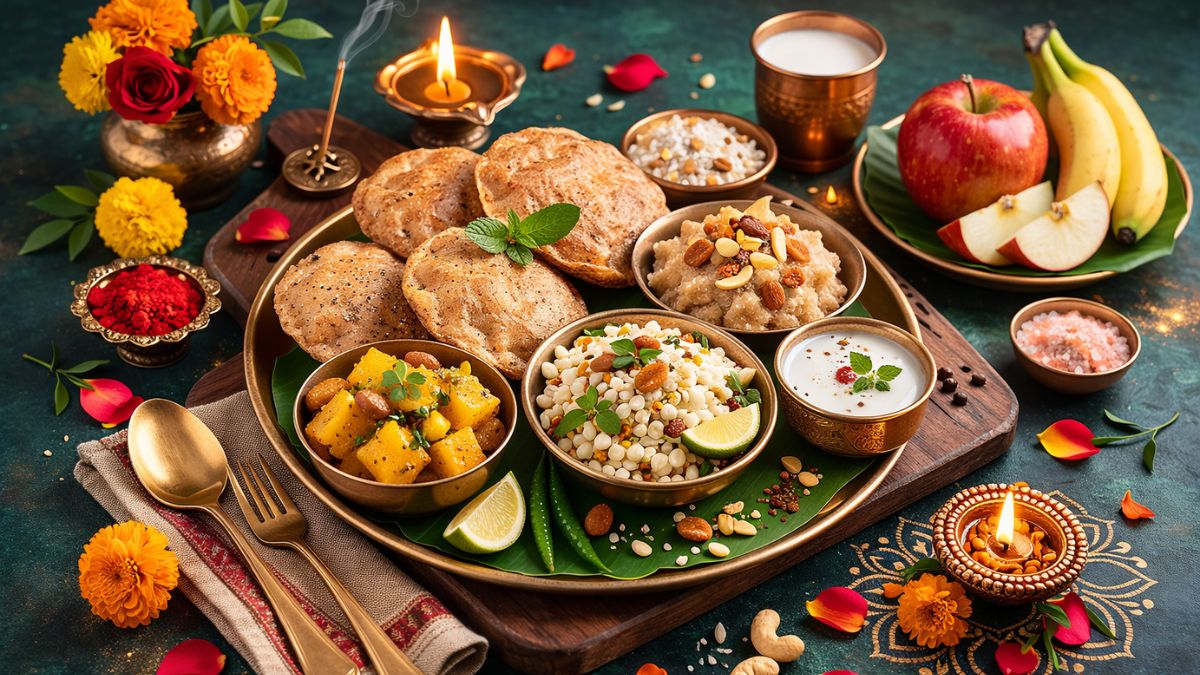

Navratri is usually framed around fasting. What to eat, what to avoid, how to manage the nine days. But if you look at it a little differently, it is not just a food shift. It is more like a reset built into the calendar. Quiet. Structured. And, if done with some awareness, surprisingly effective.
Dr Partap Chauhan, founder and director of Jiva Ayurveda with over 45 years of clinical experience, sees it as something deeper than routine fasting. “Navratri aligns with seasonal transitions when the body naturally looks for balance,” he explains. Instead of pushing against that shift, the idea is to move with it. Eat lighter. Slow down a bit. Let the system recalibrate.
Navratri fasting and digestive reset benefits
Digestion sits at the centre of all this. It does not always get attention, but it drives a lot more than we realise. During Navratri, when meals become simpler and lighter, the digestive system gets a break from constant load.
“Fasting is not about weakening digestion, it is about improving its efficiency,” Dr Chauhan says. And you can feel it. Less bloating. More ease after meals. Energy that does not dip as quickly. It is subtle, but noticeable.
At the same time, there is a catch. Overeating fasting foods, even if they are allowed, can undo the balance. Easy to slip into. Happens often.
Navratri fasting effects on mental clarity and mood
The shift is not just physical. It shows up in the mind as well. When digestion settles, mental clarity tends to follow.
“Mind and digestion are closely linked in Ayurveda,” Dr Chauhan notes, suggesting that when one improves, the other usually does too. You might find yourself a bit calmer. Less reactive. More focused through the day. Not dramatic. Just…steadier.
Daily routine and discipline during Navratri fasting
There is also a rhythm that builds over these nine days. Fixed meal timings. Lighter dinners. More mindful eating.
Dr Chauhan points out that “once the body adapts to a routine, it begins to expect it.” That is where things shift. Not overnight, but gradually. The body starts working with you instead of against you.
Ayurvedic detox during Navratri explained simply
The word detox gets thrown around a lot. Ayurveda treats it a little differently. No extremes. No harsh cleanses.
“It is a gentle process,” Dr Chauhan explains, “where the body clears accumulated waste when it is not constantly digesting heavy food.” During Navratri, this happens almost in the background. You may not notice it directly, but the effect builds.
Simple ayurvedic tips to maximise Navratri benefits
A few small habits can make the process smoother. Nothing complicated.
- Start your day with warm water.
- Keep meals light and freshly prepared.
- Avoid eating late at night.
- Take a few minutes for silence or meditation.
“You do not need to follow everything perfectly,” Dr Chauhan adds, in a more practical sense. Even small, consistent changes can make a difference.
What Navratri really does for your body and mind
When you step back, Navratri feels less like restriction and more like a pause. A structured one.
“Giving the body this kind of break helps restore balance at multiple levels,” Dr Chauhan says. Digestion improves. The mind settles. Energy becomes more stable. And some of that stays, even after the nine days are over.
Disclaimer: Tips and suggestions mentioned in the article are for general information purposes only and should not be construed as professional medical advice. Always consult your doctor or a dietician before starting any fitness programme or making any changes to your diet.
ALSO READ: Chaitra Navratri 2026: Dates, fasting rules, bhog list and meaning of the nine days



