

By using this site, you agree to the Privacy Policy and Terms of Use.
Accept
India Times NowIndia Times NowIndia Times Now
Notification Show More
Font ResizerAa
  • India News
    India News
    Politics is the art of looking for trouble, finding it everywhere, diagnosing it incorrectly and applying the wrong remedies.
    Show More
    Top News
    The States Braces for Protests Over New COVID Rules
    August 29, 2021
    THINQ-25: Jaipur school wins national title
    November 6, 2025
    Absenteeism on the part of doctors will not be tolerated, says Health Minister
    January 9, 2026
    Latest News
    Four workers faint after inhaling gas in effluent treatment plant in Ranipet
    March 4, 2026
    New Ranipet SP Sibin assumes charge
    March 4, 2026
    Rajya Sabha elections: AIADMK fields veteran Thambi Durai again, allots one seat to PMK
    March 4, 2026
    SIR protests continue in West Bengal days after publication of the draft rolls
    March 4, 2026
  • Technology
    TechnologyShow More
    Strengthening the Team: Thryve PR Onboards Pranjal Patil as PR Executive & Project Manager
    October 1, 2025
    How to Take the Perfect Instagram Selfie: Dos & Don’ts
    October 1, 2021
    Apple iMac M1 Review: the All-In-One for Almost Everyone
    Hands-On With the iPhone 13, Pro, Max, and Mini
    September 4, 2021
    Apple VS Samsung– Can a Good Smartwatch Save Your Life?
    August 30, 2021
  • Posts
    • Post Layouts
      • Standard 1
      • Standard 2
      • Standard 3
      • Standard 4
      • Standard 5
      • Standard 6
      • Standard 7
      • Standard 8
      • No Featured
    • Gallery Layouts
      • Layout 1
      • Layout 2
      • layout 3
    • Video Layouts
      • Layout 1
      • Layout 2
      • Layout 3
      • Layout 4
    • Audio Layouts
      • Layout 1
      • Layout 2
      • Layout 3
      • Layout 4
    • Post Sidebar
      • Right Sidebar
      • Left Sidebar
      • No Sidebar
    • Review
      • Stars
      • Scores
      • User Rating
    • Content Features
      • Inline Mailchimp
      • Highlight Shares
      • Print Post
      • Inline Related
      • Source/Via Tag
      • Reading Indicator
      • Content Size Resizer
    • Break Page Selection
    • Table of Contents
      • Full Width
      • Left Side
    • Reaction Post
  • Pages
    • Blog Index
    • Contact US
    • Search Page
    • 404 Page
    • Customize Interests
    • My Bookmarks
  • Join Us
Reading: Why throwing colours on Holi feels emotionally freeing, a neurologist explains
Share
Font ResizerAa
India Times NowIndia Times Now
  • Finance ₹
  • India News
  • The Escapist
  • Entertainment
  • Science
  • Technology
  • Insider
Search
  • Home
    • India Times Now
    • Home 2
    • Home 3
    • Home 4
    • Home 5
  • Categories
    • Technology
    • Entertainment
    • The Escapist
    • Insider
    • Finance ₹
    • India News
    • Science
    • Health
  • Bookmarks
    • Customize Interests
    • My Bookmarks
  • More Foxiz
    • Blog Index
    • Sitemap
Have an existing account? Sign In
Follow US
Home » Blog » Why throwing colours on Holi feels emotionally freeing, a neurologist explains
FashionLifestyleTravelVacation

Why throwing colours on Holi feels emotionally freeing, a neurologist explains

Times Desk
Last updated: March 4, 2026 12:36 am
Times Desk
Published: March 4, 2026
Share
SHARE


Contents
  • A brain primed for pleasure
  • The calming power of Holika Dahan
  • Colour, touch and the sensory explosion
  • “Bura na maano”: The neuroscience of forgiveness
  • Anandamide: The molecule of bliss
  • More than a festival, a full neural experience
New Delhi:

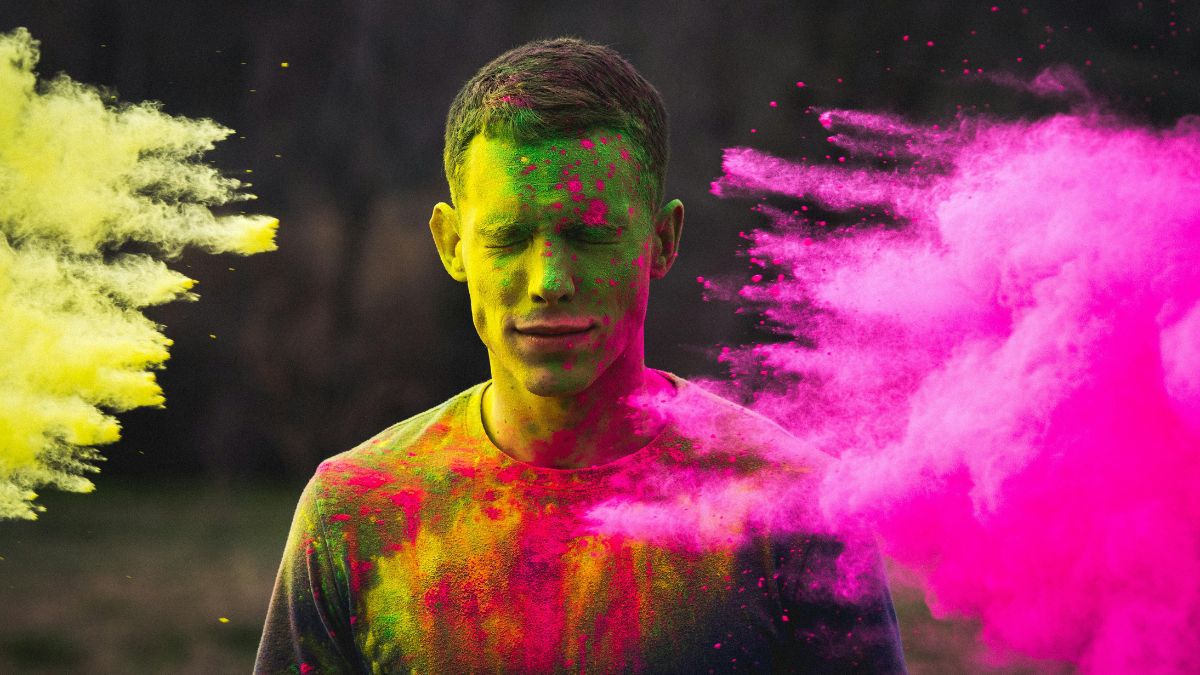
Every year, Holi arrives like a collective exhale. After weeks of restraint, rituals and routine, the air suddenly fills with colour, laughter and unapologetic joy. It feels liberating, but according to one neurologist, that feeling isn’t just cultural. It’s neurological.

Dr Sikandar Adwani, neurologist and director at Radiant Superspeciality Hospital, recently broke down the “brain science” of Holi in a YouTube video. His explanation connects fasting, fire rituals, music, touch and even forgiveness to measurable changes inside the brain. Here’s what’s really happening when you throw that first handful of gulal.

A brain primed for pleasure

Holi doesn’t appear out of nowhere. It follows weeks of spiritual discipline, Shivratri fasting, Ekadashi observances, and periods of reduced stimulation. According to Dr Adwani, when the brain experiences lower stimulation for a sustained period, its receptors become more sensitive. In simple terms, the brain becomes primed. It’s like turning down background noise before a big crescendo; when joy finally arrives, it lands harder.

Neuroscience supports this idea. Reduced sensory input can heighten responsiveness later. So by the time Holi morning comes around, your brain is biologically more receptive to pleasure.

The calming power of Holika Dahan

The night before Holi, communities gather around the ceremonial fire known as Holika Dahan. It’s symbolic, good over evil, but it’s also physiologically grounded. Dr Adwani notes that research suggests sitting near a fire can lower blood pressure and promote a sense of calm. Firelight has been associated with reduced stress responses and stronger social bonding. When an entire neighbourhood gathers around the same flame, the sense of belonging intensifies.

He describes this night as a kind of “brain reset”. Stress eases. The nervous system slows down. Social connection deepens. In short, your emotional baseline stabilises before the next day’s high-energy celebration.

Colour, touch and the sensory explosion

Then comes the morning. And everything lights up. Throwing colour stimulates the visual cortex. Applying gulal activates touch receptors. Dancing to dhol releases endorphins, the body’s natural feel-good chemicals. Splashing water, laughing loudly, running through clouds of pink and yellow, all of it creates a full sensory surge.

Dr Adwani explains that this multi-sensory engagement encourages neural growth and stronger neural connections. Movement, rhythm and synchronised dancing in groups are particularly powerful; collective motion boosts bonding hormones and reinforces emotional connection. No wonder it feels euphoric. Your brain is firing on multiple joy circuits at once.

“Bura na maano”: The neuroscience of forgiveness

Holi also carries a social ritual that’s easy to overlook: forgiveness. When people say, “Bura na maano, Holi hai,” they’re signalling emotional permission, to let go, to reset relationships. According to Dr Adwani, acts of apology and forgiveness activate the prefrontal cortex, the part of the brain responsible for empathy, decision-making and emotional regulation.

Forgiveness reduces stress hormones and supports long-term mental wellbeing. In a festival setting, where laughter lowers defences, reconciliation becomes easier. The emotional release many people feel may come as much from mended relationships as from the colours themselves.

Anandamide: The molecule of bliss

In 1992, scientists identified a neurotransmitter associated with pleasure and named it anandamide, derived from the Sanskrit word “ananda”, meaning bliss. Dr Adwani points out that the naming itself is a quiet cultural nod. Anandamide plays a role in mood, motivation and reward pathways in the brain. Festivals like Holi, rich in connection, movement and novelty, naturally stimulate these systems.

Bliss, in other words, isn’t abstract. It’s biochemical.

More than a festival, a full neural experience

Holi’s emotional freedom isn’t accidental. It’s layered. First, the brain becomes sensitive through restraint. Then it is calmed through ritual fire. Next, it is flooded with sensory stimulation, music and movement. Finally, it is soothed through forgiveness and reconnection. It’s a masterclass in emotional design, centuries old, yet neurologically sophisticated.

So this year, when colours hit your skin and laughter rises without effort, remember: your brain has been preparing for this moment. Joy isn’t random. It’s wired in, and Holi simply knows how to unlock it.

Also read: What to do on Holi morning: Rituals to follow before playing with colours


Source link

Why anxiety and depression are rising rapidly among Gen Z, expert explains
Nintendo Switch UI gets new close-up in deleted tweet
Why Indians are gaining fat even while eating less, doctor explains the metabolism puzzle
Trying to lose weight? Tamannaah Bhatia’s fitness coach says skip this popular snack
Holika Dahan 2026 date: Check Bhadra Kaal, Purnima tithi and lunar eclipse timing
TAGGED:anandamide bliss moleculebrain science of HolicoloursDr Sikandar Adwaniemotional release Holiemotionallyendorphins Holiexplainsfeelsfestival psychologyforgiveness and brainfreeingHoliHoli 2026Holi neuroscienceHolika Dahan benefitsneurologistsensory stimulation and happinessthrowingwhy Holi feels freeing
Share This Article
Facebook Email Print
Leave a Comment

Leave a Reply Cancel reply

Your email address will not be published. Required fields are marked *

Follow US

Find US on Social Medias
FacebookLike
XFollow
YoutubeSubscribe
TelegramFollow

Weekly Newsletter

Subscribe to our newsletter to get our newest articles instantly!
[mc4wp_form]
Popular News

At 3°C, Delhi wakes up to coldest January morning in 3 years

Times Desk
Times Desk
January 13, 2026
Civic polls: BJP high command may override State unit’s resistance to alliance with JD (S)
Telangana Govt focusses on renewable energy to meet future requirements; allows new industrial units to produce own energy
Dasara 2025: Invitation extended to Pramoda Devi Wadiyar
Manipur encounter: Four UKNA extremists killed
- Advertisement -
Ad imageAd image
Global Coronavirus Cases

Confirmed

0

Death

0

More Information:Covid-19 Statistics
© INDIA TIMES NOW 2026 . All Rights Reserved.
Welcome Back!

Sign in to your account

Username or Email Address
Password

Lost your password?

